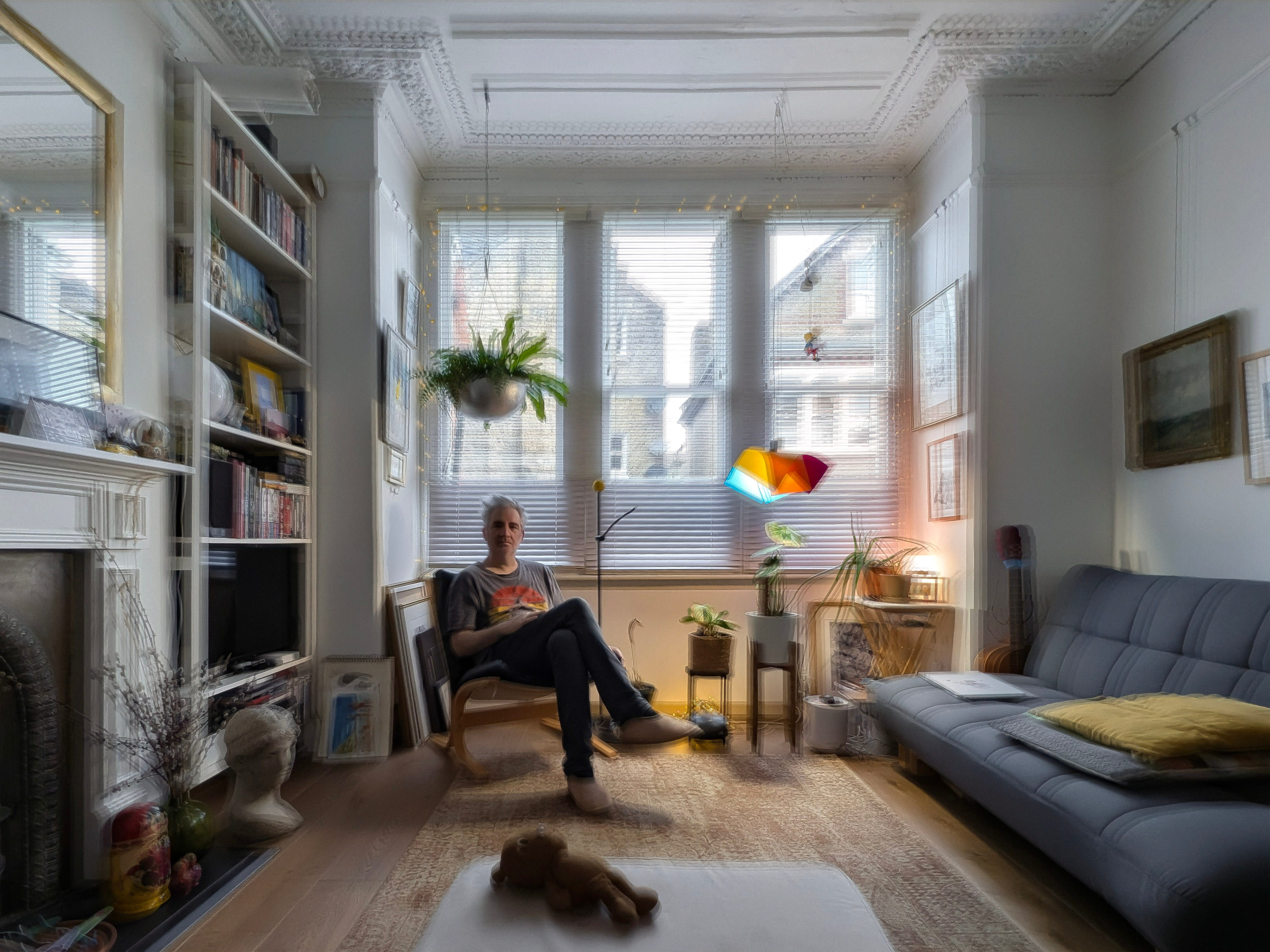
João Diogo Ferreira
ABOUT
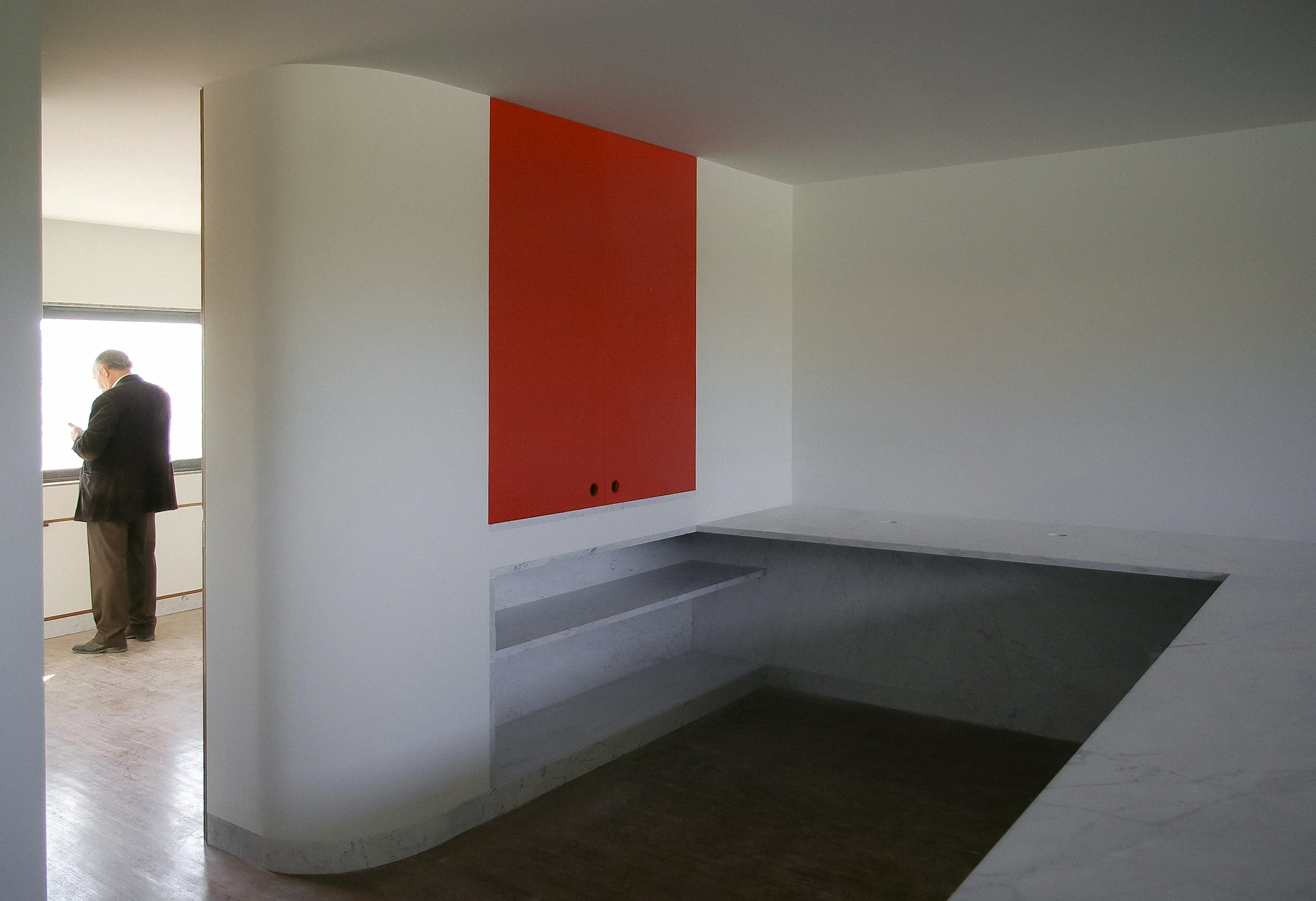
Shortly after winning the Europan "Almas de Fala" international competition for 120 terrace houses, João co-founded ZapGun Architects with Artur Fernandes, producing a body of work ranging from meticulous residential detailing to large-scale public infrastructure. The practice operated on rigorous research and site supervision until the Portuguese debt crisis put the larger schemes, like the Coimbra public housing, on indefinite hold. This was the springboard for new adventures abroad.
Before ZapGun, João had the privilege of working directly alongside Fernando Távora — an architectural luminary and influential educator — and Jorge Barros, sharing the frenetic environment of the Aleixo Offices populated also with the Pritzker Prize winners Álvaro Siza and Eduardo Souto de Moura.
In 2013, upon moving to London, he applied this deep experience to the high-stakes world of UK architecture, delivering complex residential and commercial projects for practices including Timothy Hatton Architects and Velorose. It was Velorose that opened the door to the local industry, where he led the renovation of the One Charterhouse Square address, on the edge of the City.
This was followed by a series of successful high-end prime residential and gallery projects with Tim Hatton in Mayfair, involving collaborations with Laplace and Axel Vervoordt. This ten-year relationship is perhaps best highlighted by the detailed work found in every corner of The Foundry, the building Tim renovated to house his own offices.
João’s return to independent activity was initiated during the quiet of the Covid pandemic with the refurbishment and extension of his family home in London. It has since expanded into a series of exciting ongoing projects in London and Cantanhede (his hometown).
This variety of work has allowed him to build a distinct 'black book' of relationships and friendships, ranging from master stonemason James Elliott and Enzo Metalworks in NY, to automation and lighting specialists such as Ideaworks, CSS, and leading Lighting Designers such as LDI. It includes the craftsmanship of Jack Badger, various premium tadelakt and polished plaster installers like Decor Tadelakt or Hare & Humphreys, Chimney-piece restorers Melluish & Davis, and trusted contractors like the 800 Group.
Ultimately, João navigates the dry mechanics of contracts and technical detailing with precision. He masters the contractual complexities to protect the artistic intent, which is the part that actually brings him joy.
When not practicing architecture or navigating family life, João can be found gardening, painting, reading, or watching West Ham and Sporting matches.
WORKS AND COLLABORATIONS
This is a curated, chronological collection of structures and ideas I have built or participated. They were built by people who mostly still exist, for clients who requested them.
London & International (2013–Present)
2024 to 2025 | Flagship Art Gallery & Apartments, Mayfair, London. I was the Project Architect leading specialist packages for a Grade II Listed building, collaborating with THA, Laplace, and Artfarm.
2024–2025 | Landscape Delivery, Mayfair, London. I acted as Construction Manager for the direct execution of sub-tropical, English, and climate-resilient gardens in collaboration with Archiplants and THA.
2021–2025 | Super-Prime Private Dwelling, Mayfair, London. I served as Project Leader for the comprehensive refurbishment, extension, and basement of a significant heritage property with THA.
2019–2023 | Architect's Own Family Home, South London. I acted as both Client and Architect for the full-scope extension and refurbishment of a Victorian ground floor flat and garden.
2018–2021 | Grade II Listed Residence, Mayfair, London. I was the Project Architect for a high-specification refurbishment and extension, collaborating with THA and Axel Vervoordt.
2018 | Luxury Residential Scheme, The Bromptons, Chelsea, London. I developed the full construction package with THA.
2016–2019 | The Foundry, I managed key architectural phases for Timothy Hatton Architects' new studio construction.
2016 | Private Palace Modification, I developed the construction package in collaboration with THA and Axel Vervoordt.
2014 | JW3 Sukkah, Finchley Road, London. I designed and managed a temporary pop-up installation structure with Velorose.
2014–2015 | One Charterhouse Square, Clerkenwell, London. I was the Project Lead for the refurbishment of a historic building into luxury apartments with Velorose.
ZapGun Architects, Independent Studio (2001–2013)
Fuelled by the Europan win and the Coimbra Council contract, Artur and I established our independent studio. We set up shop on the charismatic Rua de São João, later expanding uphill to São Lázaro. We experimented constantly, pushing back against a local architecture scene heavily focused on the traditional Oporto School. During this period, we also expanded into the performing arts, assisting set designer Marta Silva on numerous theatre and opera productions for venues including the Coliseu do Porto, Teatro de São Luiz, and A Comuna in Lisbon.
ZapGun has inhabited the web since 1998. We were pioneers in the digital presence of Portuguese architecture, evolving from early blog formats to interactive Flash experiments with Nuno Baldaia, wrapped in the graphic identity of Renato Seixas. By the turn of the millennium, we became early adopters of the PmWiki system. We utilised this technology to create a dynamic platform, pioneering Wiki engines long before they became an industry standard. Rejecting static brochure sites, we designed our digital home with the same experimental rigour we applied to our built projects. The site remains online as a digital artefact. Frozen since 2011 and built on obsolete code, most of its original functions have succumbed to digital entropy.
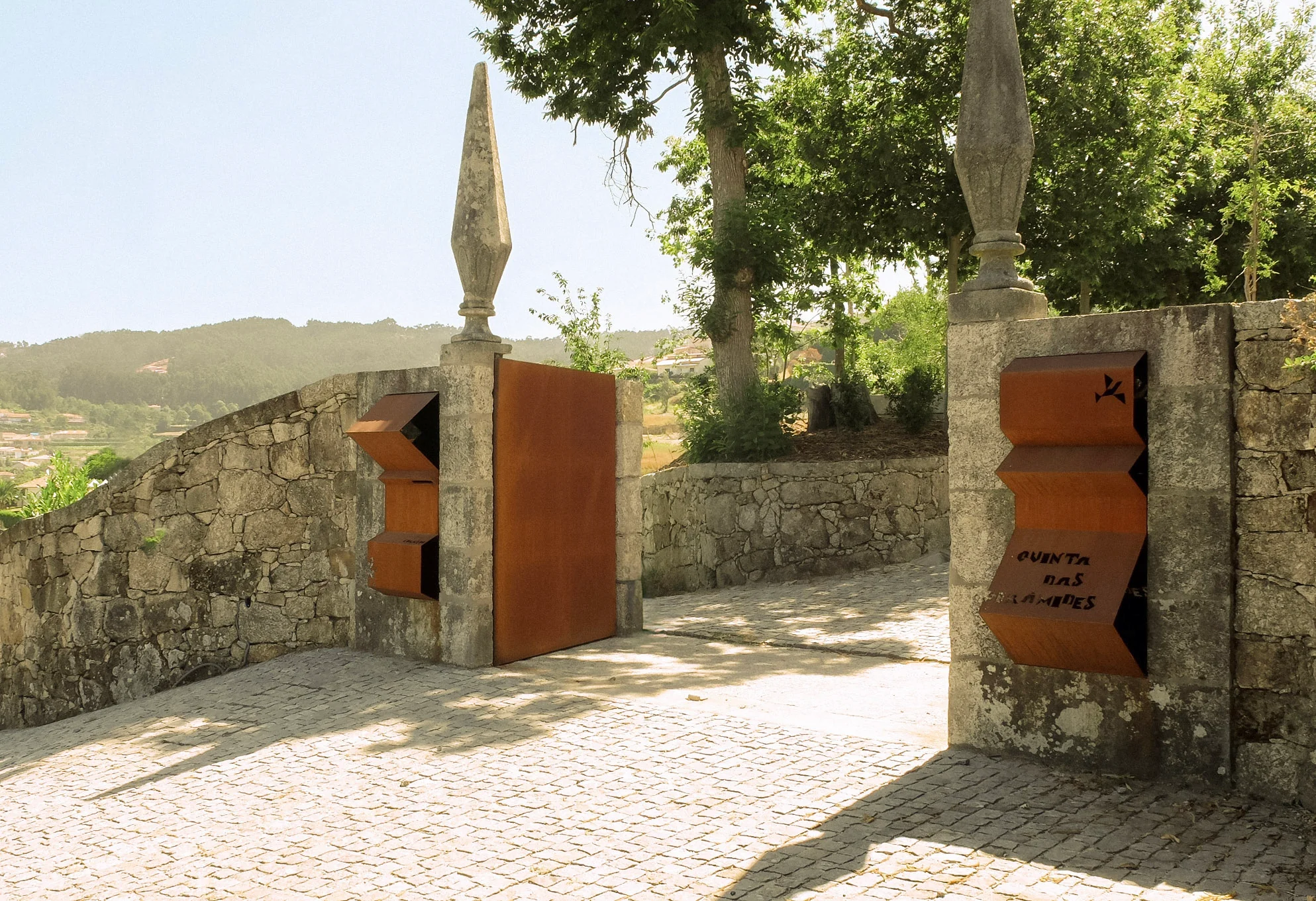
2011–2014 | Quinta das Pirâmides, Telhado. Ecotourism Hotel and Landscape Strategy. ZapGun’s final major commission involved moulding ancient farmland into a habitable retreat while strictly preserving its agricultural character. It was a deeply practical experience organising access, sports facilities, and planting. This project beautifully marked my transition to the UK. The client finalized the build with minimal supervision, and it is now fully operational.
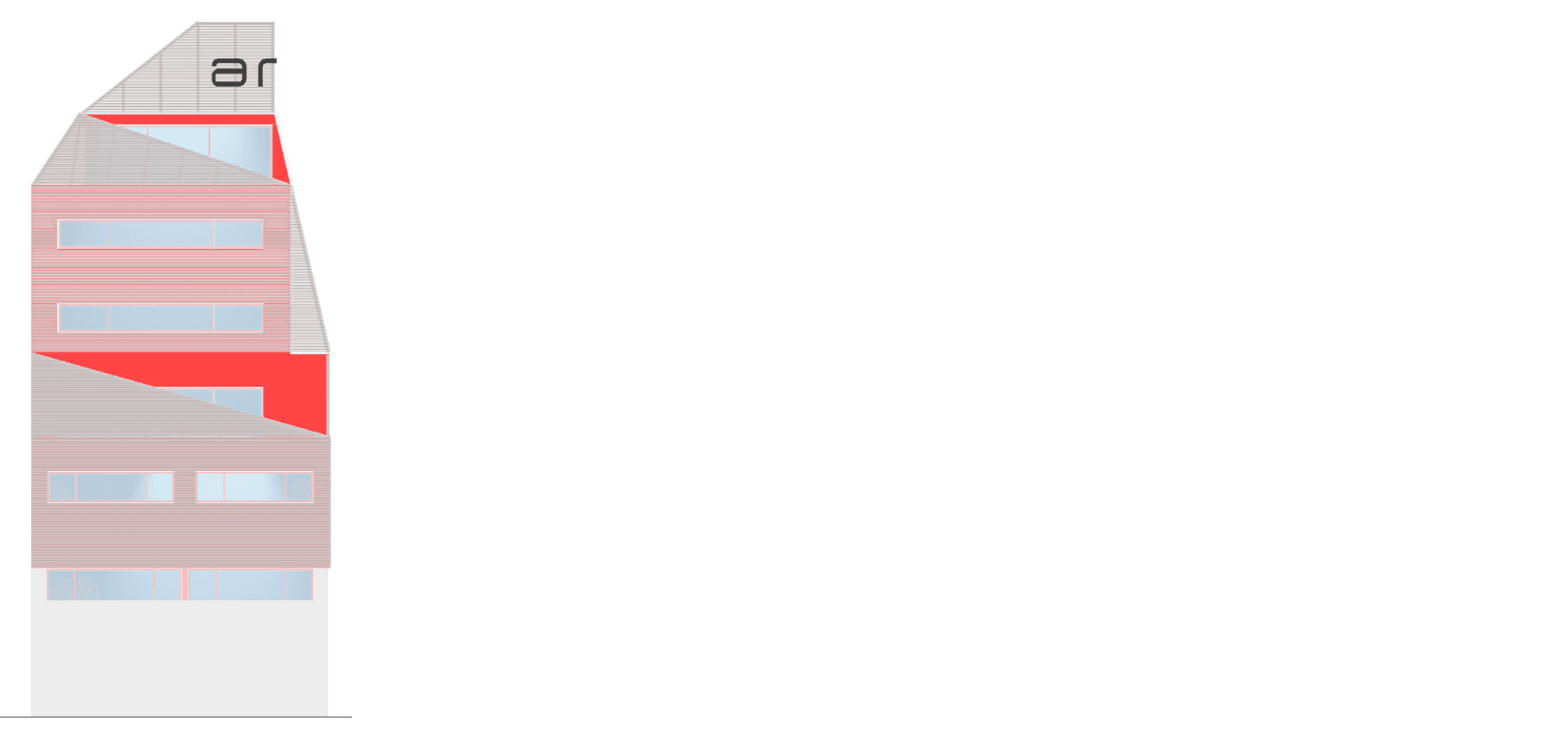
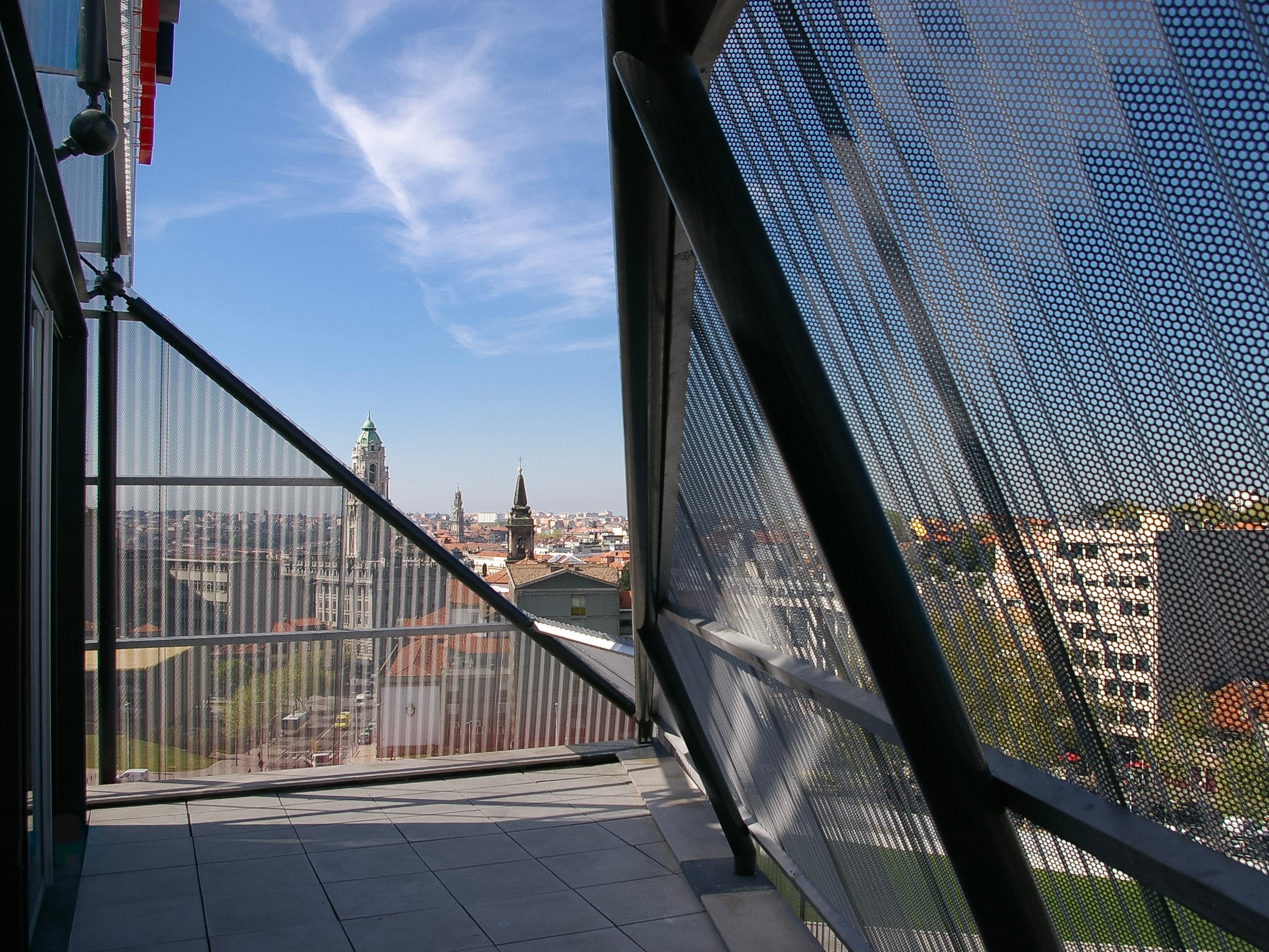
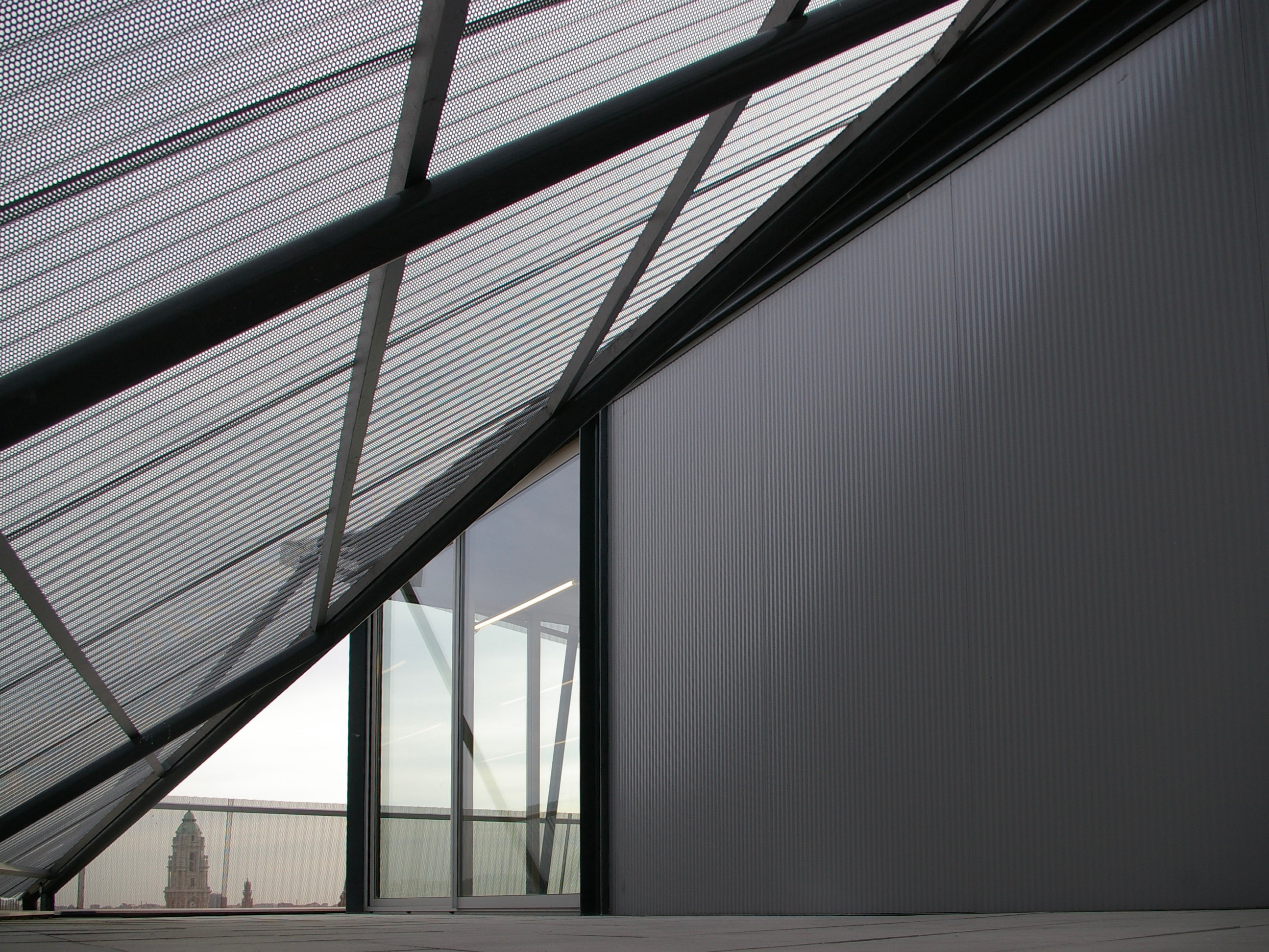
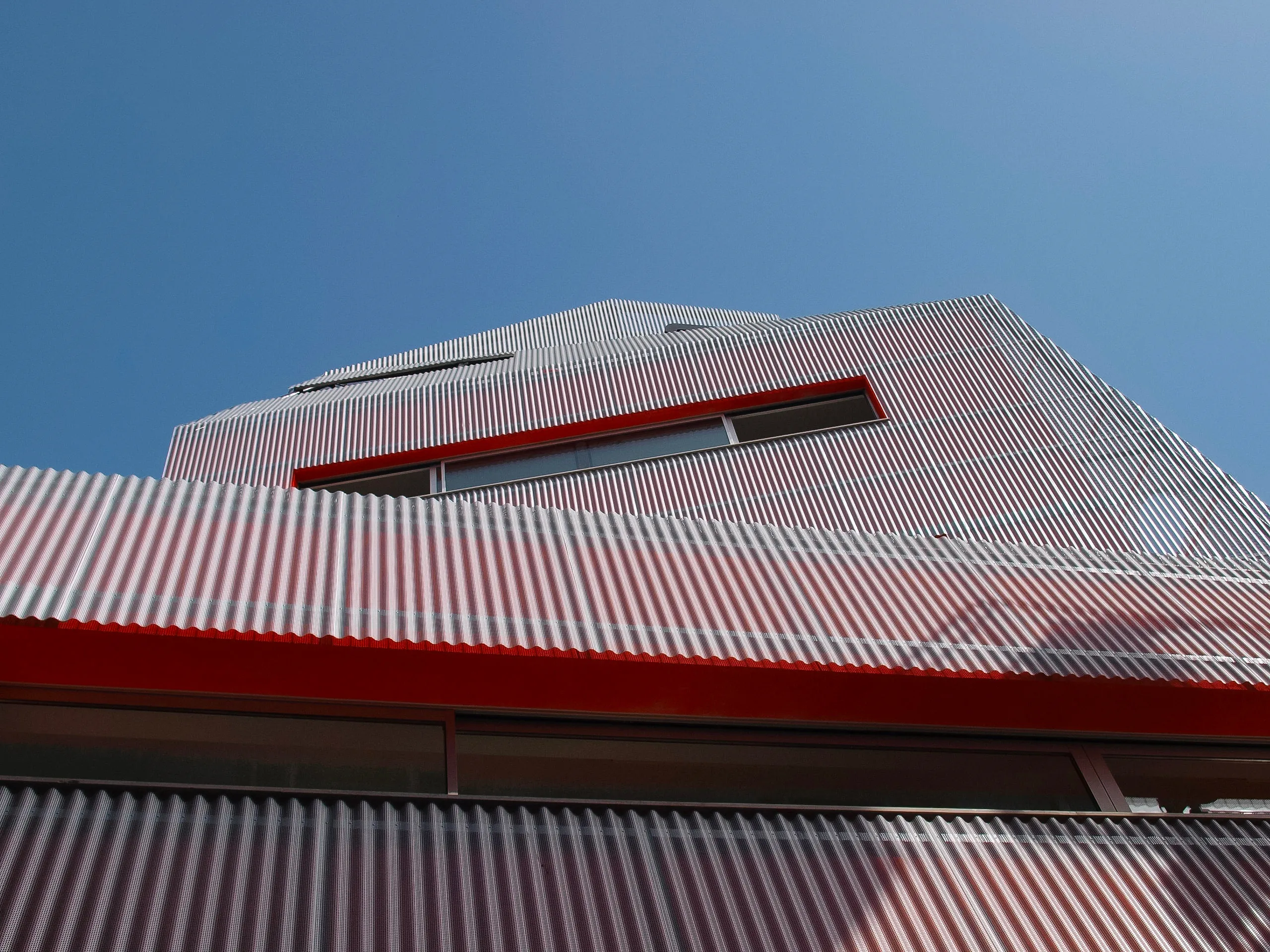
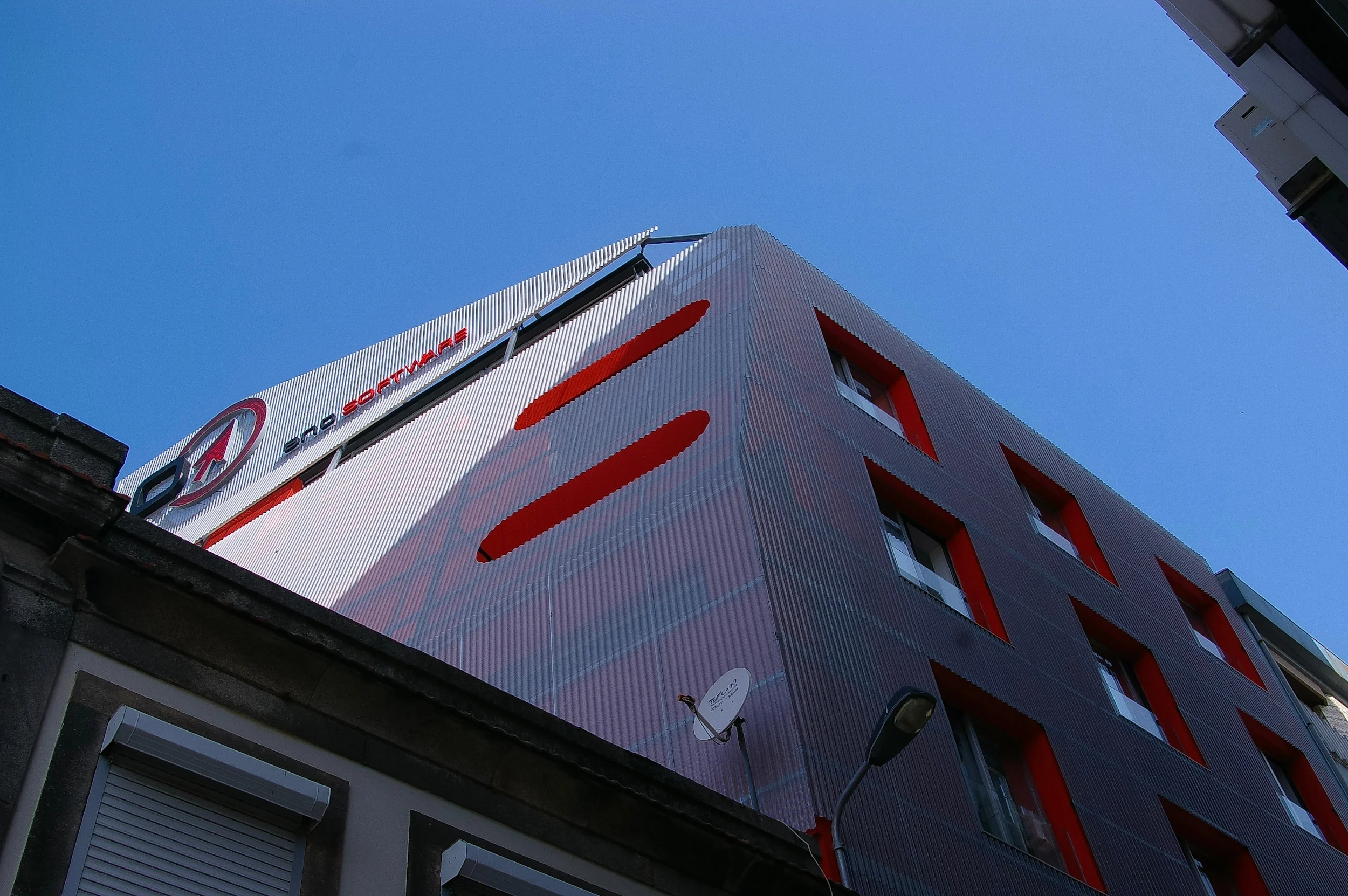
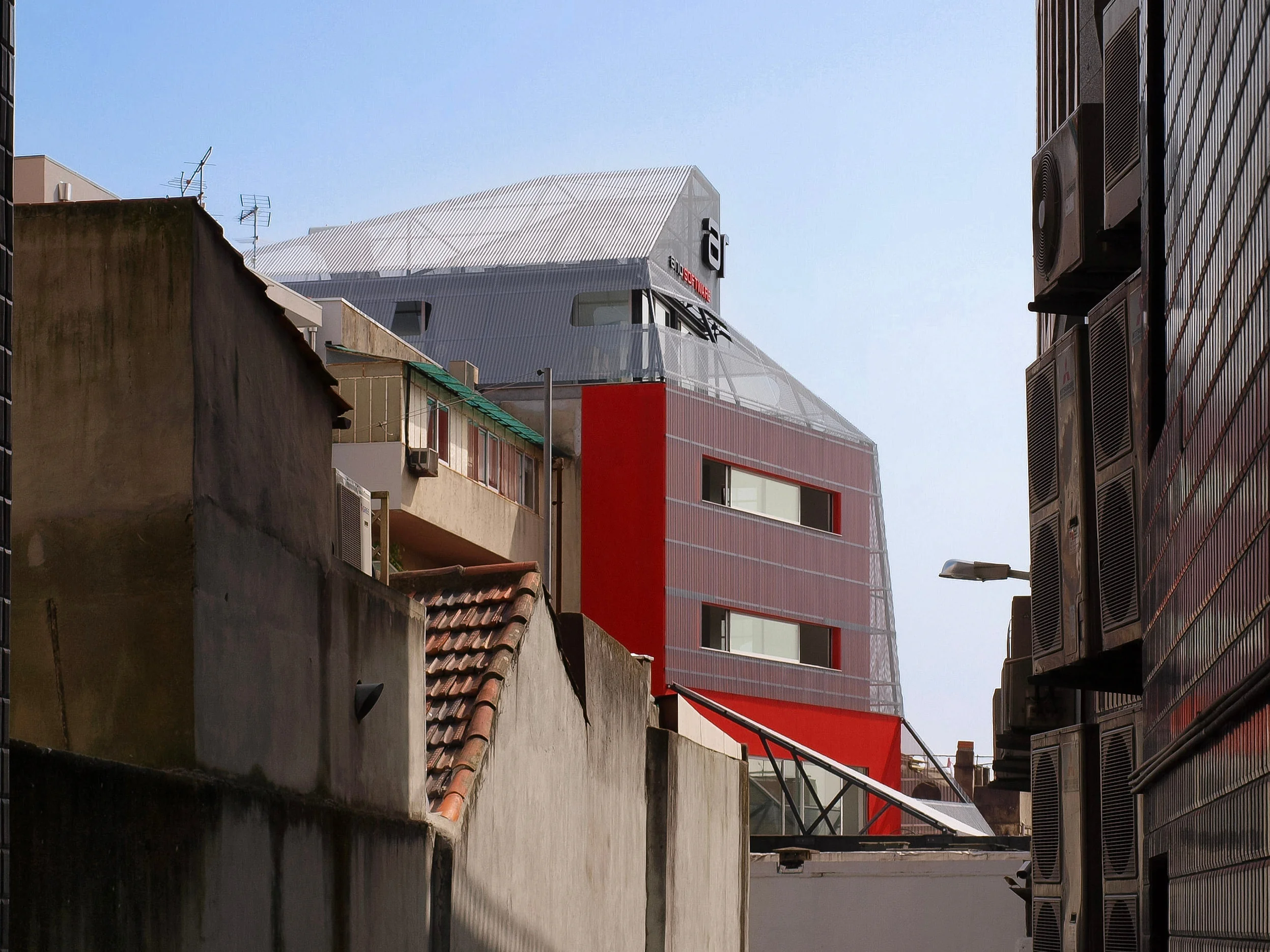
2009–2011 | ANO Software Head Office, This project presented a distinct challenge: making an ordinary 1980s building visible. We stripped the roof to install a penthouse office with an exceptional view. We then encapsulated the entire original envelope in a new metal skin. Using a translucent metal mesh stretched over a steel sub-structure, we leveraged the existing edges to generate a new prismatic form. This diamond shape was derived from the inside out. While the external transformation was the public statement, the internal reorganization remains the quiet triumph of the project.
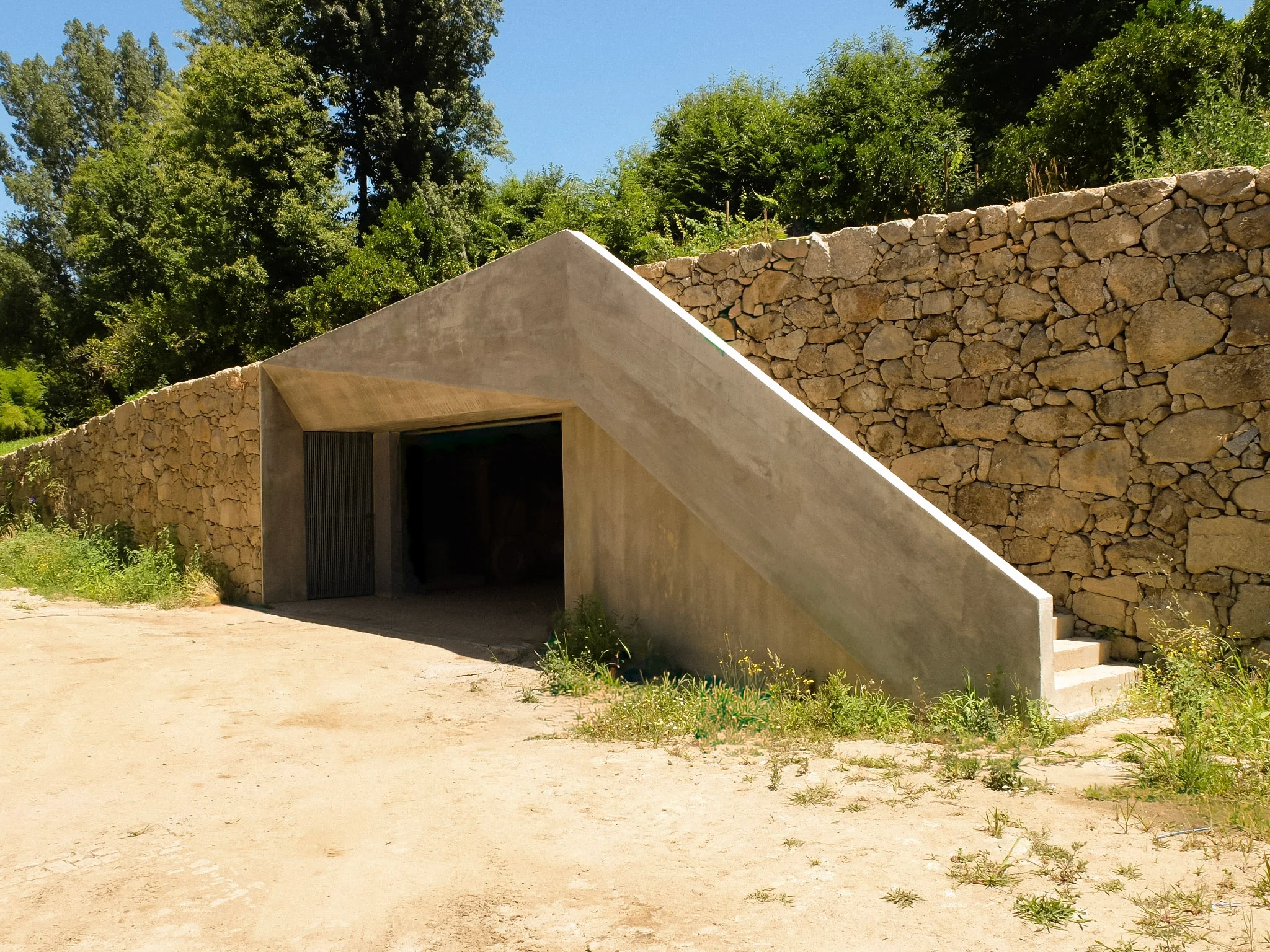
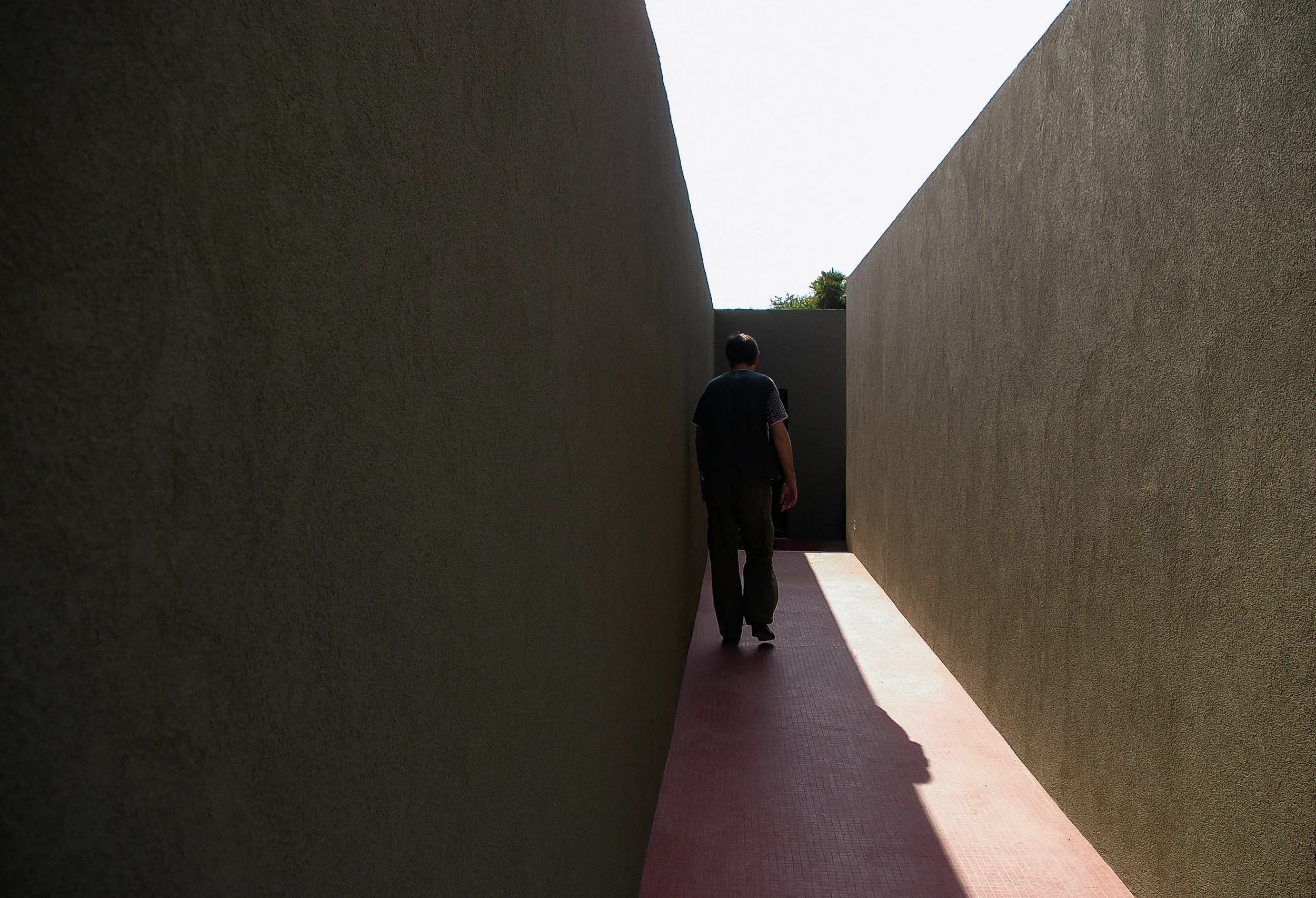
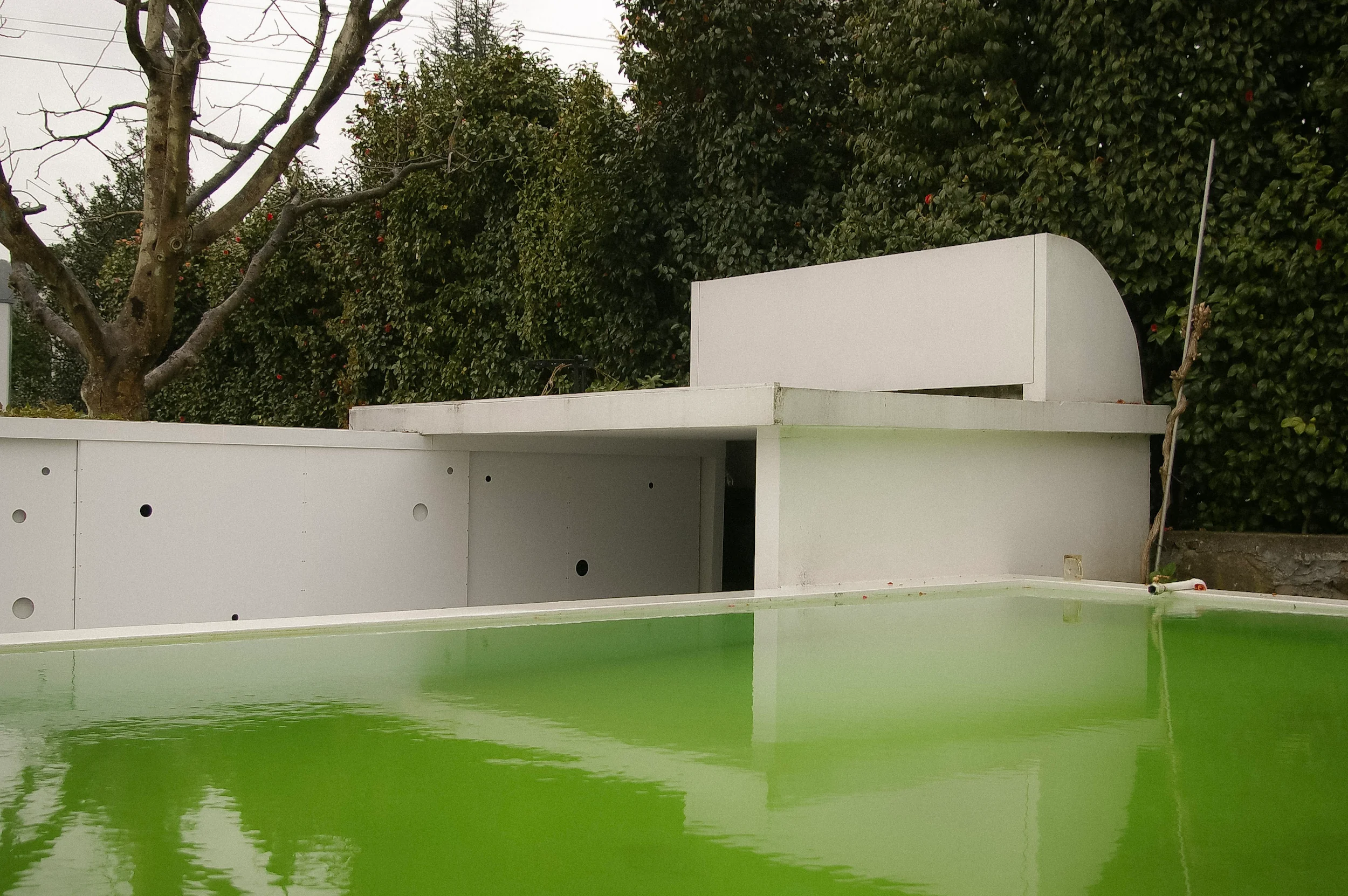
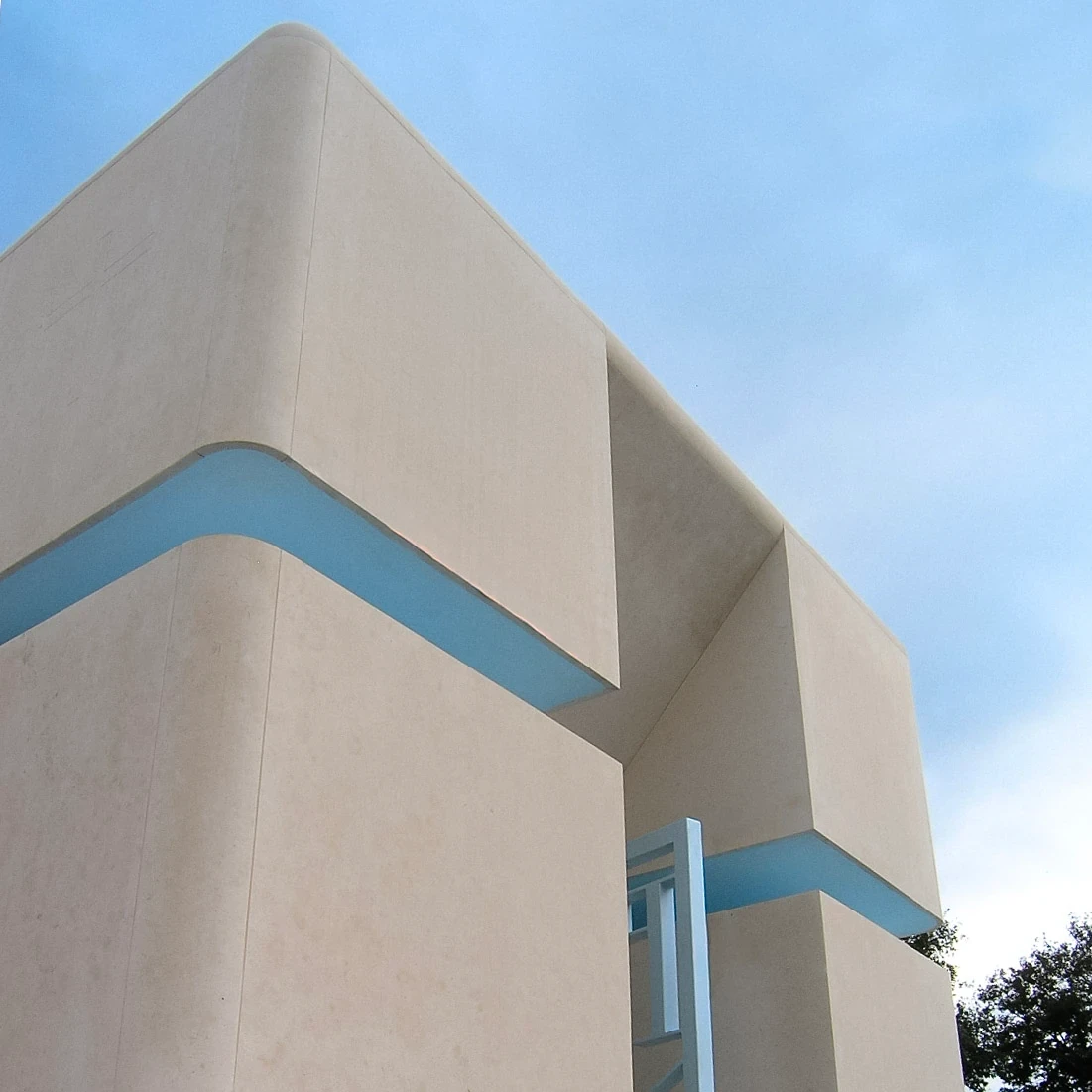
2008–2009 | Costa Ferreira's Family Mausoleum, Joane. This monolithic volume of concrete and Ataíja limestone hovers just a hand's breadth above the ground. Inside, a central courtyard holds a cypress tree as a symbol of endurance. Instead of traditional casted formwork openings, we core-drilled through a metre of solid wall to excavate light. Today, vegetation grows through these perforations to integrate the building with nature.
2008 | Almas de Fala III, Coimbra. Public Housing, Community Hall and Nursery. This was a direct commission from the Council expanding the original masterplan. The design proposed a new mixed-use block comprising 48 flats and public amenities. It was a significant extension of the area's infrastructure before being placed on indefinite hold.
2007–2008 | Le Palais, Porto Historic Centre. This complete refurbishment of an early 20th-century landmark house served as a personal construction laboratory where I had direct involvement in the building tasks.
2006–2007 | Santos da Casa, This was the refurbishment of a Modernist housing block acquired by three architects for their own occupation. The project marked my first completed commission acting as my own client.
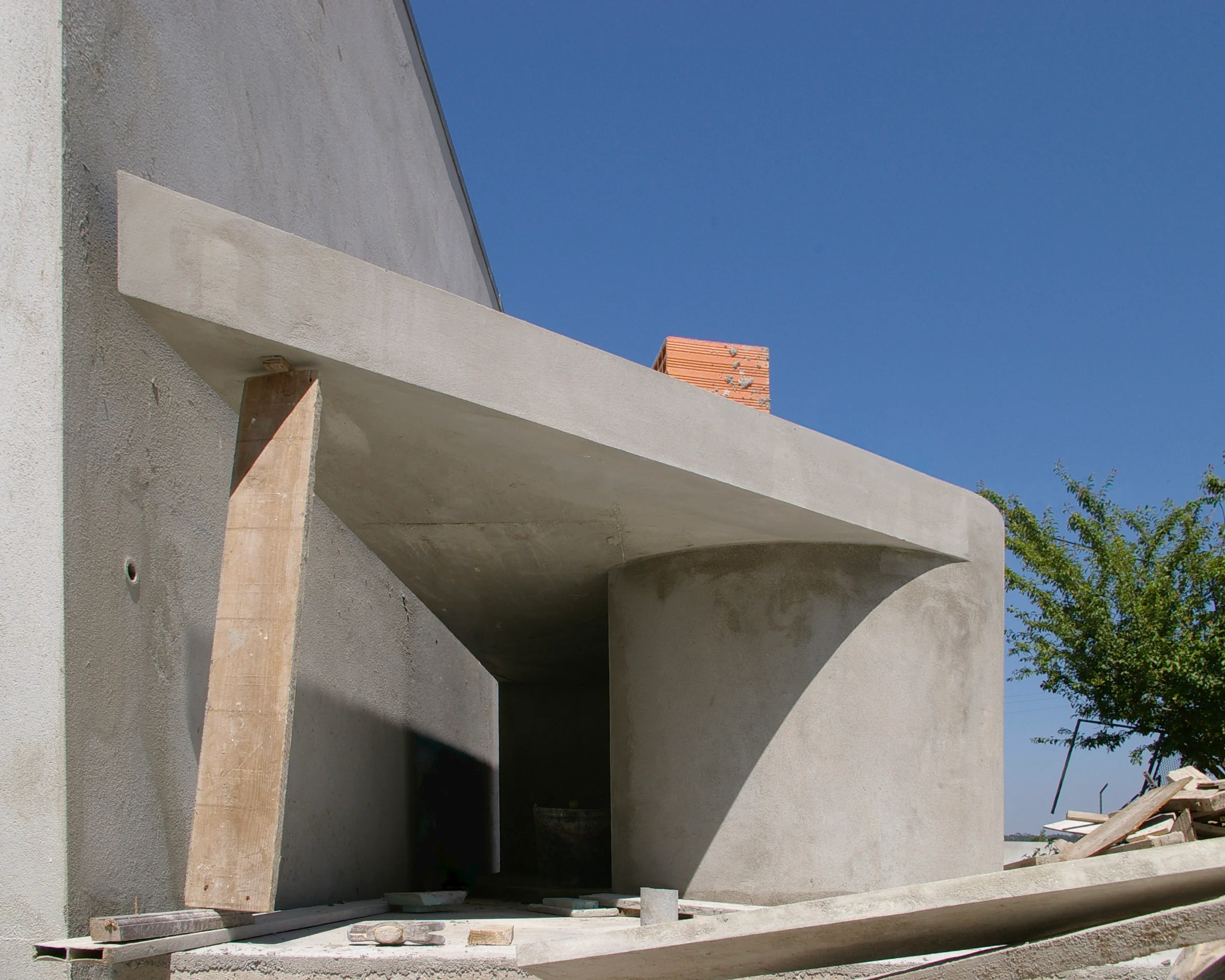
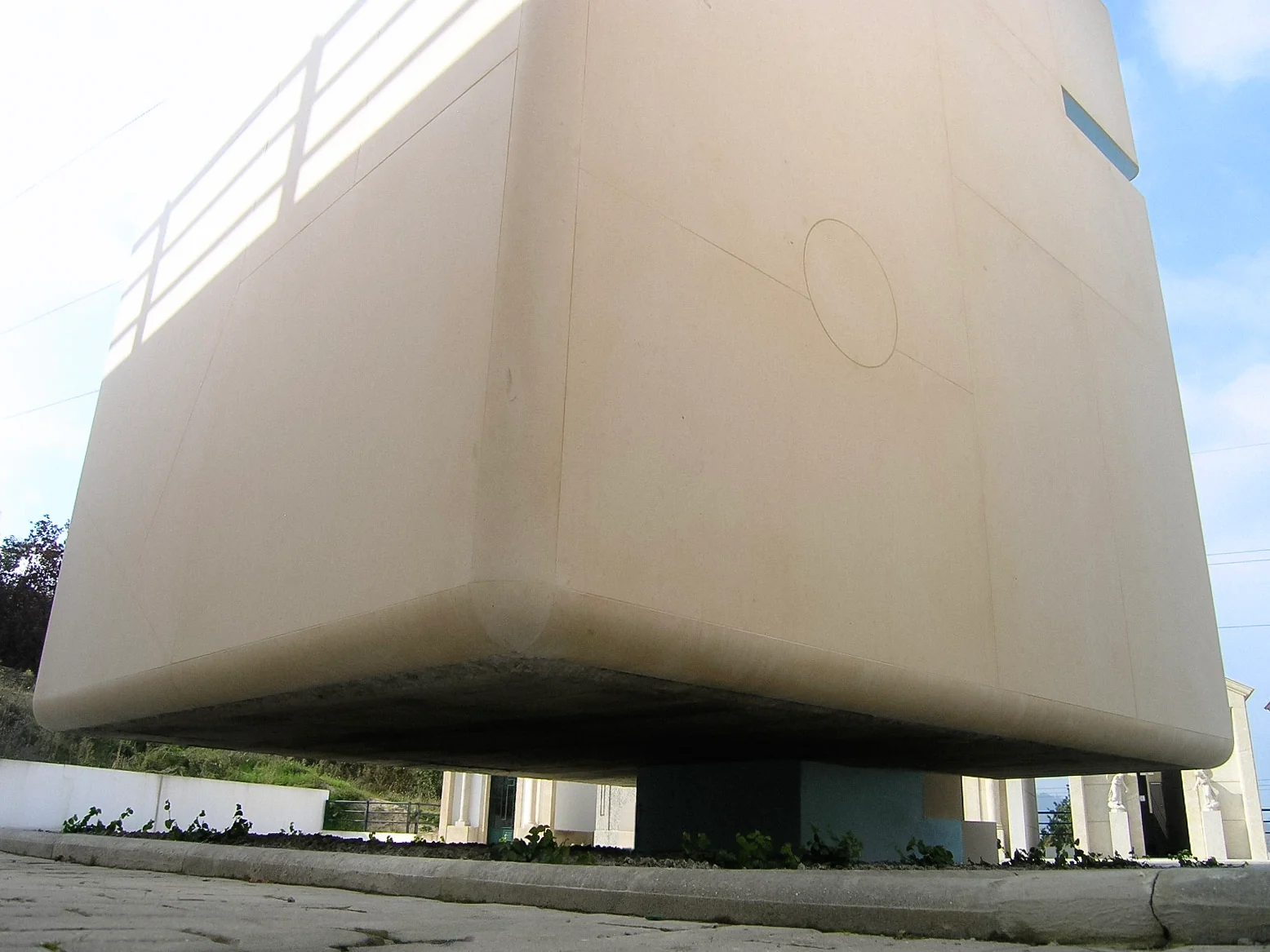
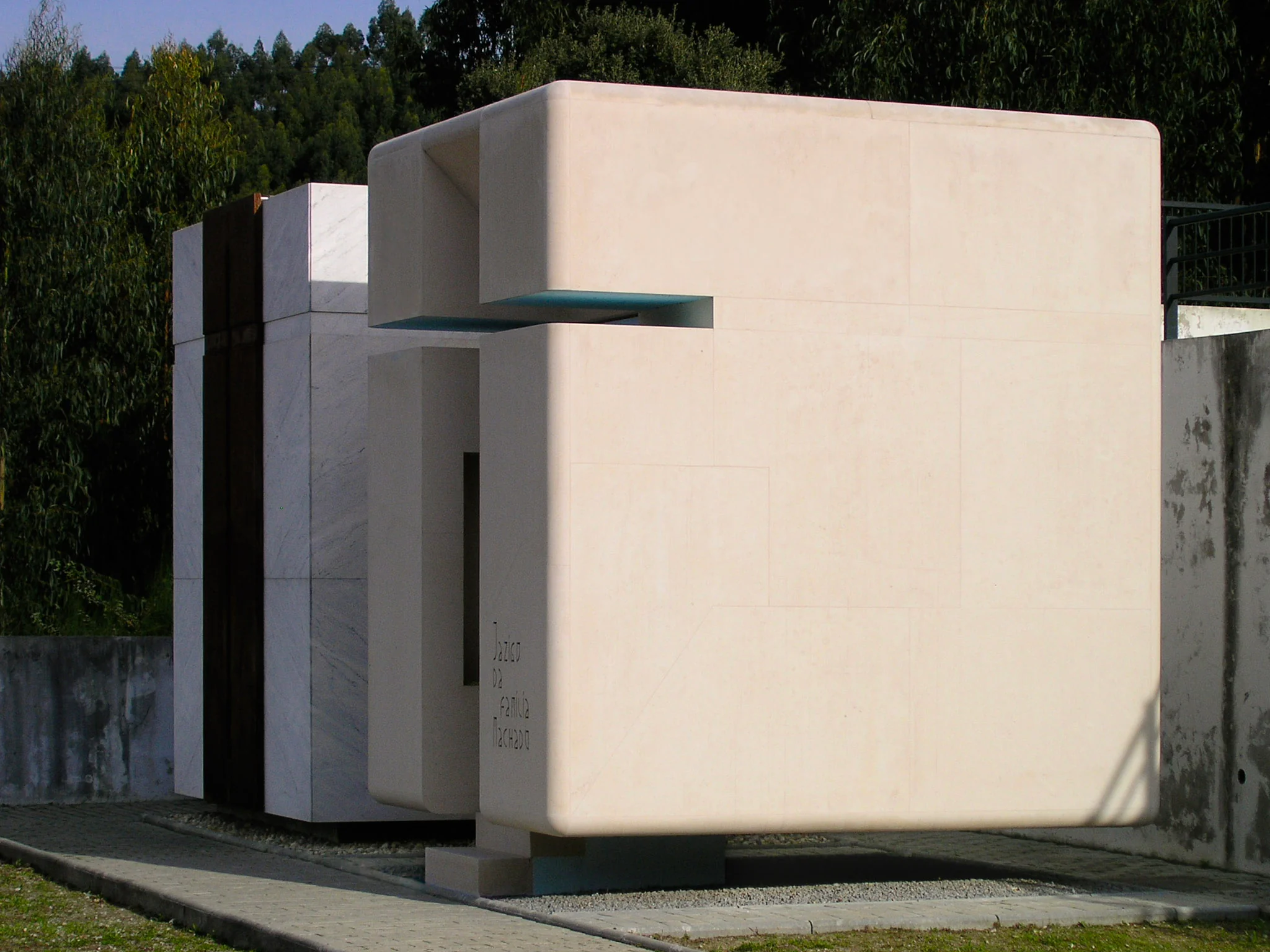
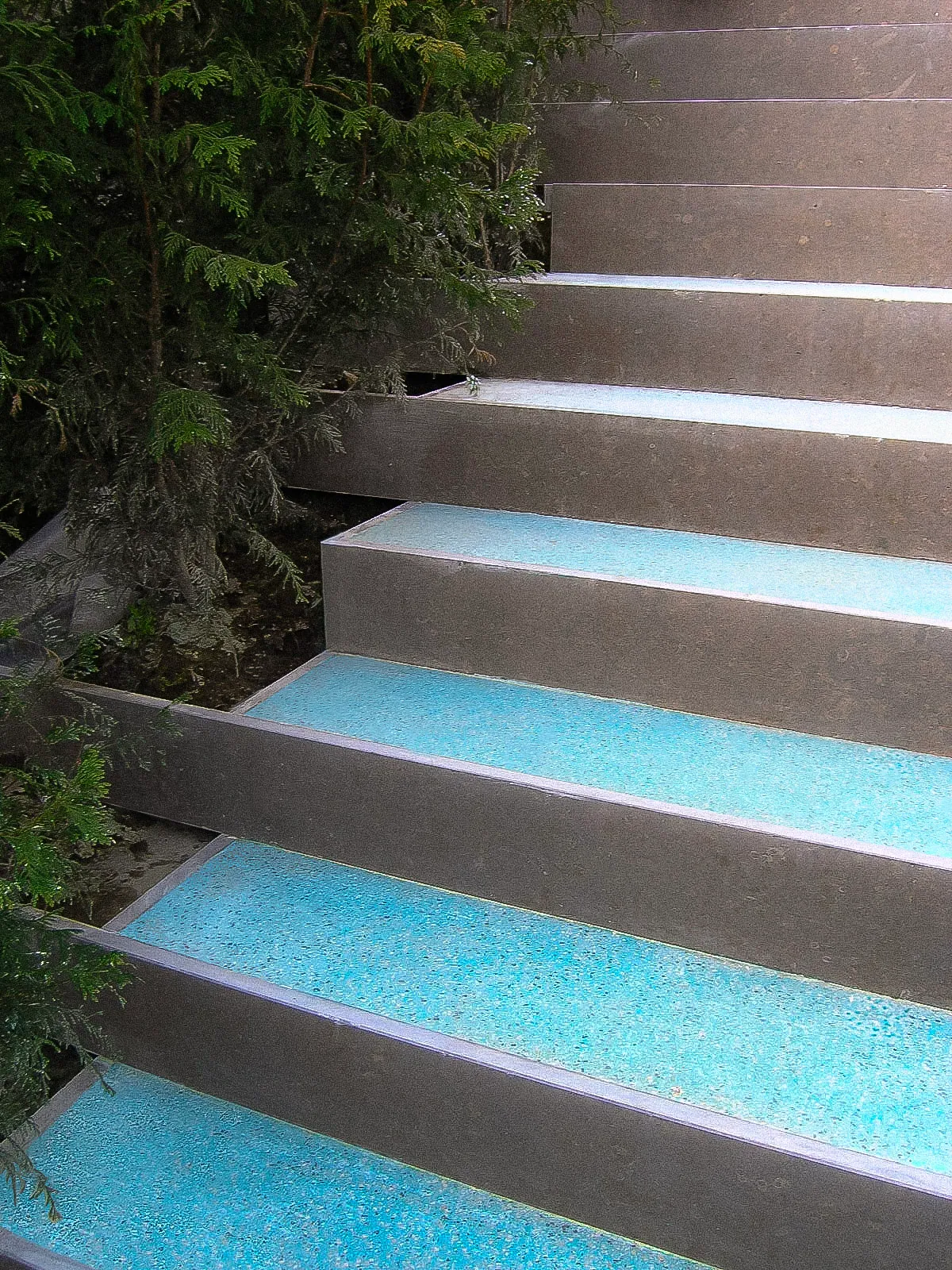
2004–2006 | Machado's Family Mausoleum, Serzedelo. This project began with a specific and emotive request. The family patriarch, facing terminal illness, expressed a deep aversion to being buried underground. He asked us to design a resting place where he could remain suspended above the earth. We responded with a monolith of rounded stone that appears to defy gravity. The entire volume is cantilevered from the access steps and hovers completely clear of the ground.
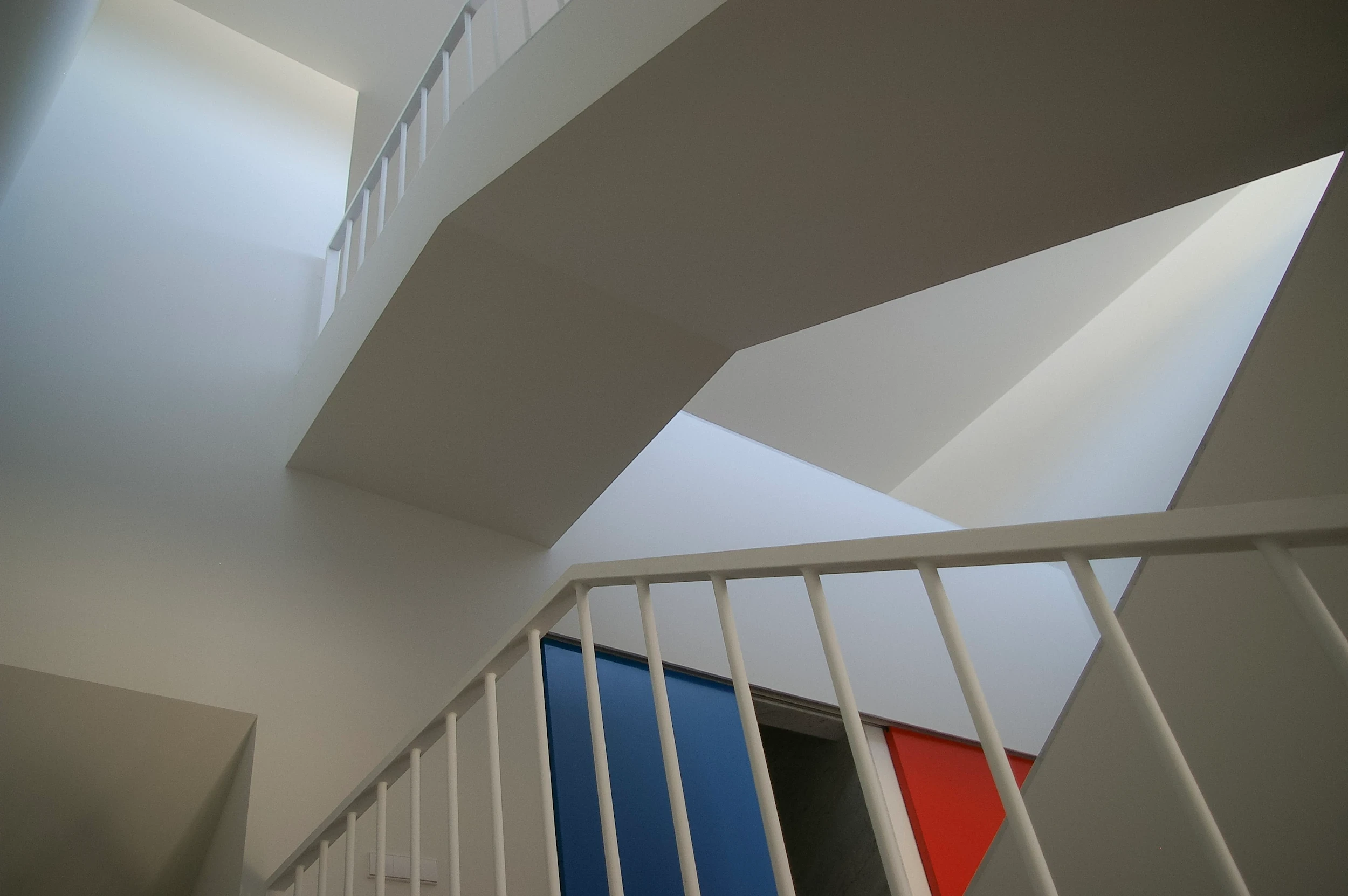
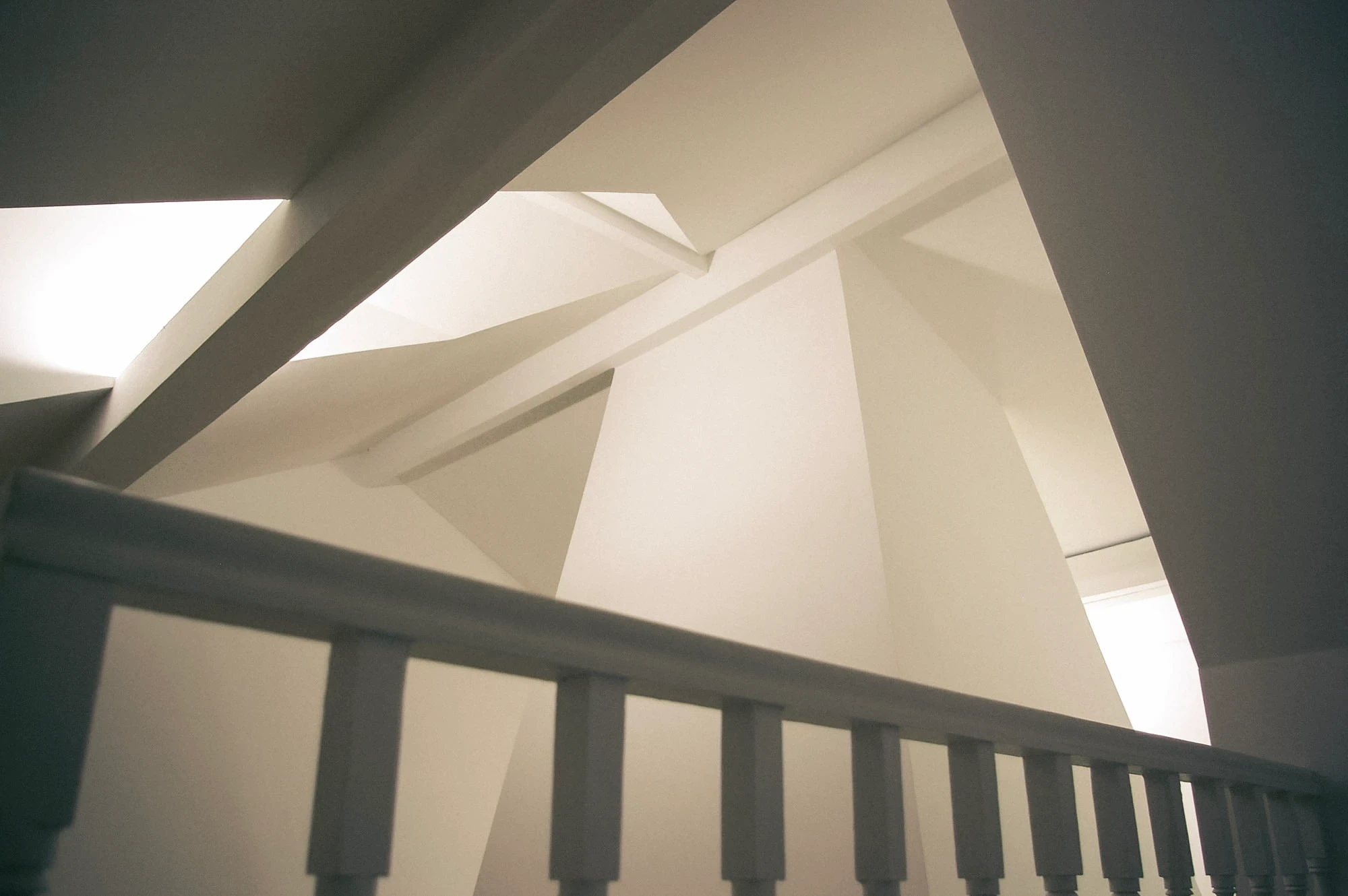
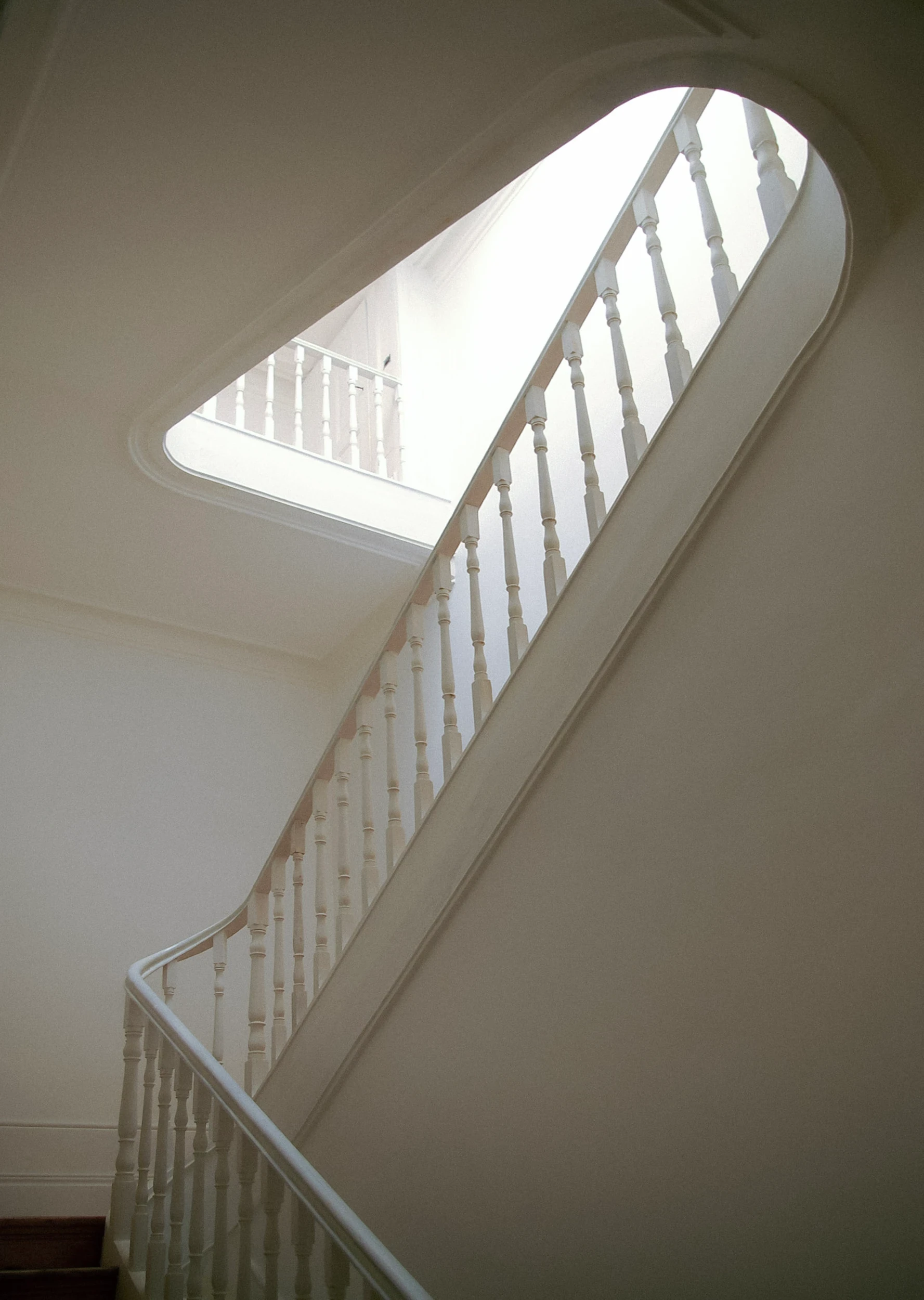
2004–2006 | Compact House III, Porto. Single Family Residence. This concludes the Compact House trilogy. The project required a strictly pragmatic approach to reconcile a tight plot with an ambitious brief of four bedrooms and parking for two vehicles. Consistent with its predecessors, the design revolves around a vertical void. A full-height central core is illuminated by a distinctive trapezoidal skylight that drives natural light deep into the plan.
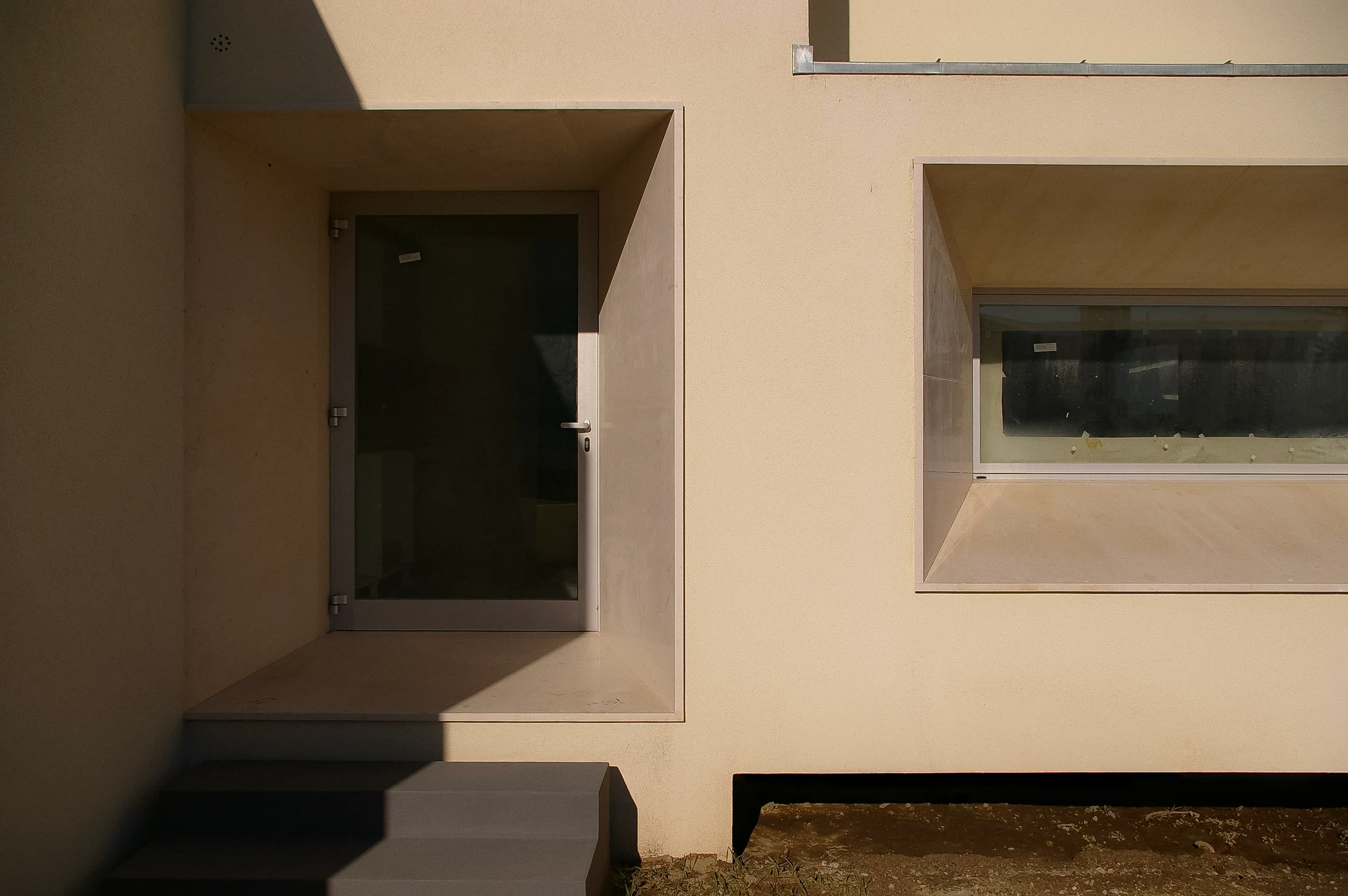
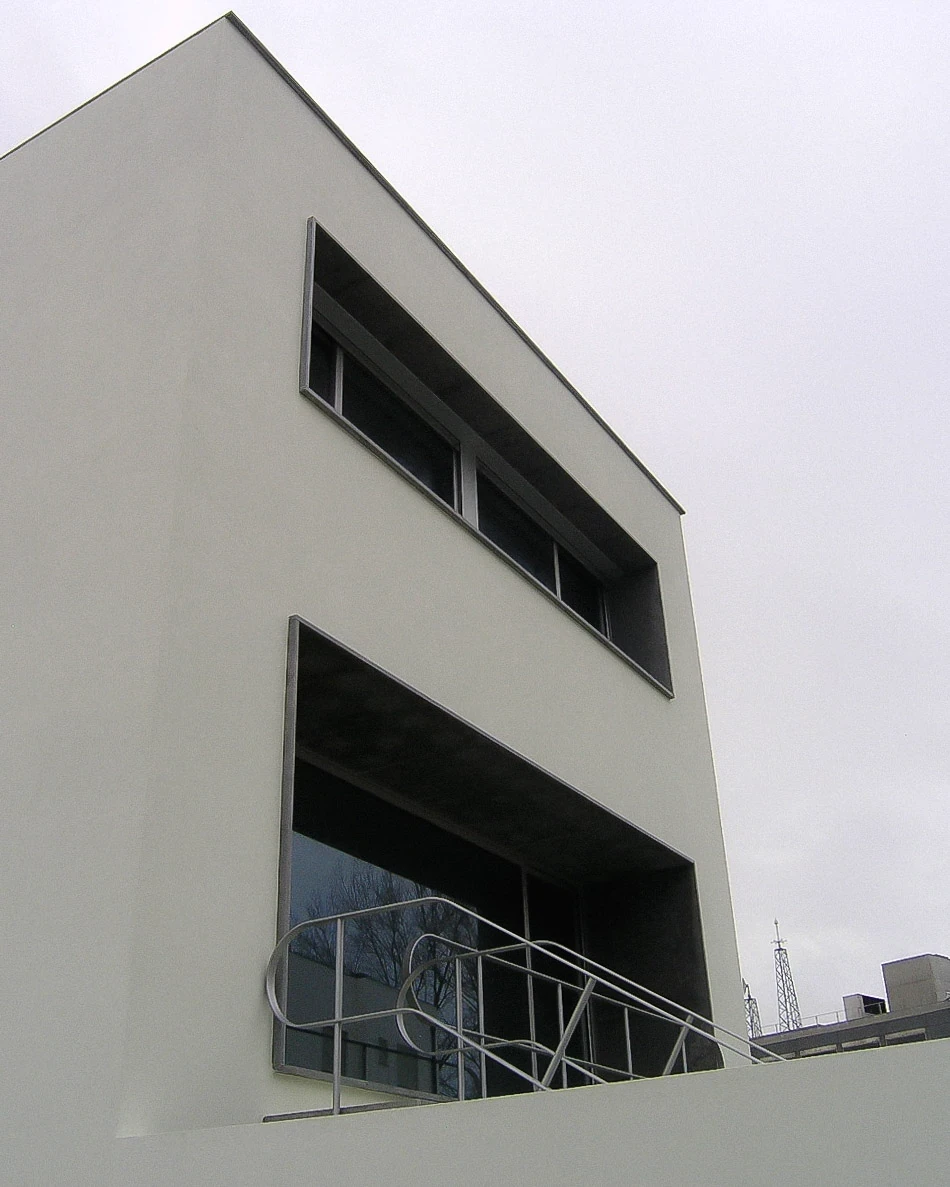
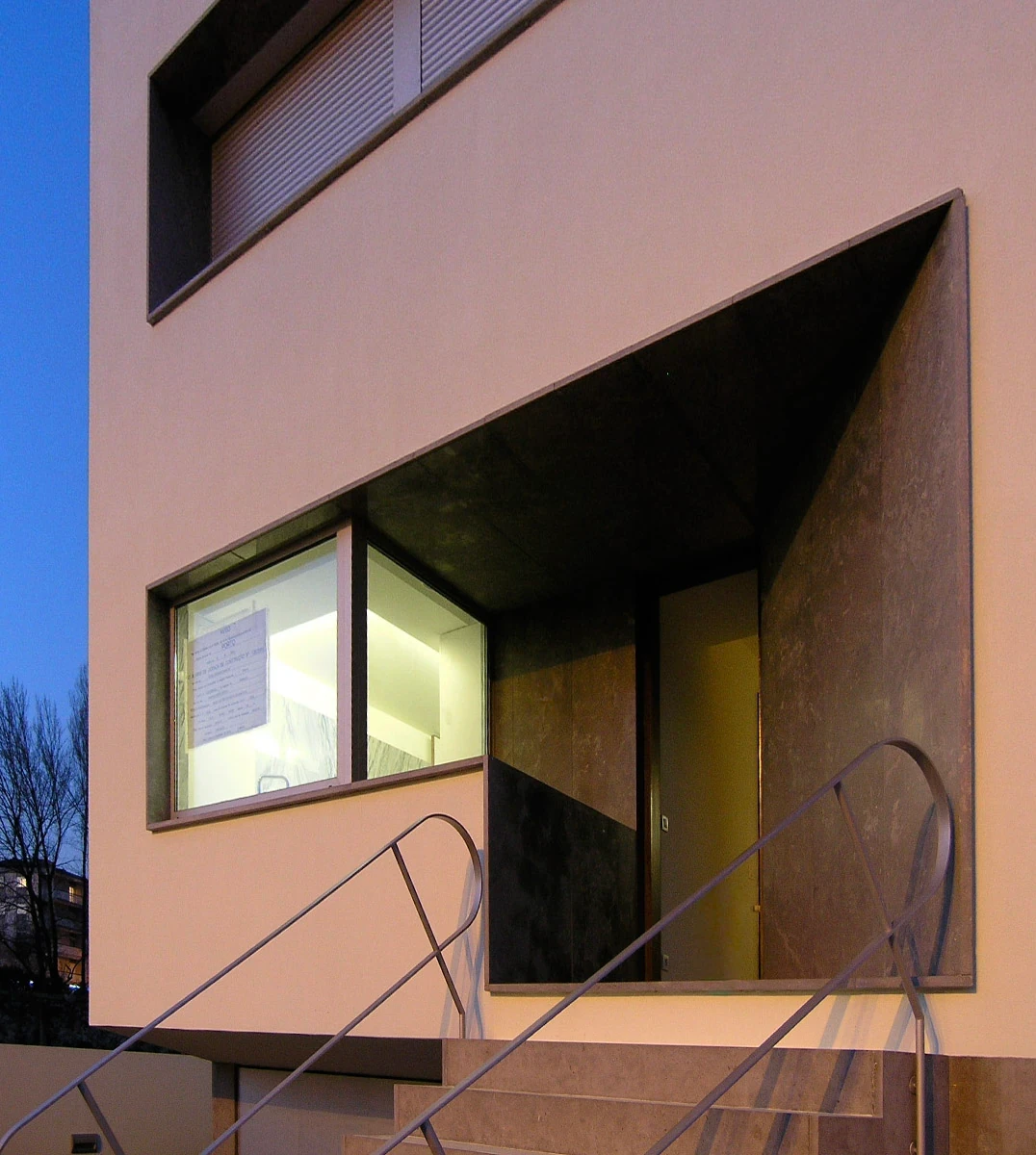
2003–2009 | Craft Shop House, Esposende. Residential and Commercial Conversion. Situated facing the Cávado Estuary and the Ofir Pine Forest, this project transformed a house and family-run shop specializing in artisanal cane and bamboo furniture. To preserve the family memory, we maintained the original roof and volume. We focused the intervention on the facades, where new projecting openings pop out distinctly from the old structure. We also designed a dog house and a chicken coop pro bono, perhaps the very first architect-designed chicken coop in the region.
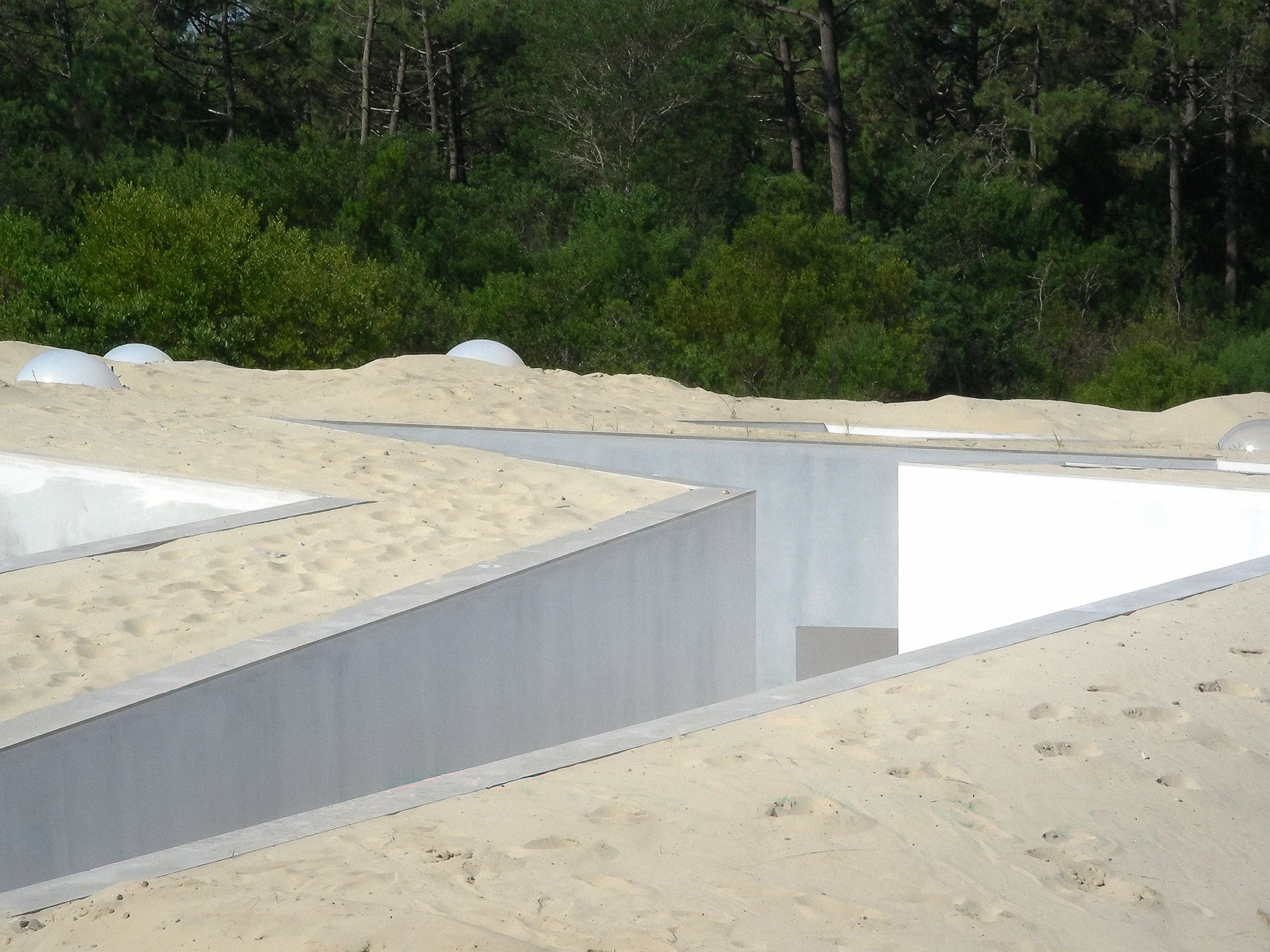
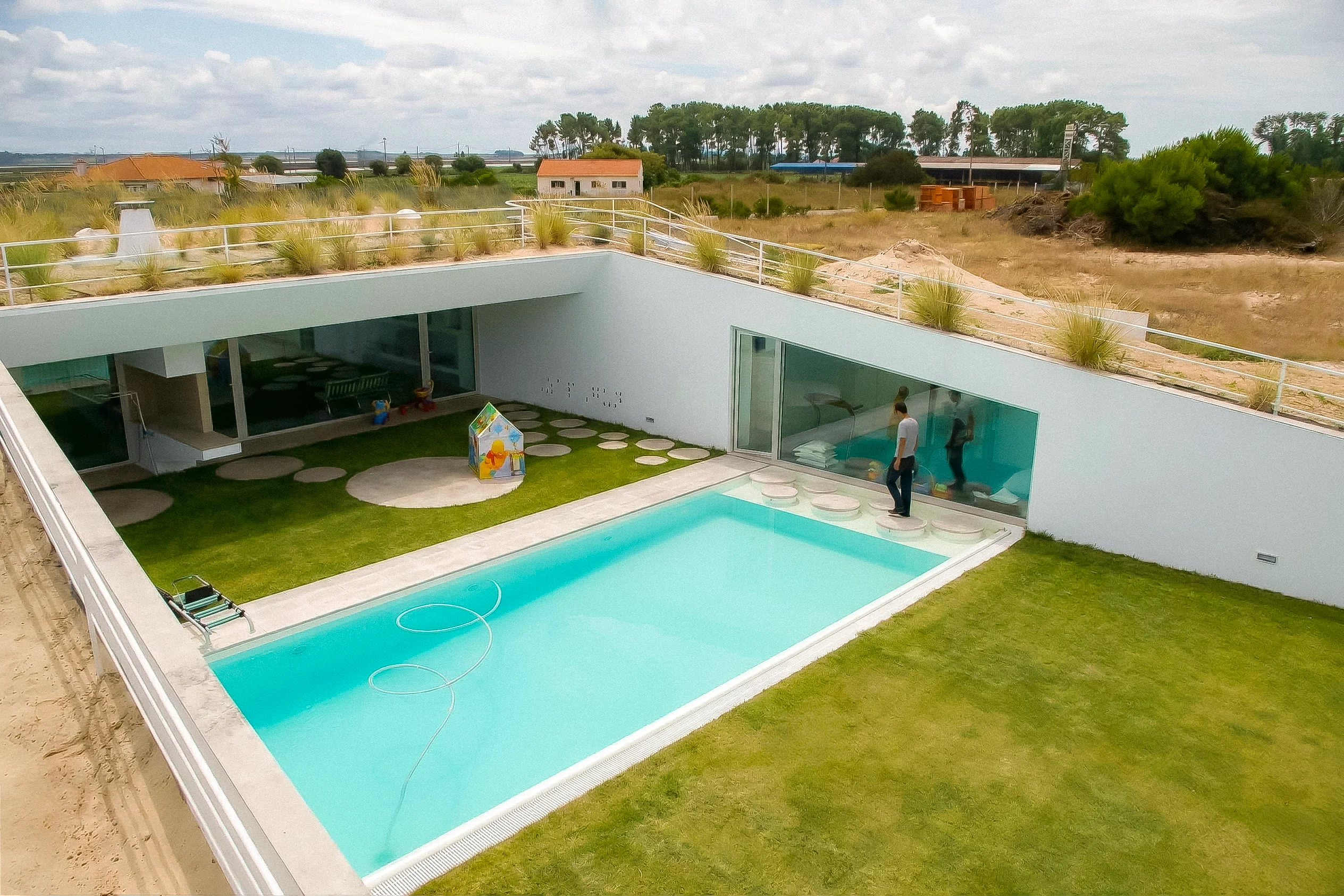
2003–2008 | Dune House, Torrão do Lameiro. Single Family Residence. Located in the wild landscape of Torrão do Lameiro, the house acts as an artificial dune camouflaged by native vegetation. Sculptural openings puncture the volume to carve out space for domestic life within the sand. Commissioned by a cousin and partner who are specialists in oceanography and aquaculture, the project was a true family collaboration inspired by their adventurous spirit.
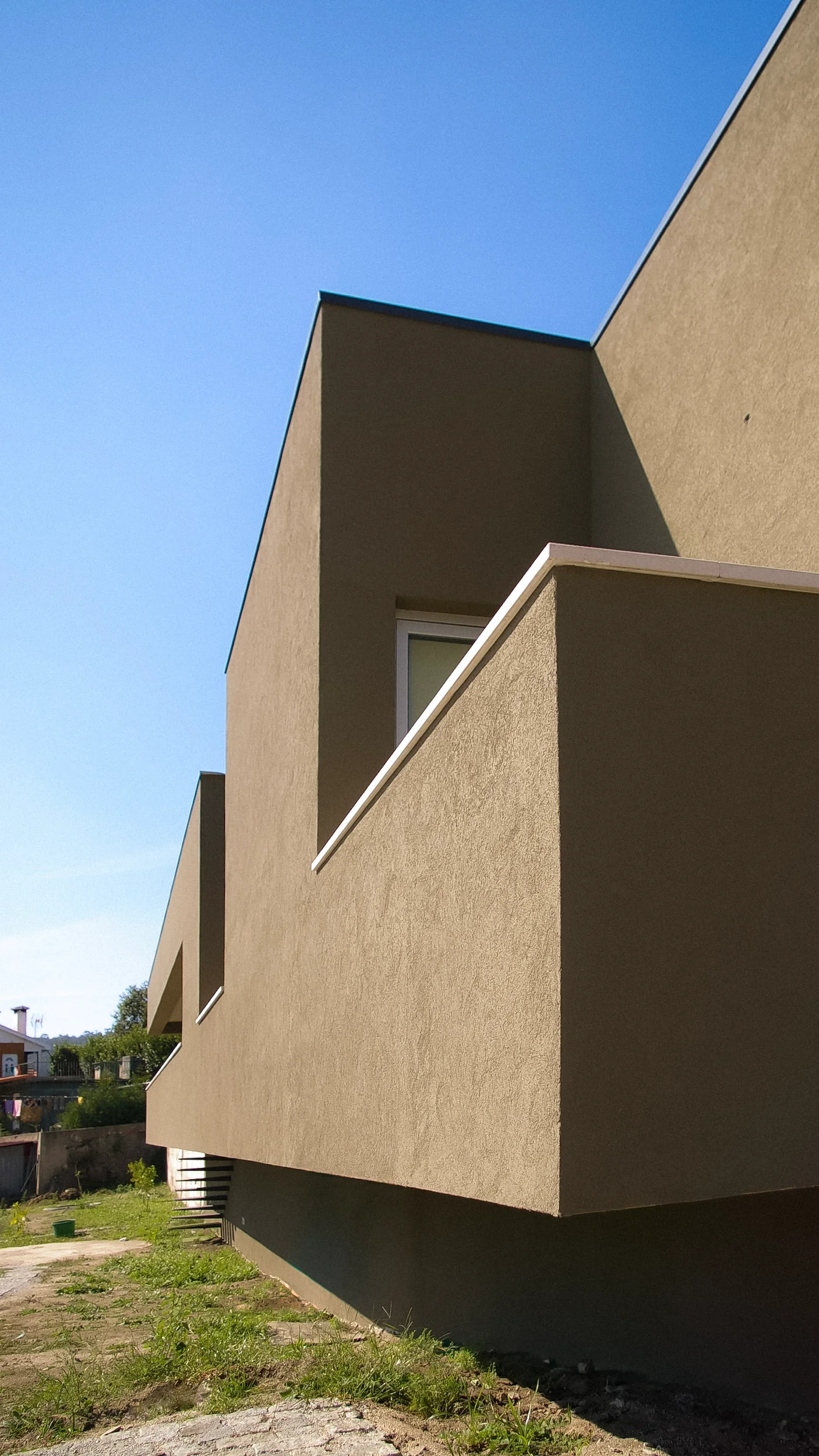
2003–2008 | Clone.aid House, Joane. Two False Semi-Detached Houses. Designed for Artur's cousins, these two houses engage in a game of mirrors. We call them false semi-detached because we subverted the standard typology to solve a family problem of equity. Challenging the unique topography, we established two distinct axes of symmetry. The first faces the street to organise the garages in a conventional urban rhythm. The second axis pivots downhill to orient the living spaces toward the landscape. This geometric sleight-of-hand ensures both units enjoy identical solar exposure, expansive views, and completely independent gardens.
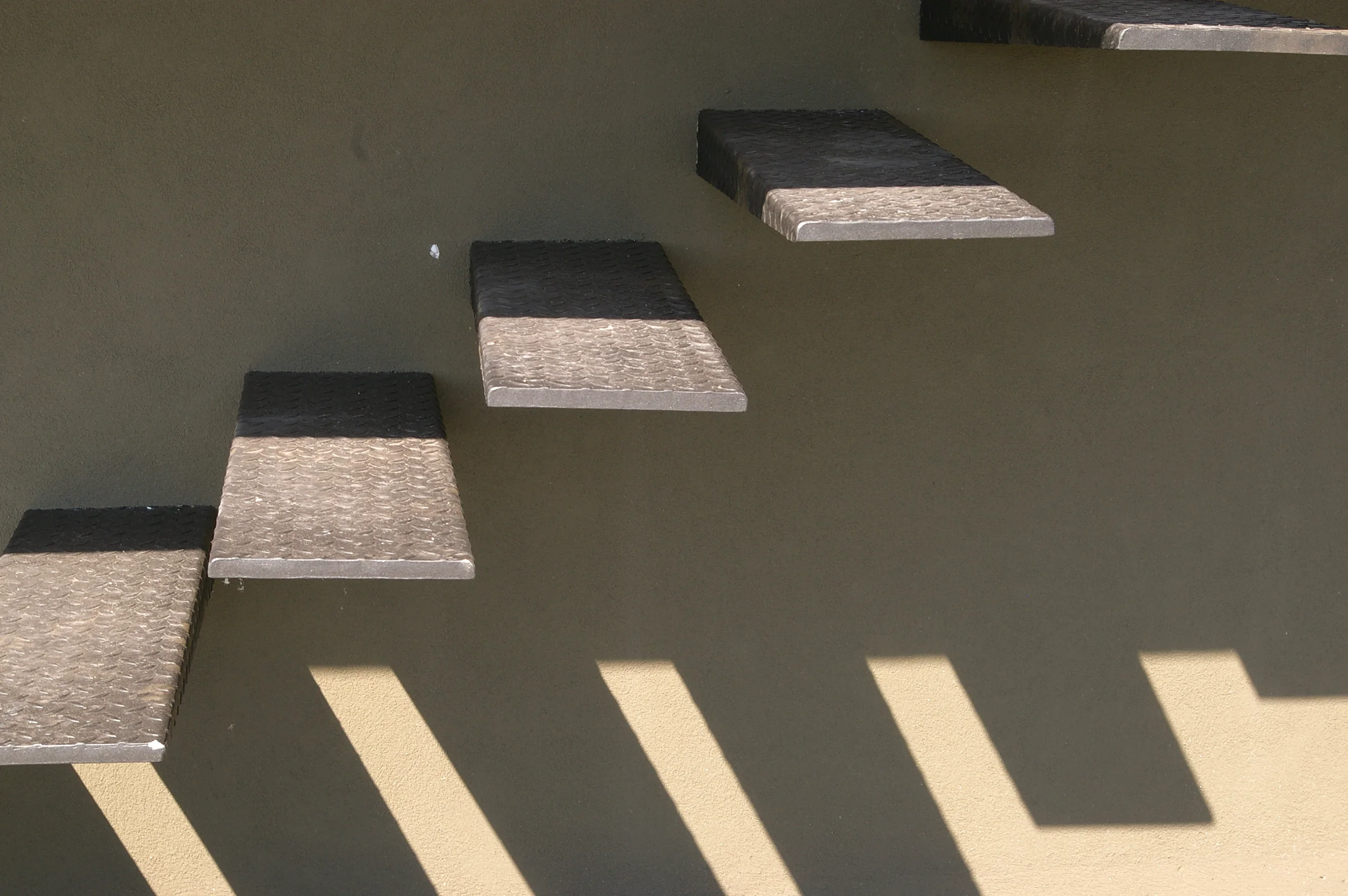
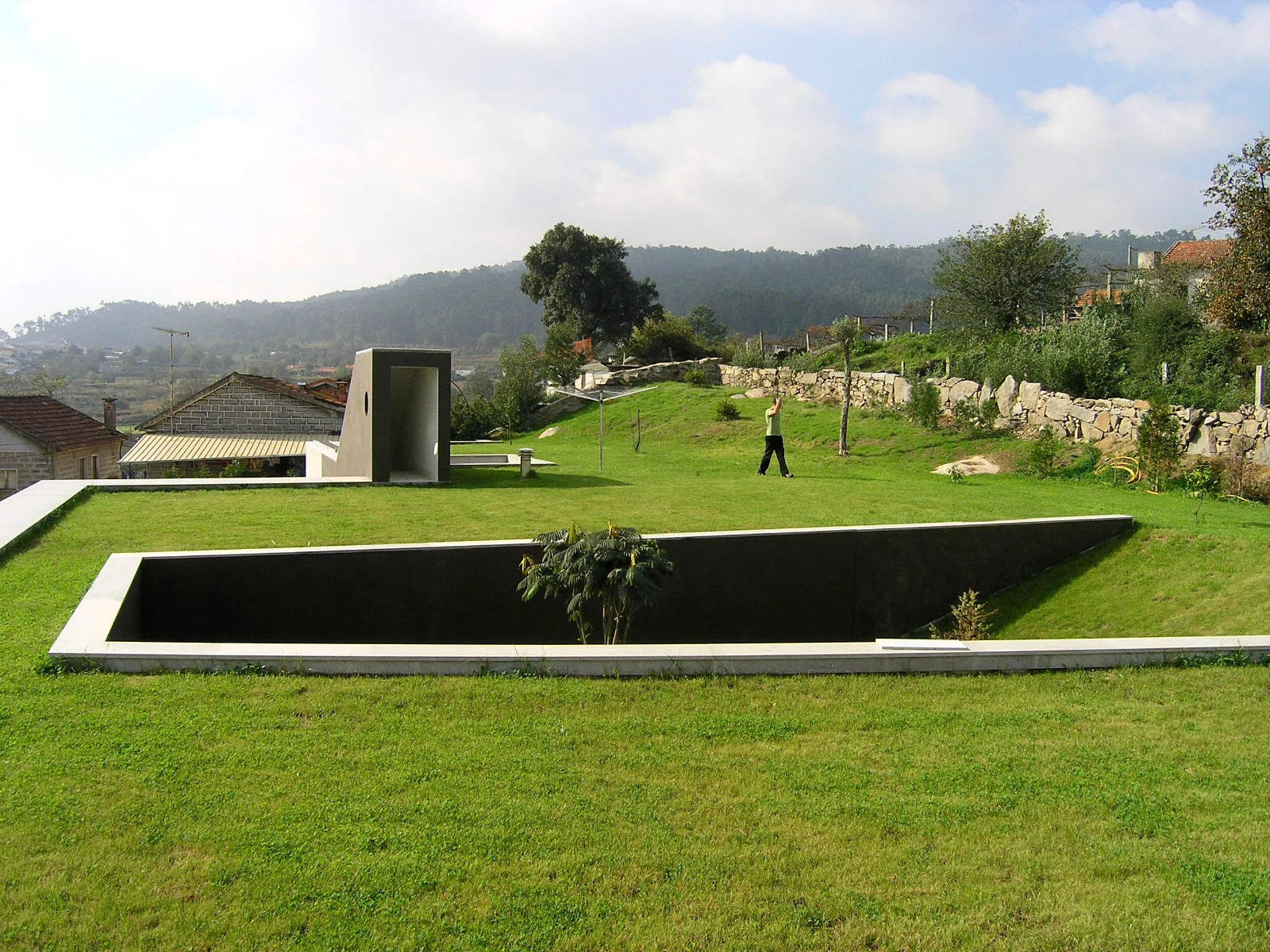
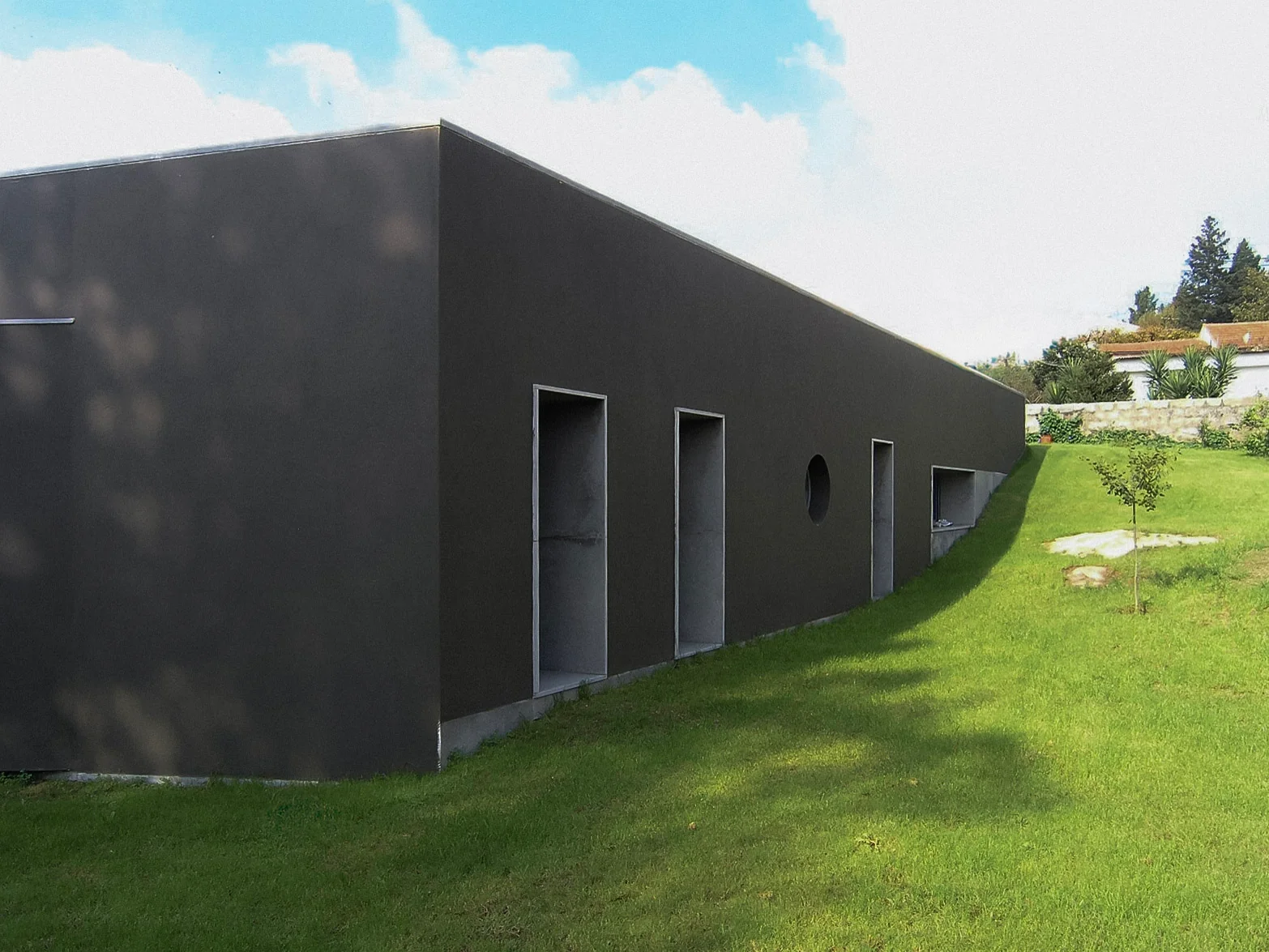
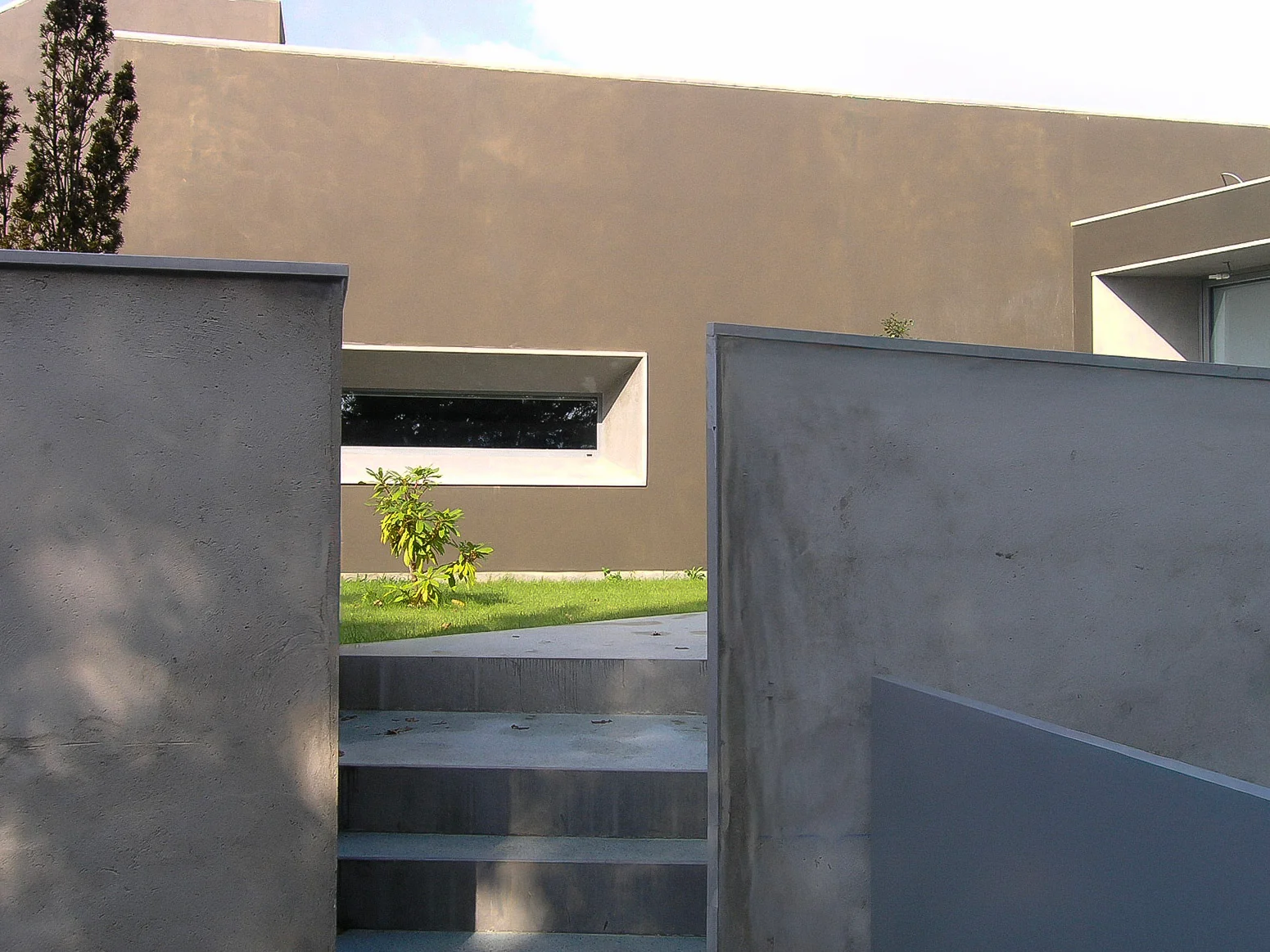
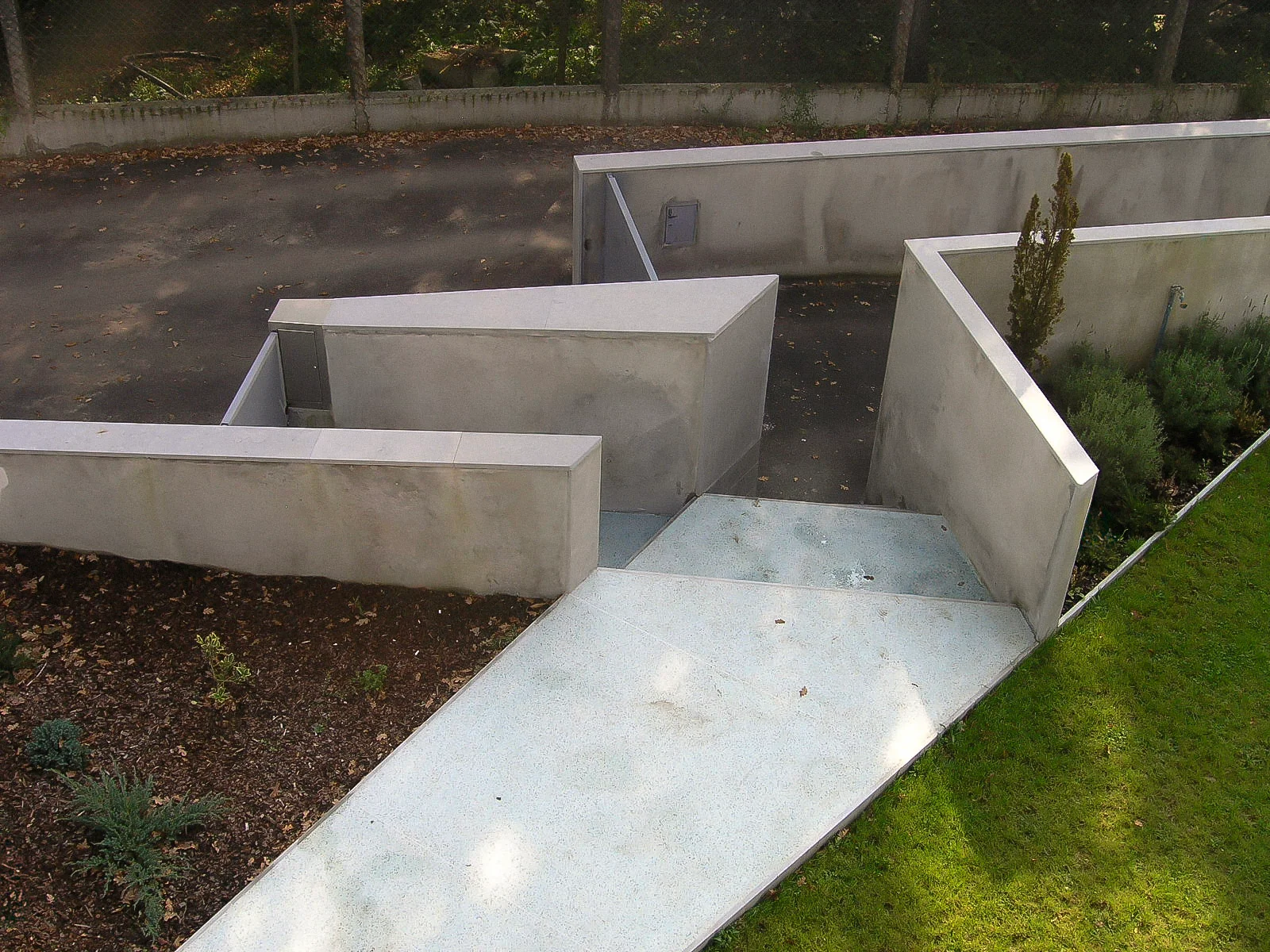
2003–2006 | Bellynavel House, Joane. Single Family Residence. This house was designed to be walked upon. Buried into the hillside, the architecture is invisible from above and signaled only by an interplay of ramps and stairs. Built for a contractor who fully engaged with the radical proposal, the house unfolds over three levels. These include a subterranean garage, a living layer stretching along the contour, and a roof garden acting as a landscape punctuated by architectural follies.
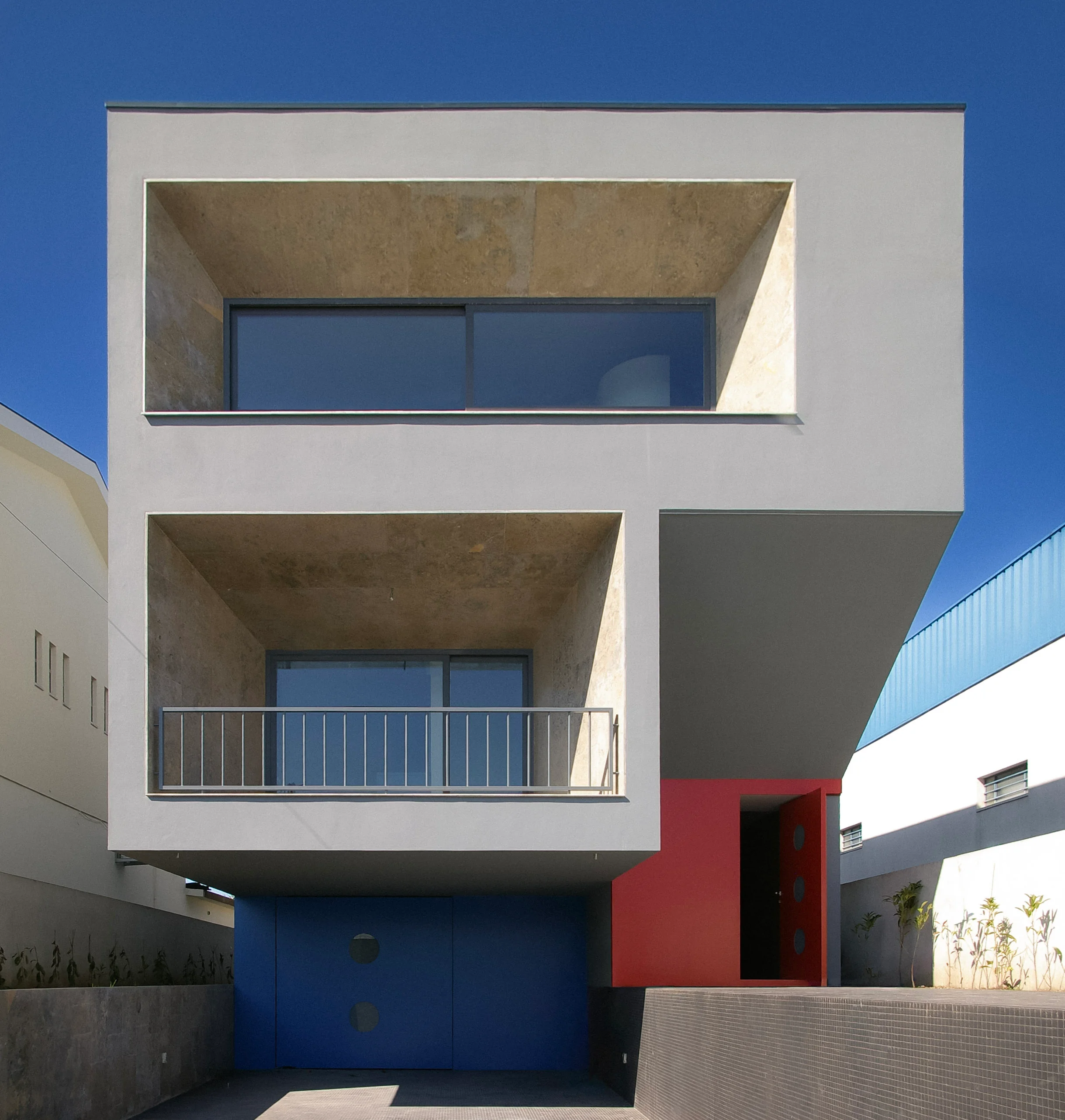
2002–2009 | Compact House II, Single Family Residence. The second in the Compact House trilogy was inserted into a proportionally narrow and deep plot. To counter the blind side walls and the inevitable gloom of the central core, we manipulated the section. By splitting the floor levels between front and back, we created a fissure in the roof. This top light washes down into a dramatic central void. The atmosphere was deliberately imbued with the spirit of the Nouvelle Vague, channeling the chromatic tension of Godard’s Le Mépris.
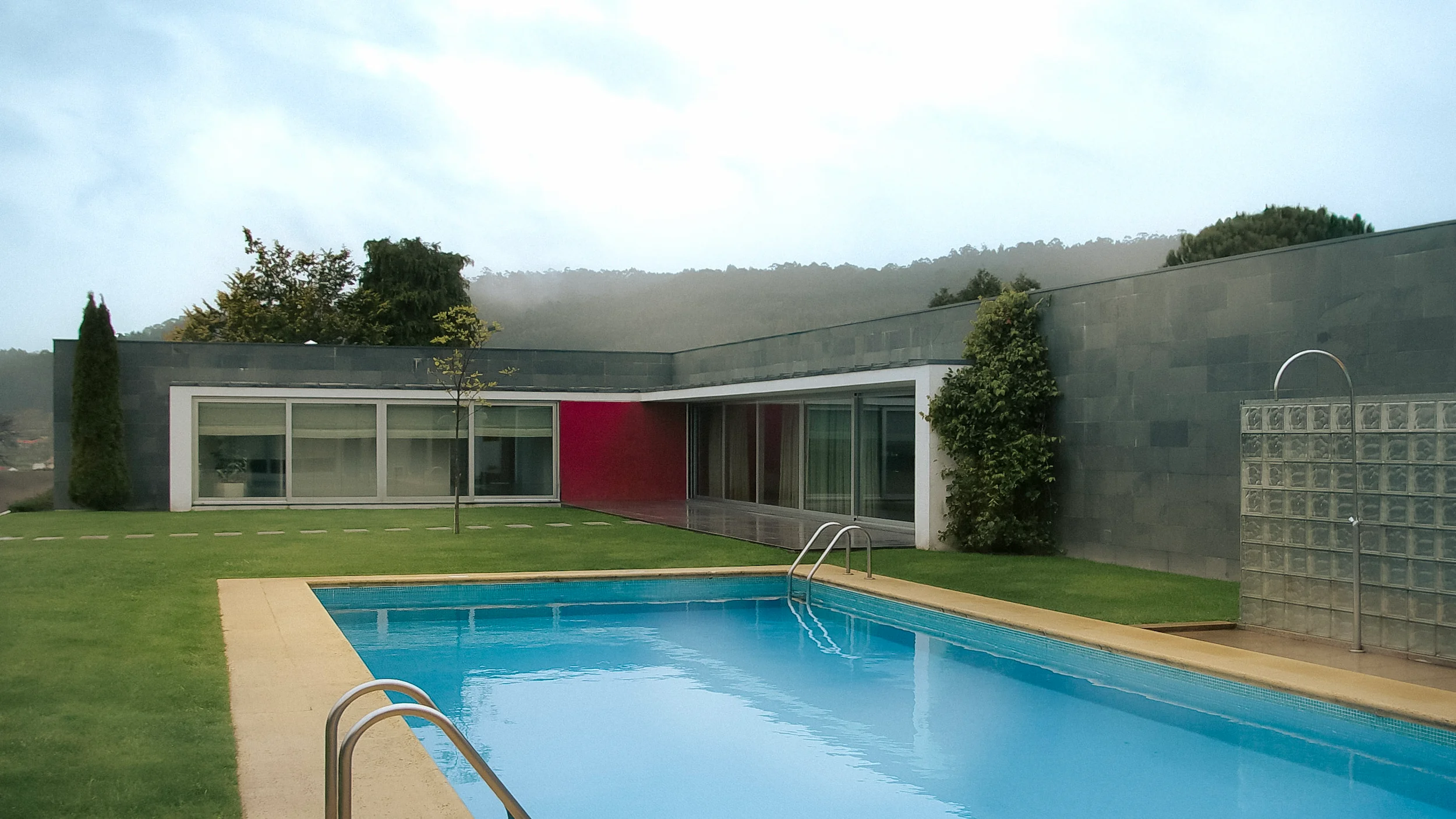
2001–2004 | House in Braga, This single-story exercise in minimalism served as the studio's first experiment in adapting the optimism of the American Case Study Houses to the reality of Northern Portugal.
2000–2003 | Terrace House in Cantanhede, Reconstruction and Extension. This was a complete reconstruction behind a preserved front elevation. As my first significant commission, it was designed for the only clients willing to take a risk on a young architect: my parents. This trust allowed for an uncompromising exploration of space, specifically the creation of a central, light-filled void. This spatial strategy served as the prototype for the Compact House trilogy that followed.
1998 | Almas de Fala, Coimbra (EUROPAN 5) 1st Prize: 120 Social Housing Units & Urban Masterplan, This competition entry was a collaboration with Artur Fernandes and Rui Caetano. Beyond the prize money, the true reward was the subsequent public contract to develop the project through to the Tender stage. Although construction never materialised, working alongside a progressive Coimbra Council and a stellar team of engineers to improve public housing standards became a career-defining lesson.
Early Career (1998–2001)
Extending my final academic years to gain professional experience, I worked within the Porto School environment at the Aleixo building. I began under the mentorship of Fernando Távora, focusing on heritage restoration and urban design. I subsequently joined the office of Jorge Barros. There I took on daily site supervision and technical detailing for the 4 Attached Houses project from start to completion, providing a practical grounding in construction that ran parallel to my studies.
1999–2001 | 4 Attached Houses, Matosinhos. I was responsible for daily site supervision and technical detailing with Jorge Barros Arquitecto.
1999–2000 | Keratec Plant, Vagos. I acted as Architectural Assistant for the design and construction supervision of a tile factory with Jorge Barros Arquitecto.
1999 | Portuguese Embassy, Berlin Competition entry in collaboration with Marcos Cruz.
1998 | Avenida da República, Viana do Castelo. I worked on the urban design, underground parking, and granite paving detailing with Fernando Távora Arquitecto.
1998 | Palácio do Freixo, Porto. I assisted in the restoration of a Baroque National Monument with Fernando Távora Arquitecto.
Architectural Qualifications
2014 | ARB - Architects Registration Board, UK
2000 | OASRN - Portuguese Architect’s Registration Board – RIBA Part III equivalent
2000 | Graduated Diploma with Merit - RIBA Part II equivalent
1992–2000 | ESAP - Oporto School for the Arts, Architectural training, Portugal


Bestiary apré Paris
2026 Acrylic on canvas board (20x30cm)
One trick I use to keep my daughter and nephews entertained in classical galleries is to have them spot the animals in the paintings. It keeps them moving from room to room, hunting through the frames.
Dogs, cats, or horses are relatively common. Cows are slightly scarcer. You might spot a few monkeys and birds shown as exotic pets. Lions are fairly common, but mostly as symbolic representations in ornamental engravings or small sculptures on chairs, table clocks, and porcelain rather than natural portraits. Monkeys are common in the Asian sections. Zebras and giraffes are almost impossible to find.
The reasons are obvious. These paintings were portraits of their time, and zoo animals were simply unknown. They were not pets, and painters could not stand next to them to replicate their likeness.
For reasons I have only recently started assigning meaning to, I have always liked putting relaxed wild animals into everyday contexts. I have quite a few drawings of kangaroos standing next to me or in front of petrol stations, also giraffes that are my favourite. I have drawn hippos and rhinos in front of buildings in various settings. Some serenity comes to my mind.
This picture is a memory collage from the Hunting Museum - Le Musée de la Chasse - in Paris, with that giant stuffed polar bear standing next to us.
My daughter and cousin meticulously checked every section looking for a cow. I was unfair in not telling them that cows were not hunted beasts. Polar bears, however, were.
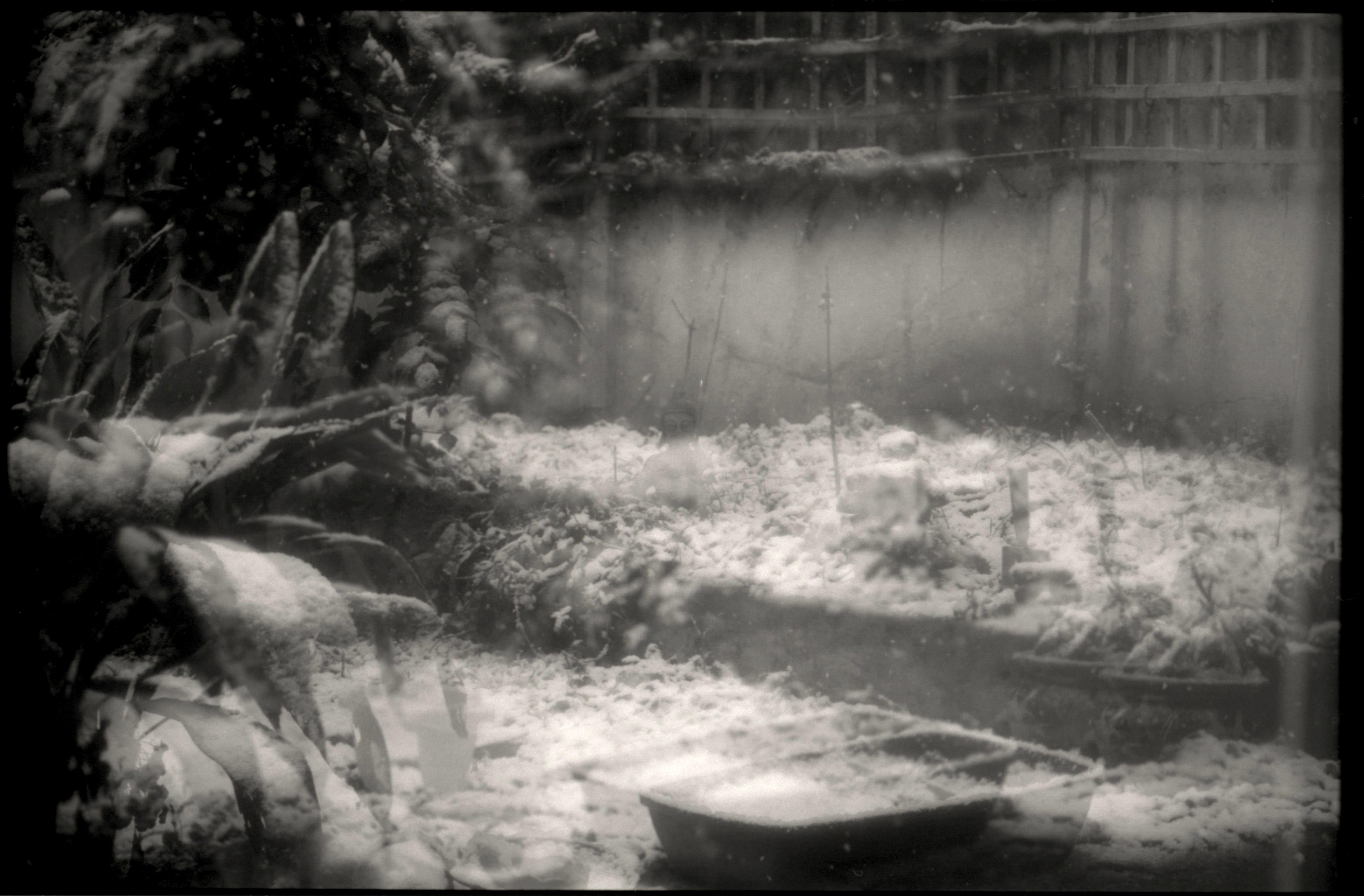
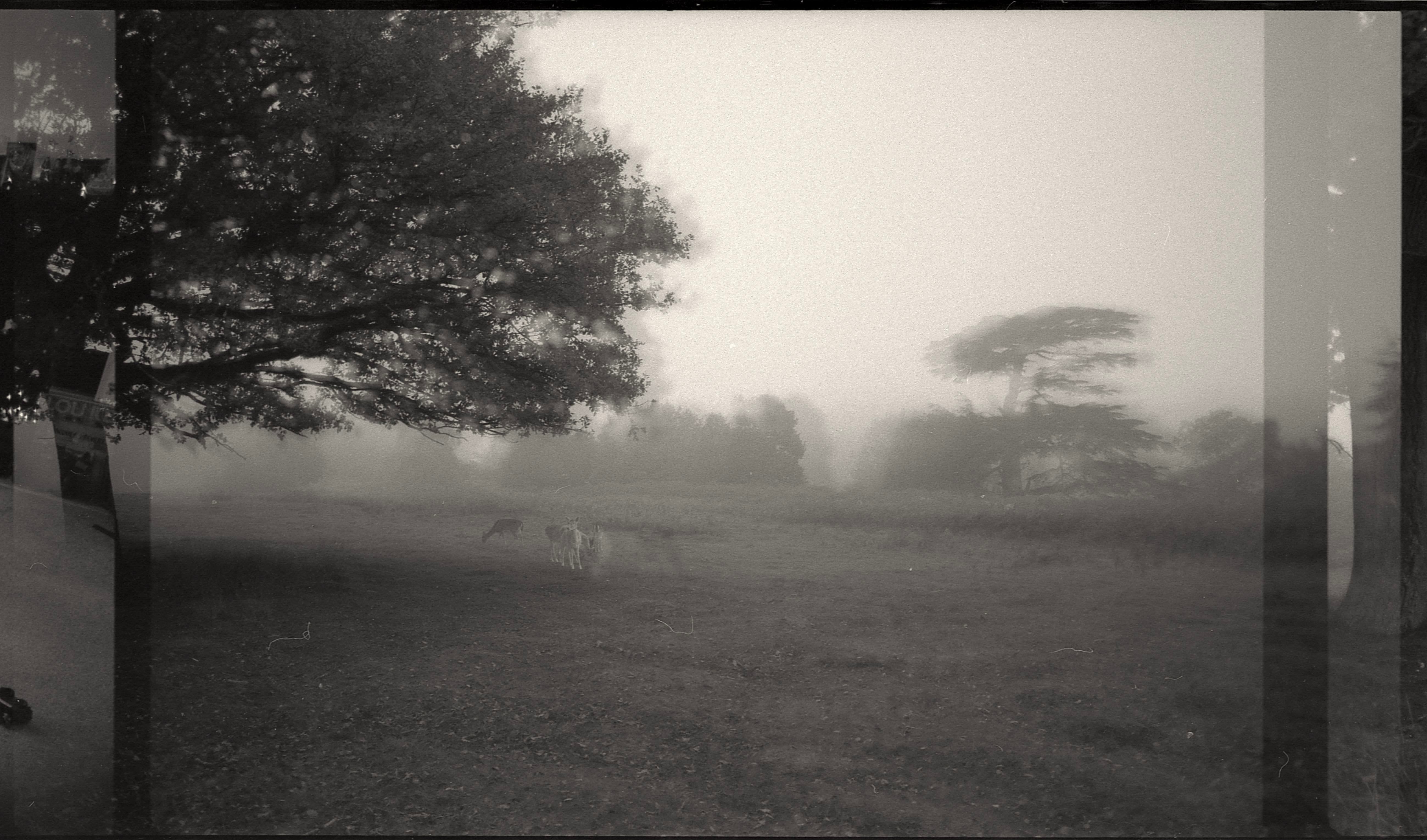
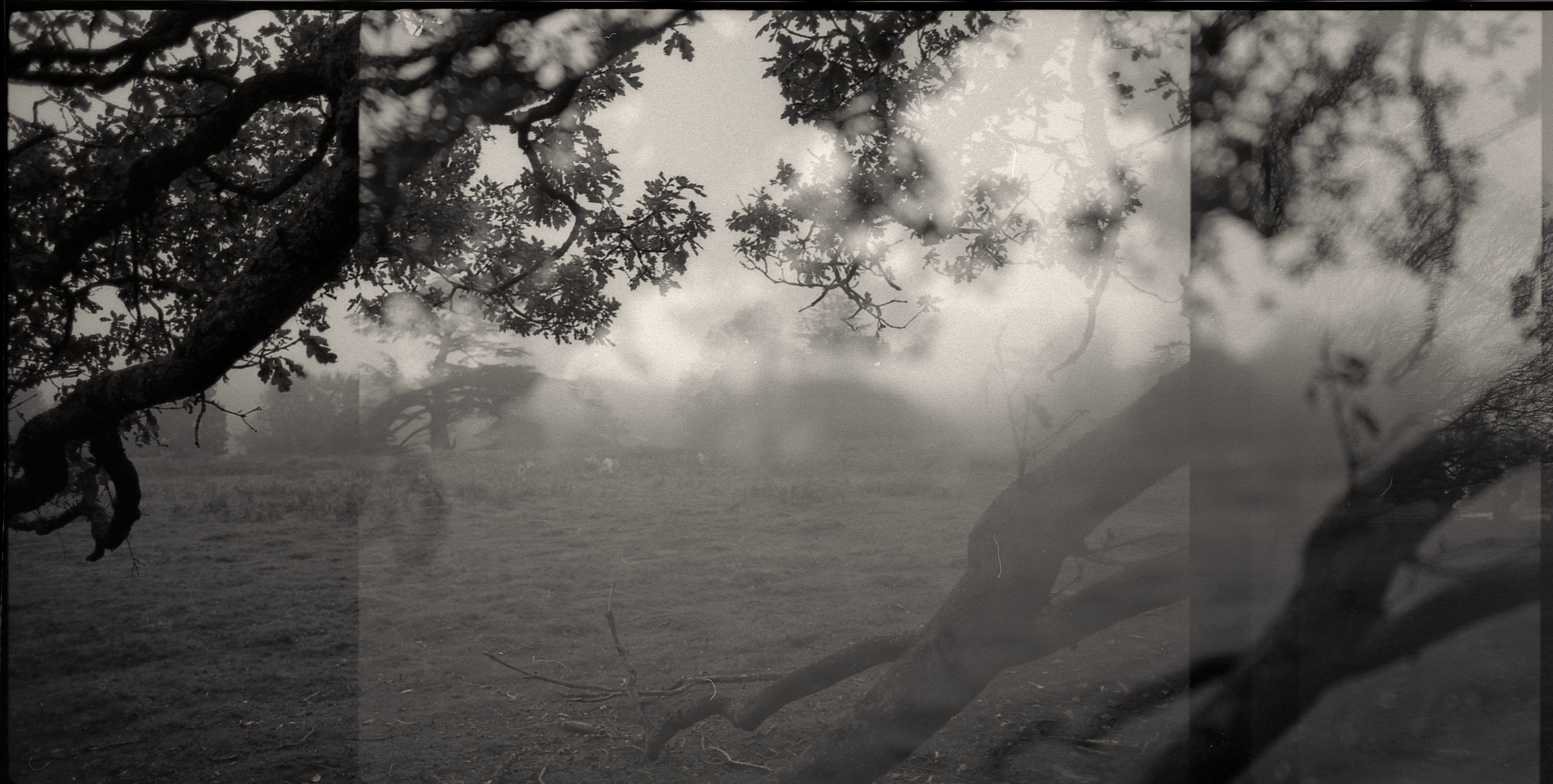
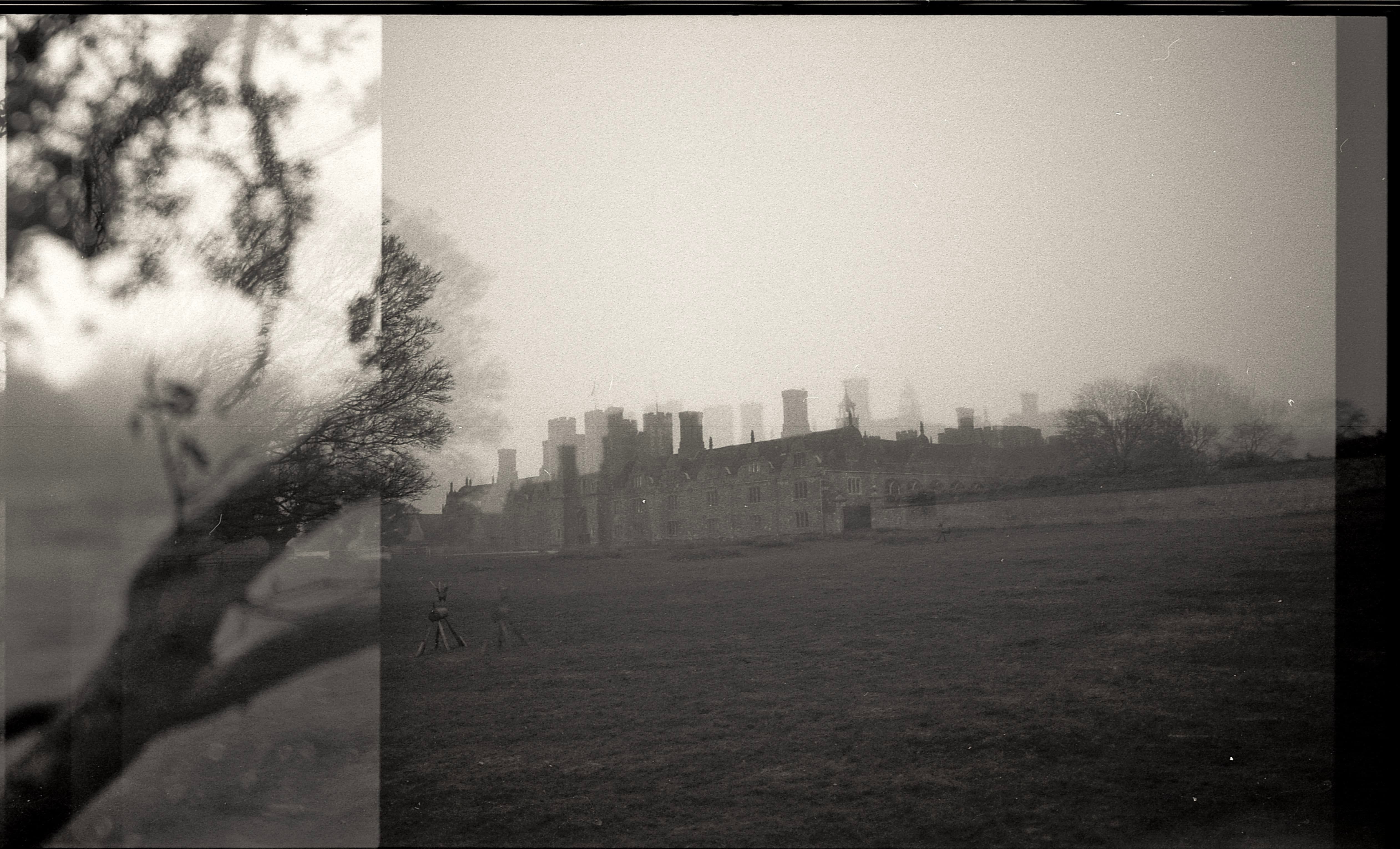
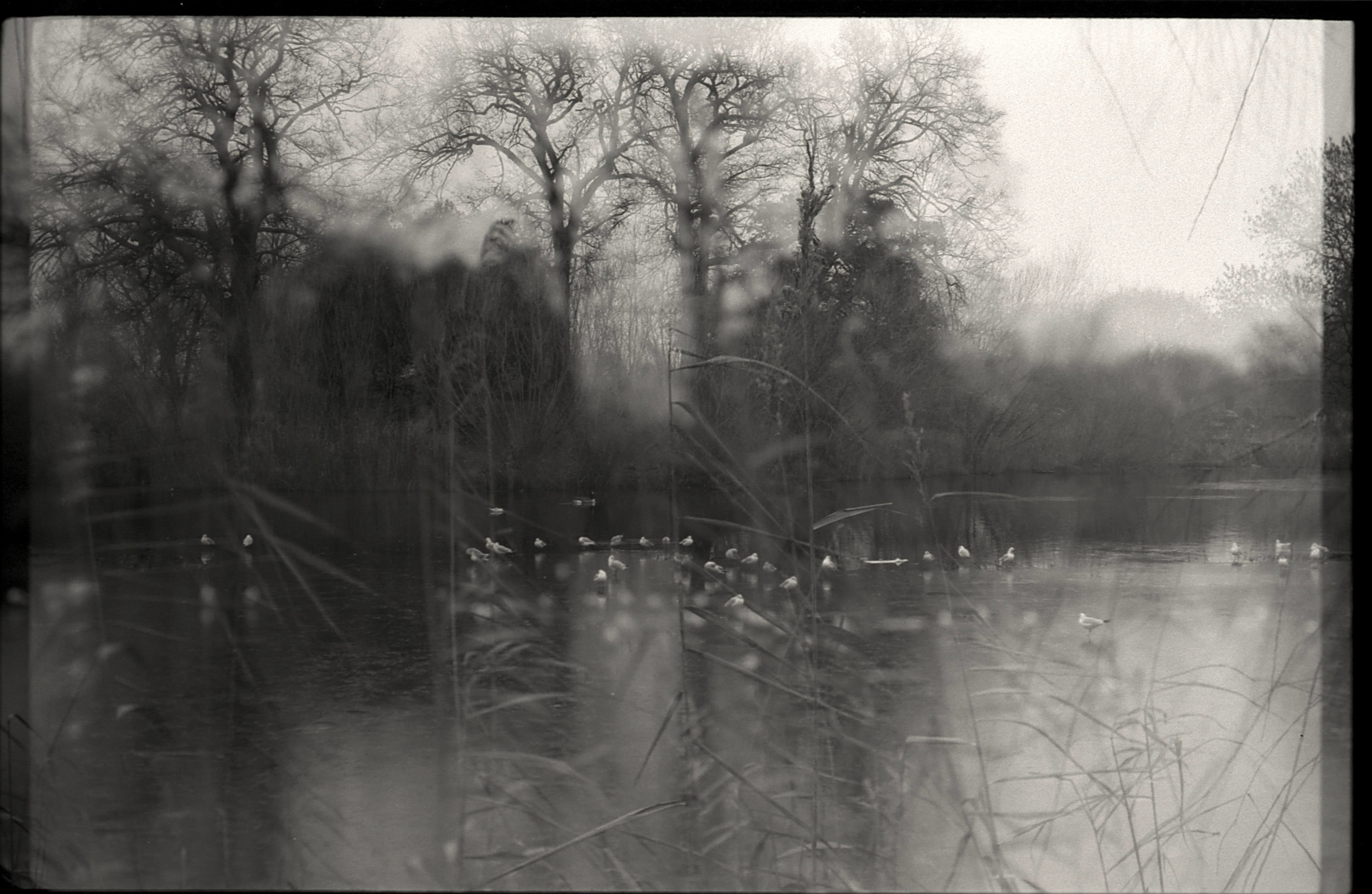
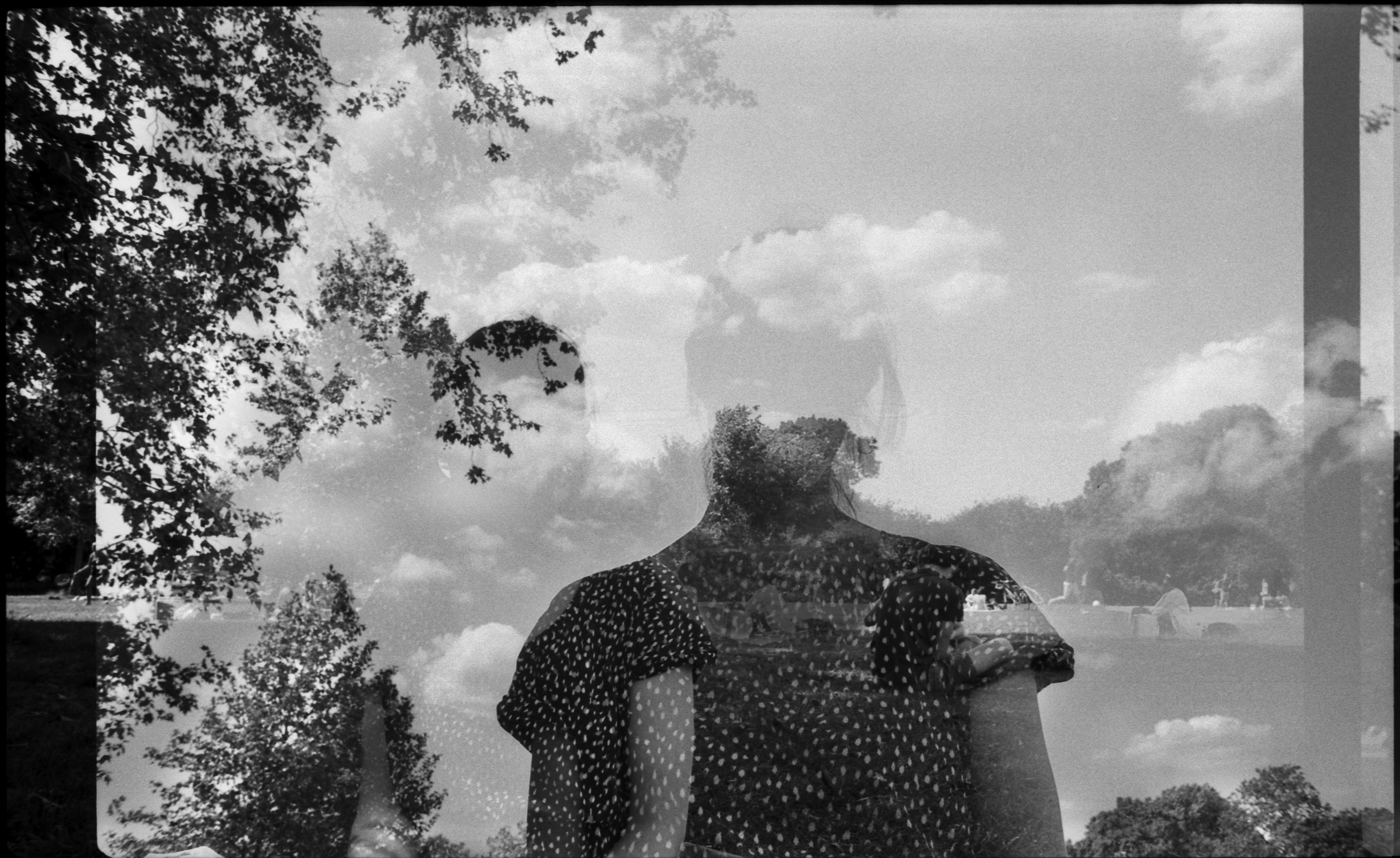
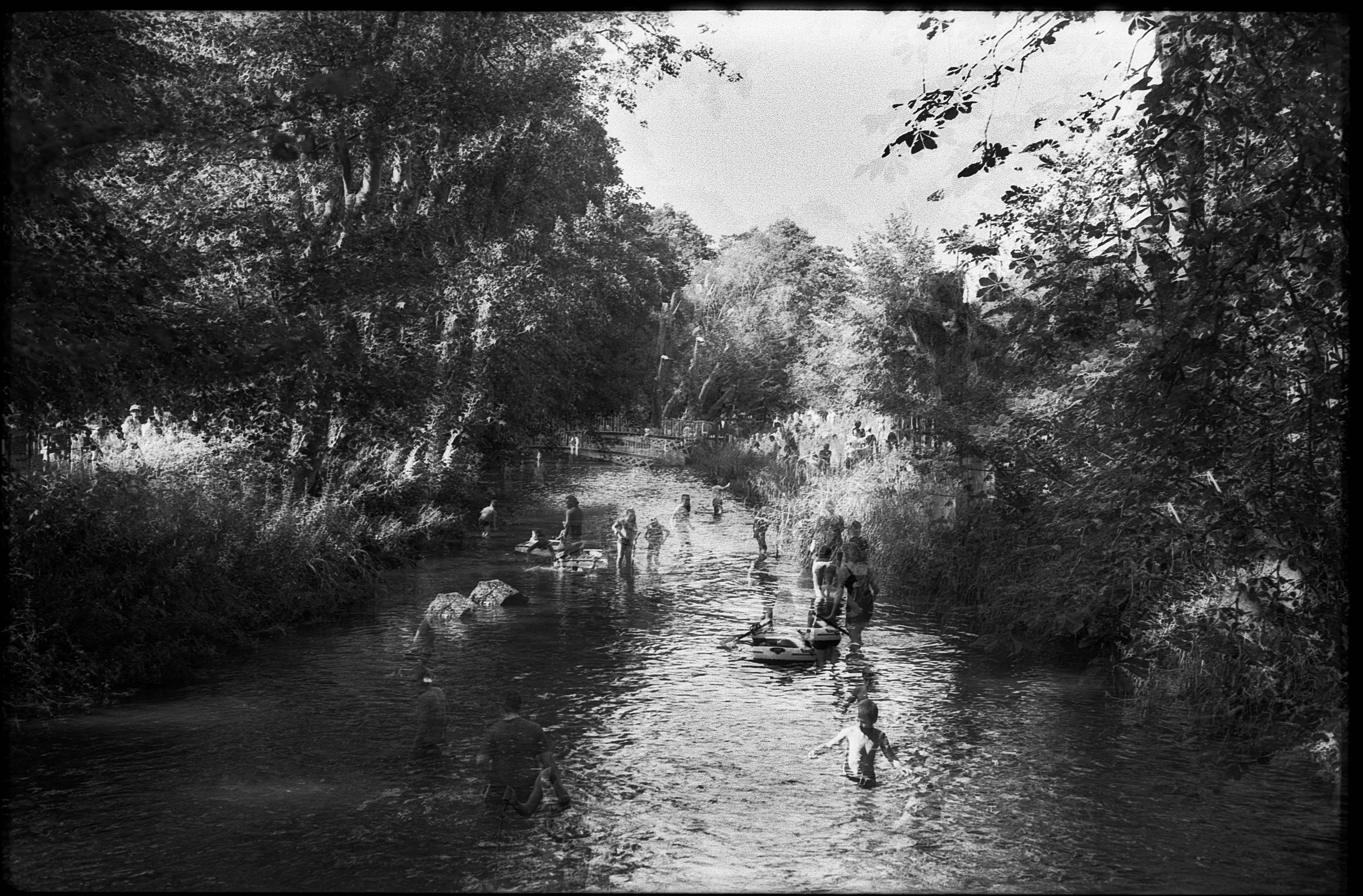
In-Camera Overlaps
2020-2024 | Analogue Multiple Exposures & Stand Development
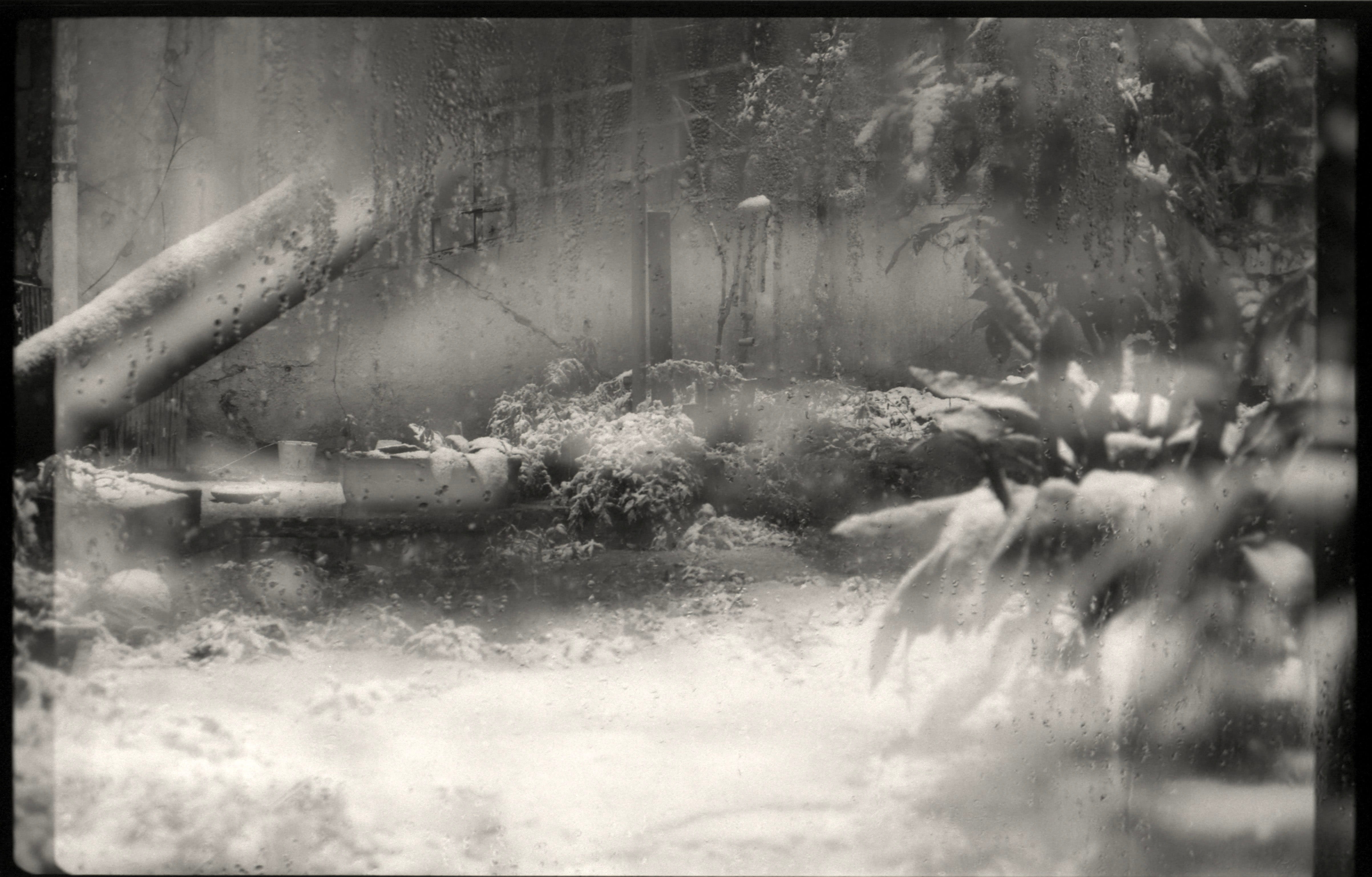
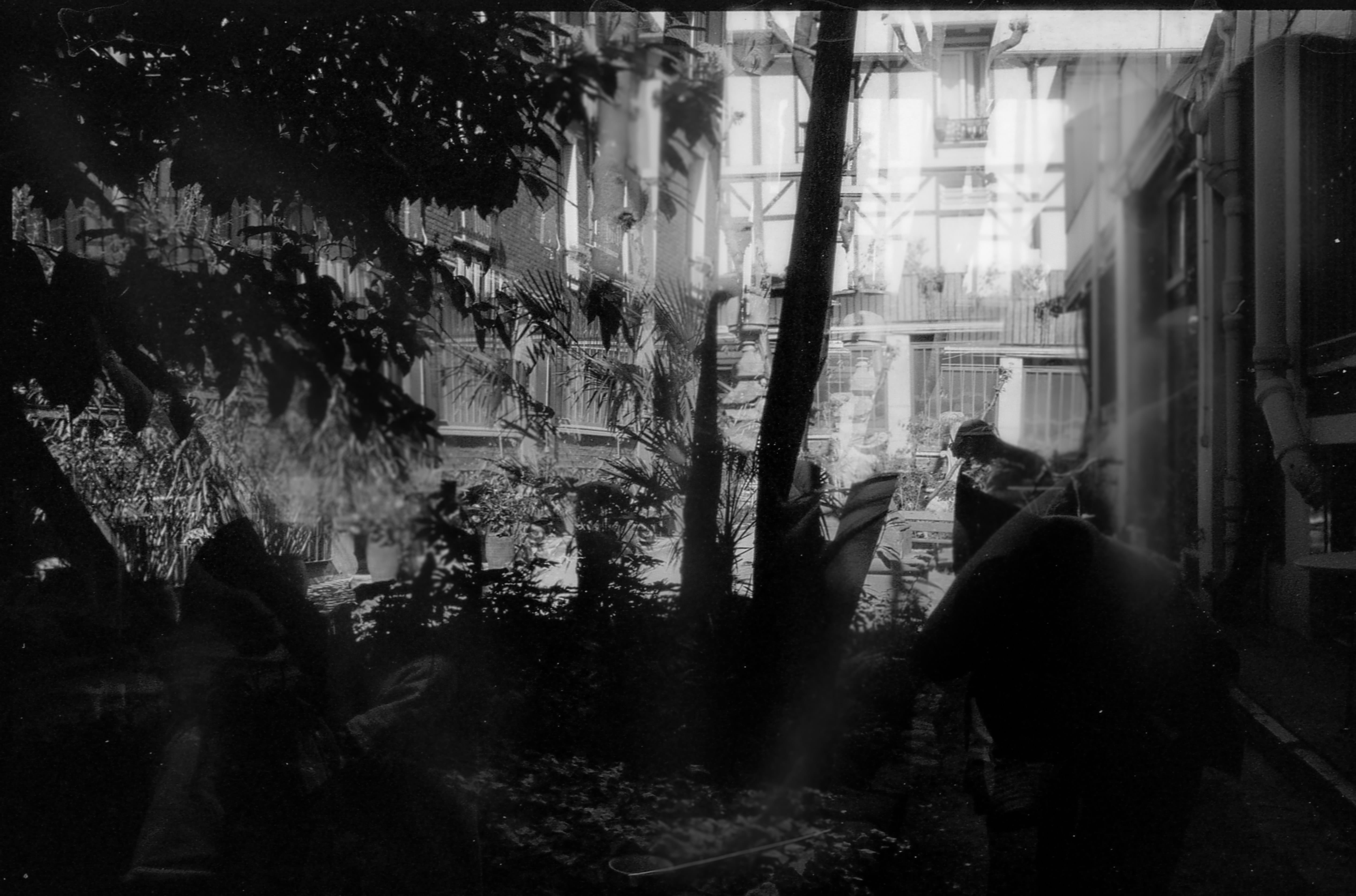
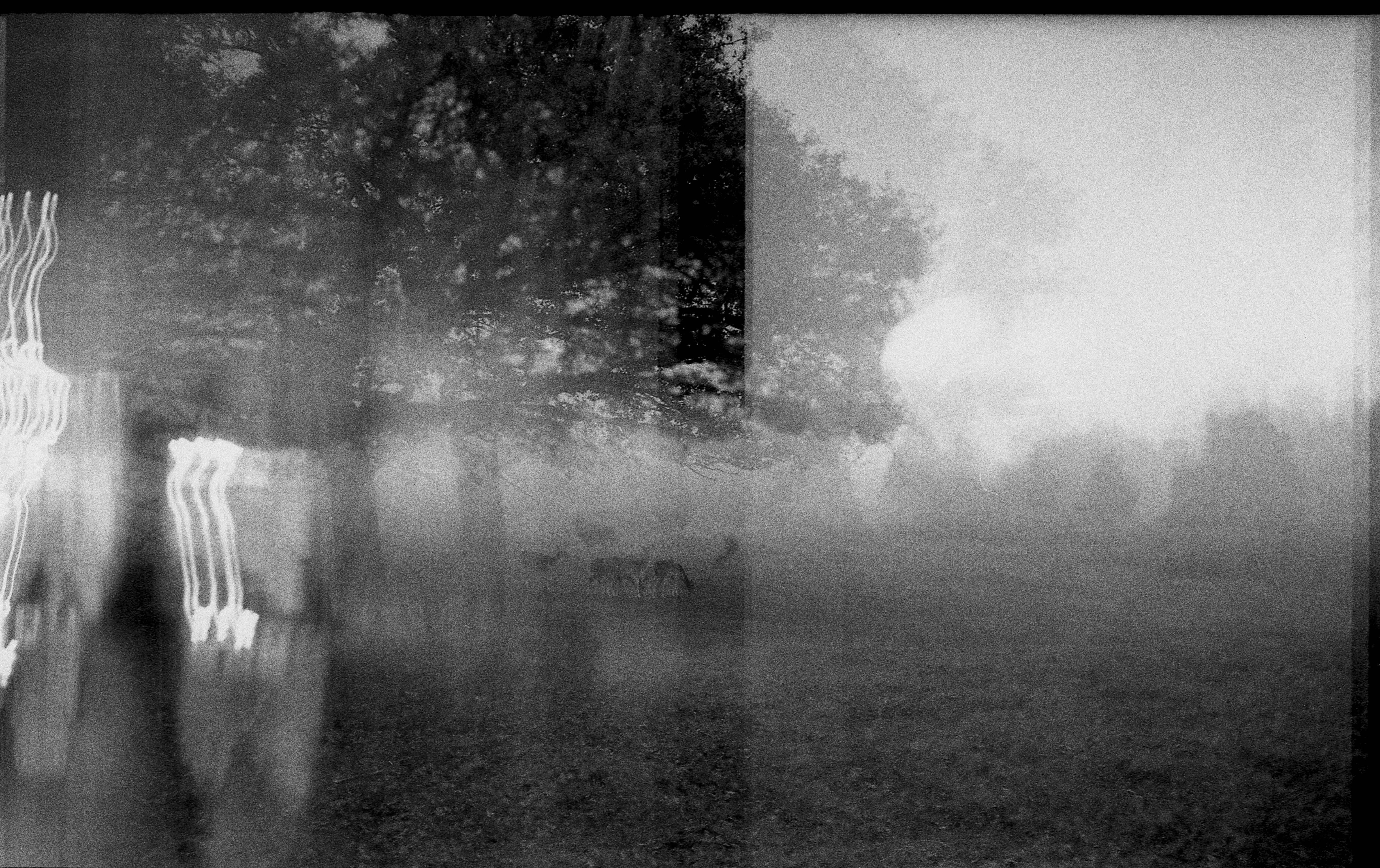
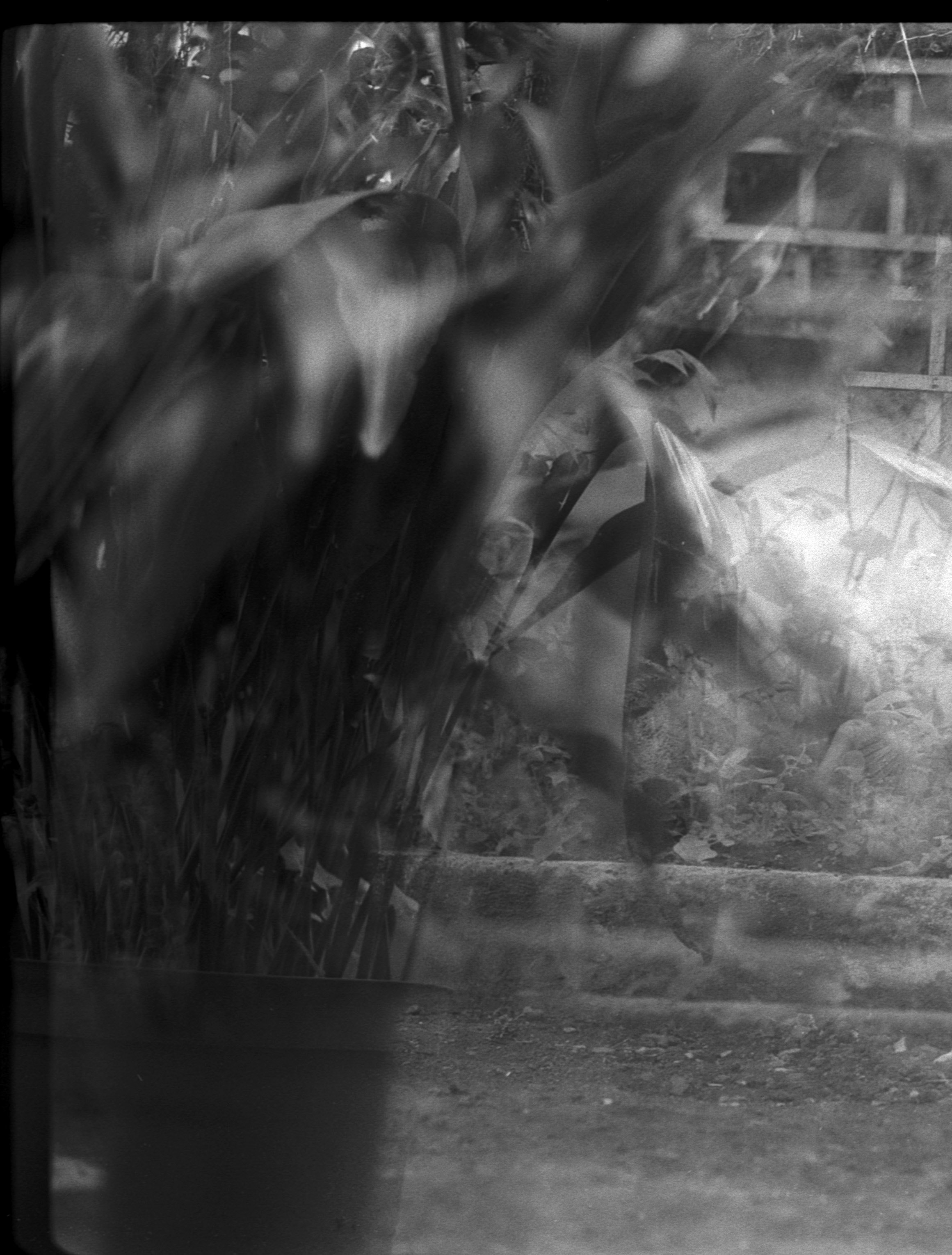
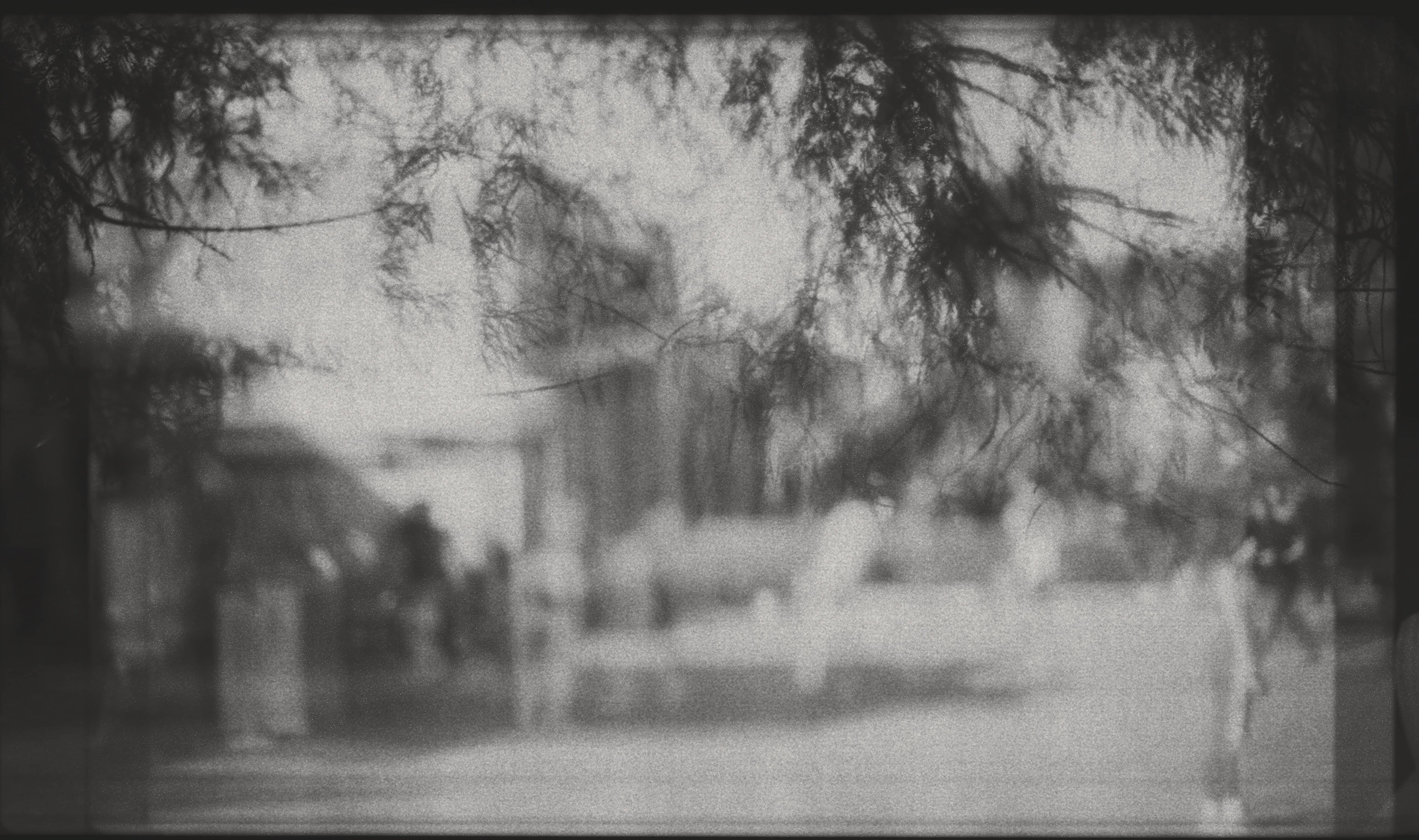
On the brink of the pandemic, I recovered my old Pentax from the dust. I also acquired a couple of cheap point-and-shoot cameras on eBay, specifically a Konica C35 and an Olympus XA. This initiated a prolific return to analogue photography. I have shot around thirty rolls since then.
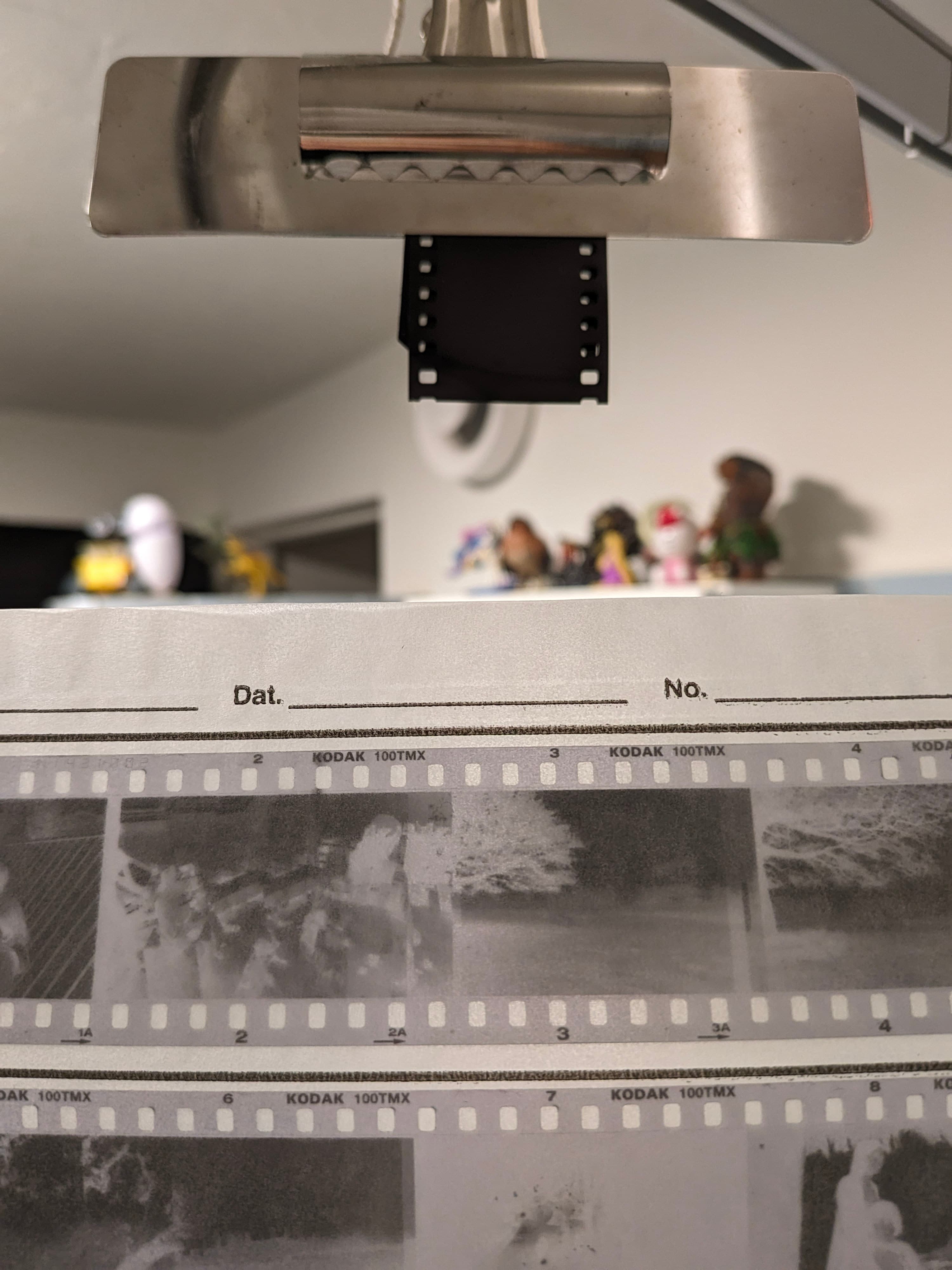
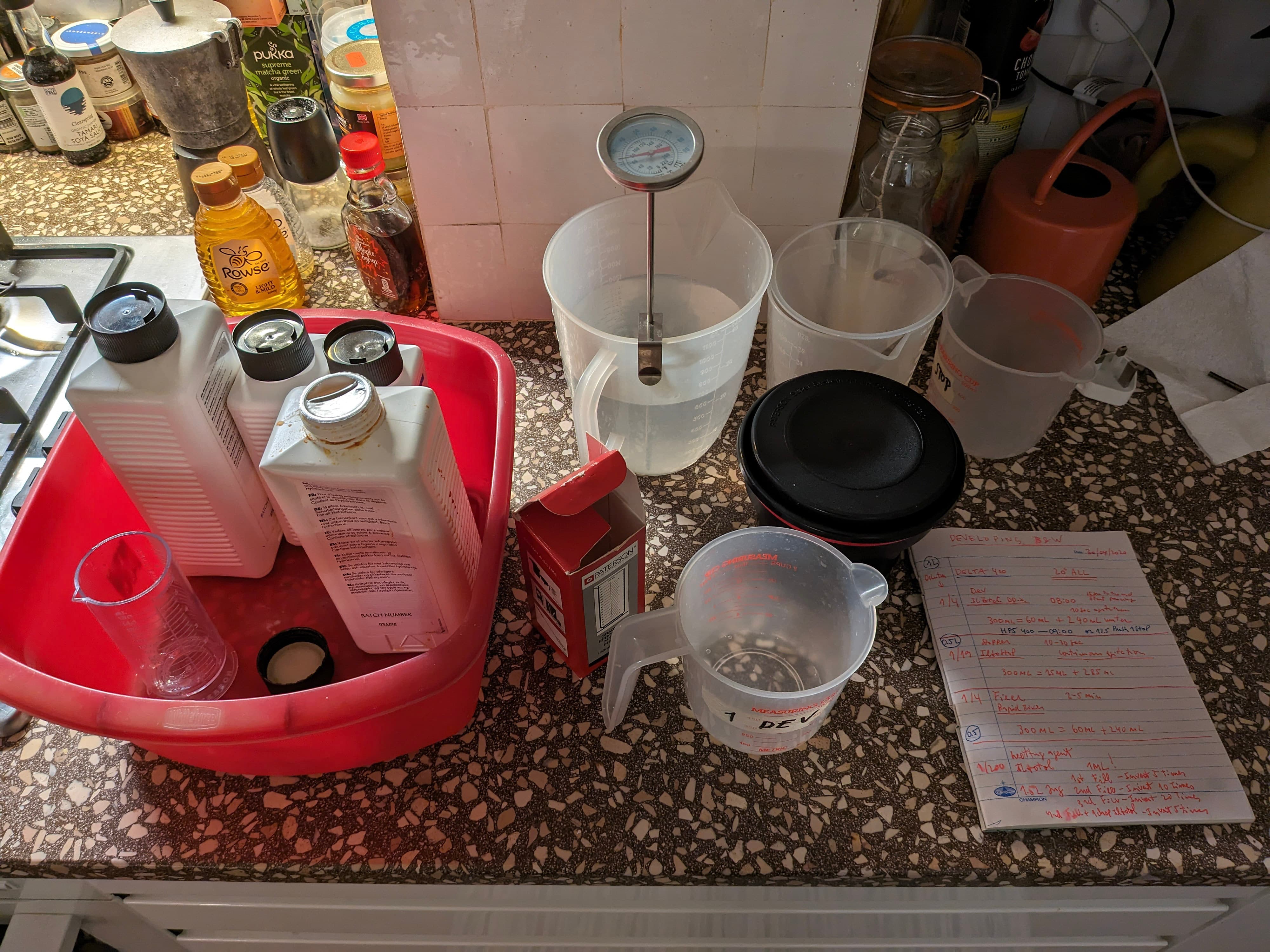
The lockdowns motivated me to develop the majority of these black and white rolls at home. I refined a process using stand development. This technique relies on static immersion in dilute chemistry. It compensates for the unpredictable overlap of multiple exposures and tames the high contrast while preserving the ghostly layering of the imprinted shots. This method disregards film ISO and camera settings. It acts as a universal equaliser to retrieve detail from even the most chaotic frames.
I captured these multiple exposures in-camera using a combination of specific focus and exposure settings. When paired with the stand development technique, this created a series of mesmerising final photographs. The examples shown here were shot across England, France, Italy, and Portugal.
Analogue photography creates a necessary gap of time between the moment of shooting and the final image. This delay does not exist in digital photography, where the immediate reaction is to check the screen. I find this waiting period fascinating. Finishing a roll, putting it on the shelf, developing, scanning, and printing all introduce something new and sometimes random to the final result. For this reason, I preserve a few undeveloped rolls on my shelf. They might be developed in the future, or they might not. It does not matter in the end.
Costa Ferreira's Family Mausoleum
Video Archive, 2007
ZapGun had the rare challenge of designing two family mausoleums in northern Portugal. These unconventional commissions resulted in two distinct, stone-clad structures that both hover slightly above the ground.
This film from 2007 documents the construction of the Costa Ferreira mausoleum in Joane. It captures the process of core-drilling through approximately one metre of solid white cast concrete. These perforations excavate light and open into a small internal courtyard where we planted a cypress tree.
We originally attempted to tint the white concrete with blue pigment. We liaised with Cimenteira Nacional for this experiment. We quickly realised that the heavy weight of the blue pigment, unlike red oxide, caused the colour to sink entirely to the bottom of the formwork during the cast.
We also built a small shrine for a Virgin Mary figurine. It is sheltered by a curved copper cove perforated with a map of the stars.
I will return to the specific architectural details of this and the second mausoleum in separate future entries.
ANO Software Head Office
2009–2011 | Archive and Process
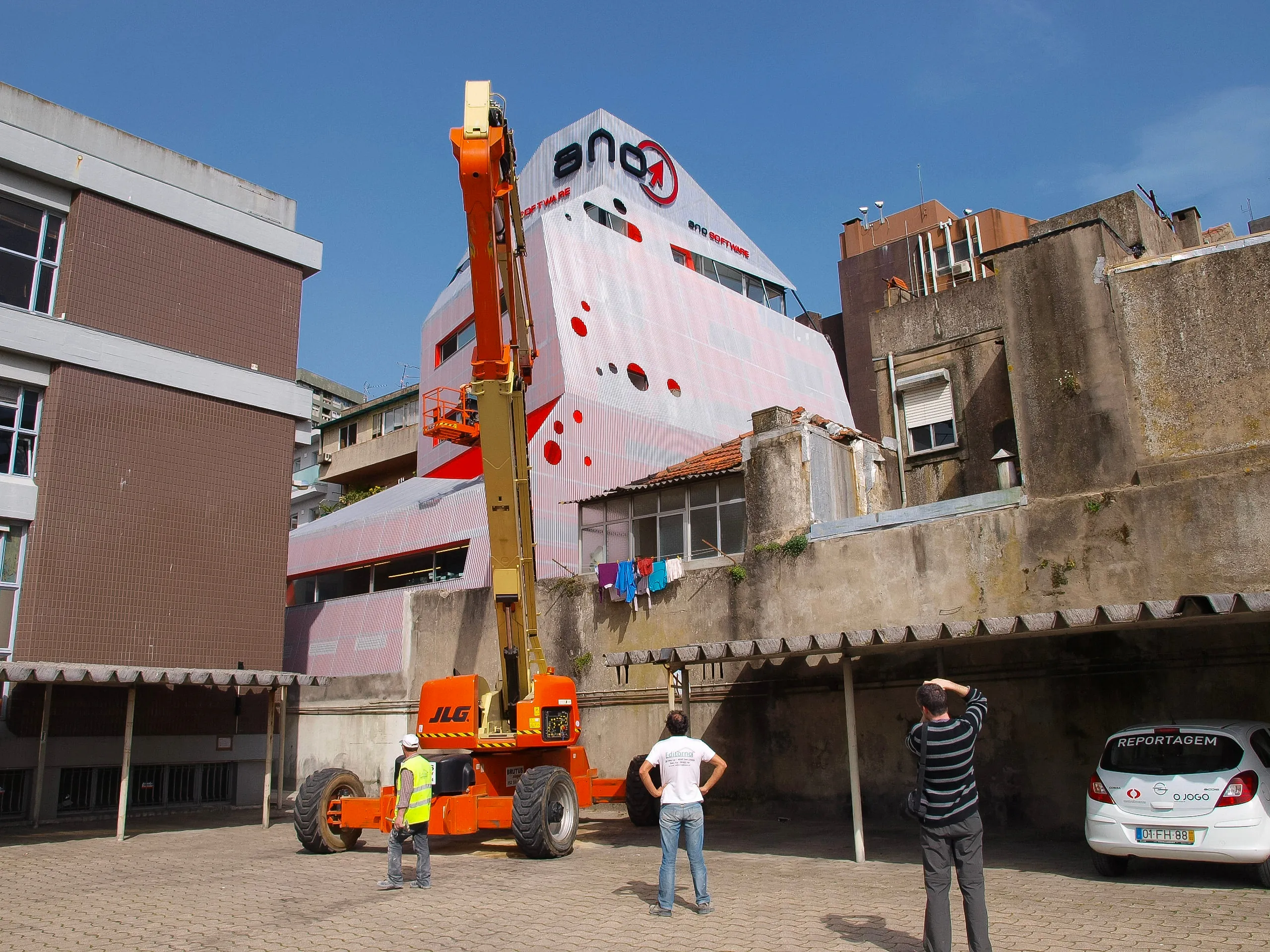
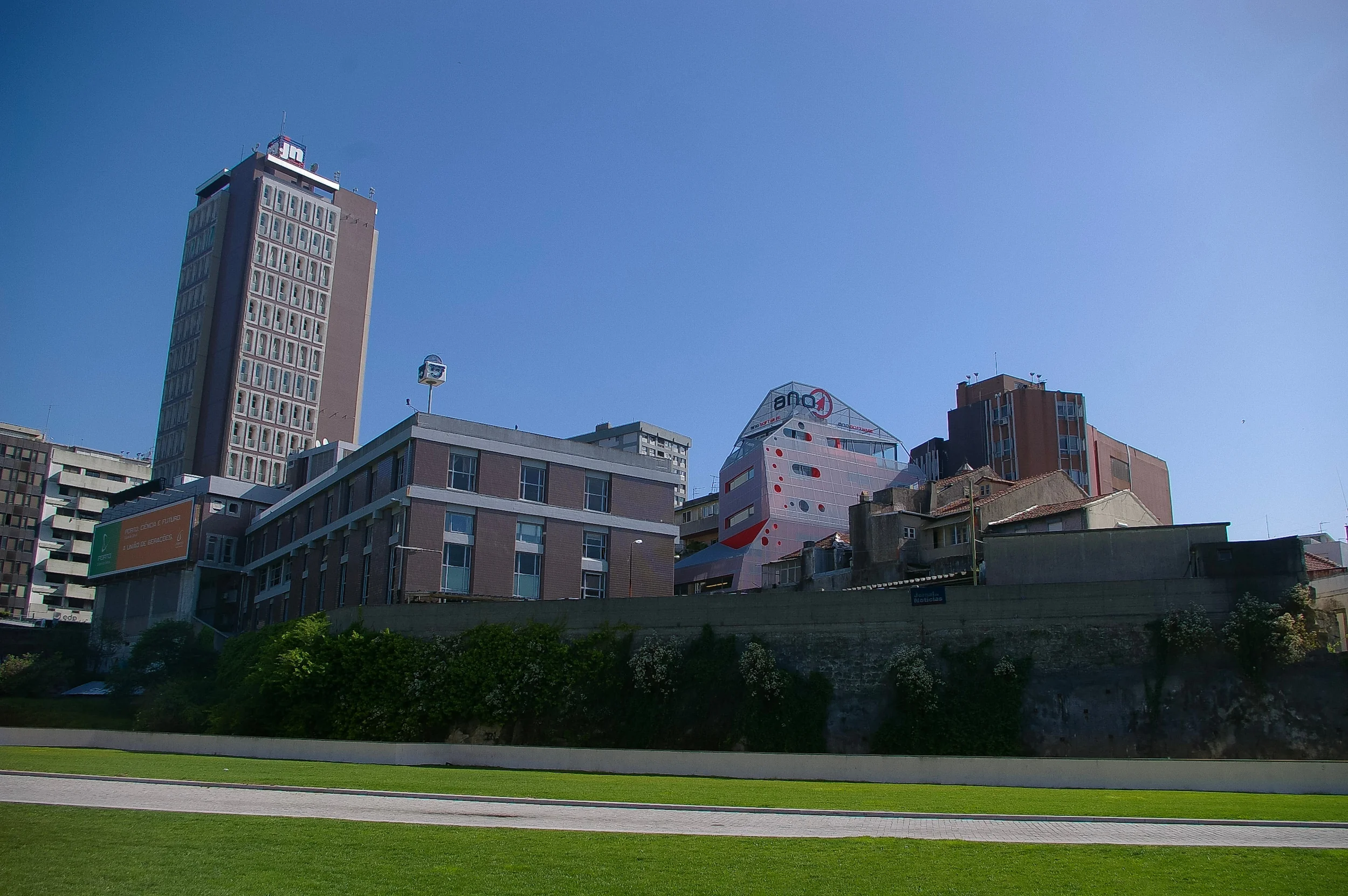
Building a personal website is an exercise in digging. You sift through the archive and find and revisit things you forgot you did. This is the ANO Software head office.
It started as an ordinary, remarkably dull block from the 1980s sitting over Trindade Station. The brief presented a distinct challenge. We had to take an invisible building and make it visible.
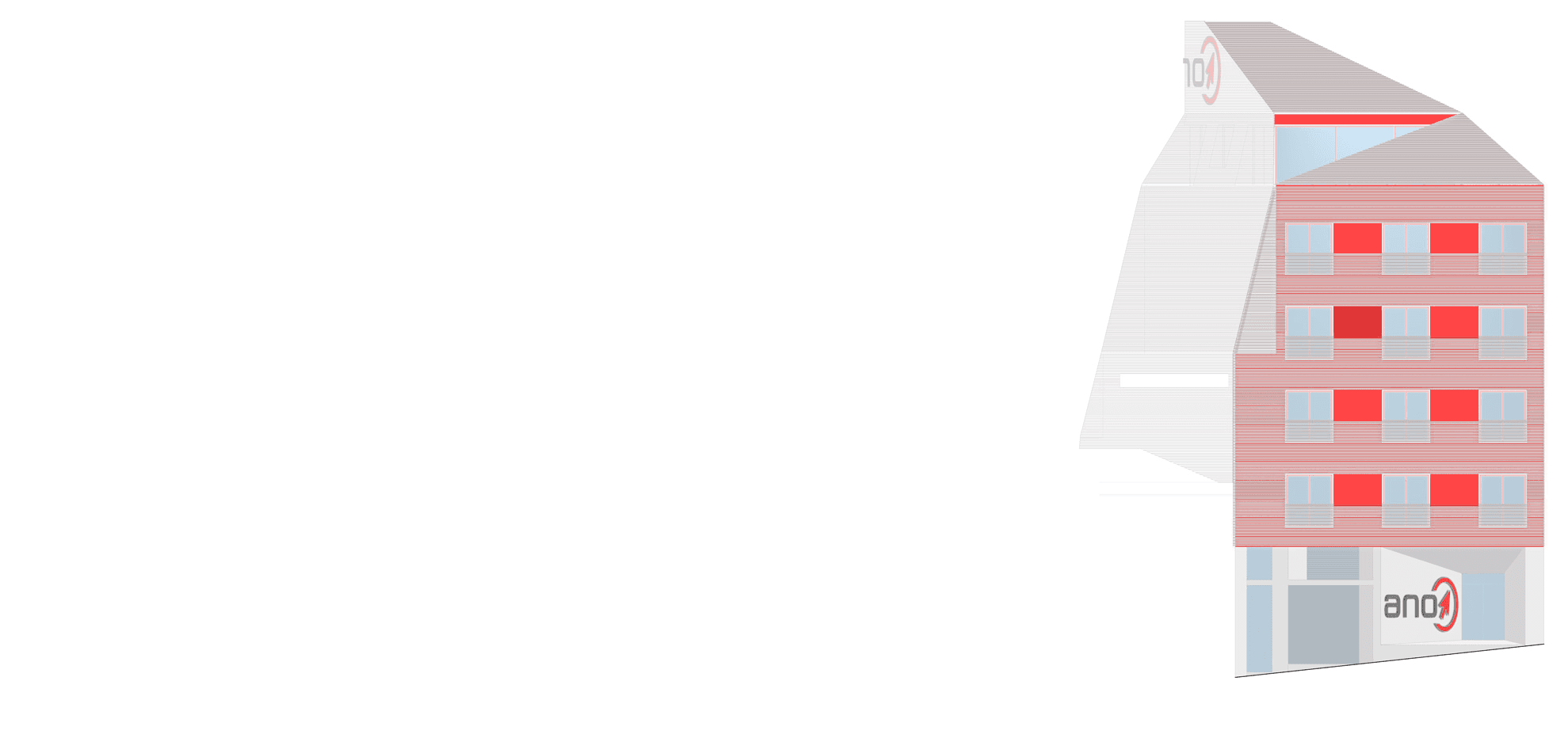
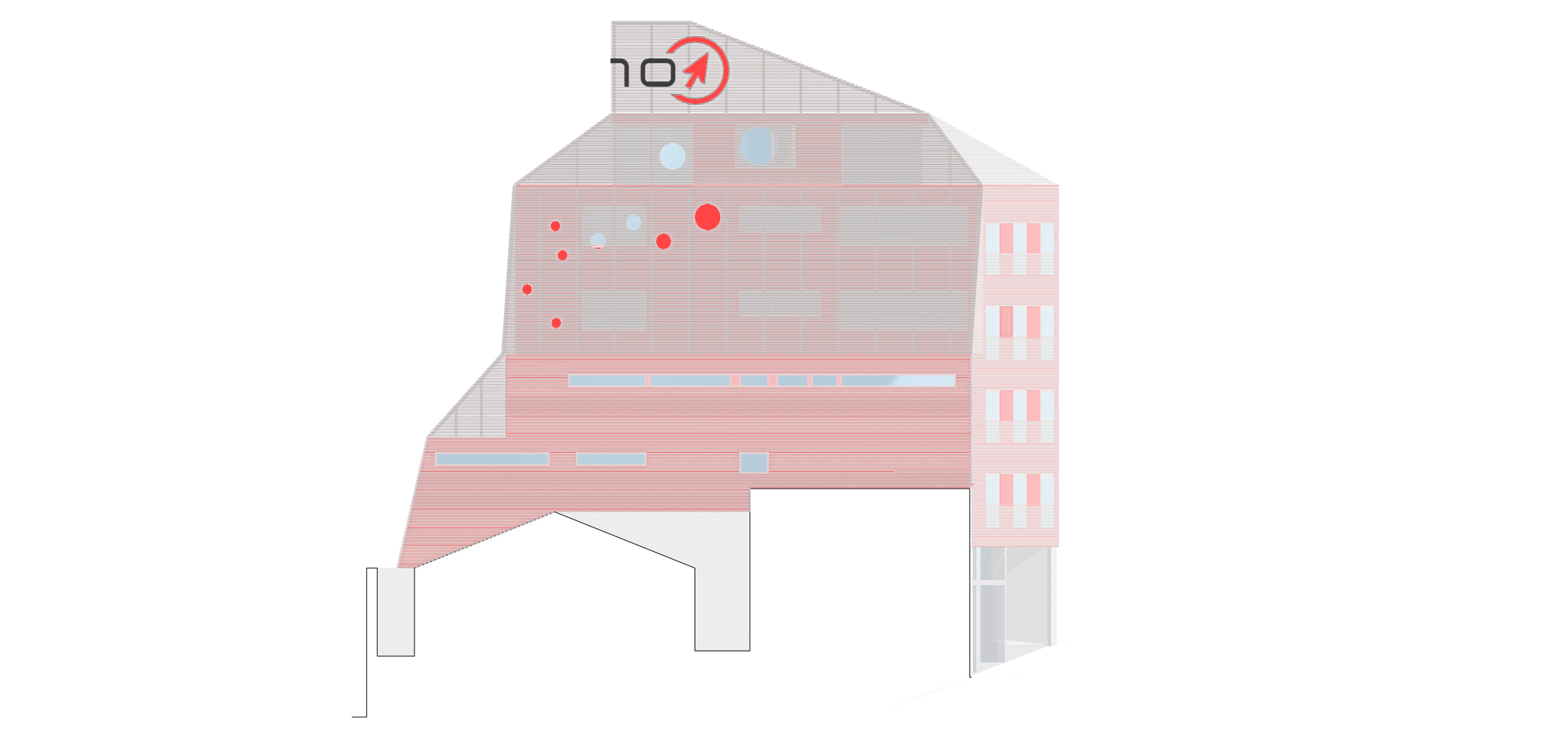
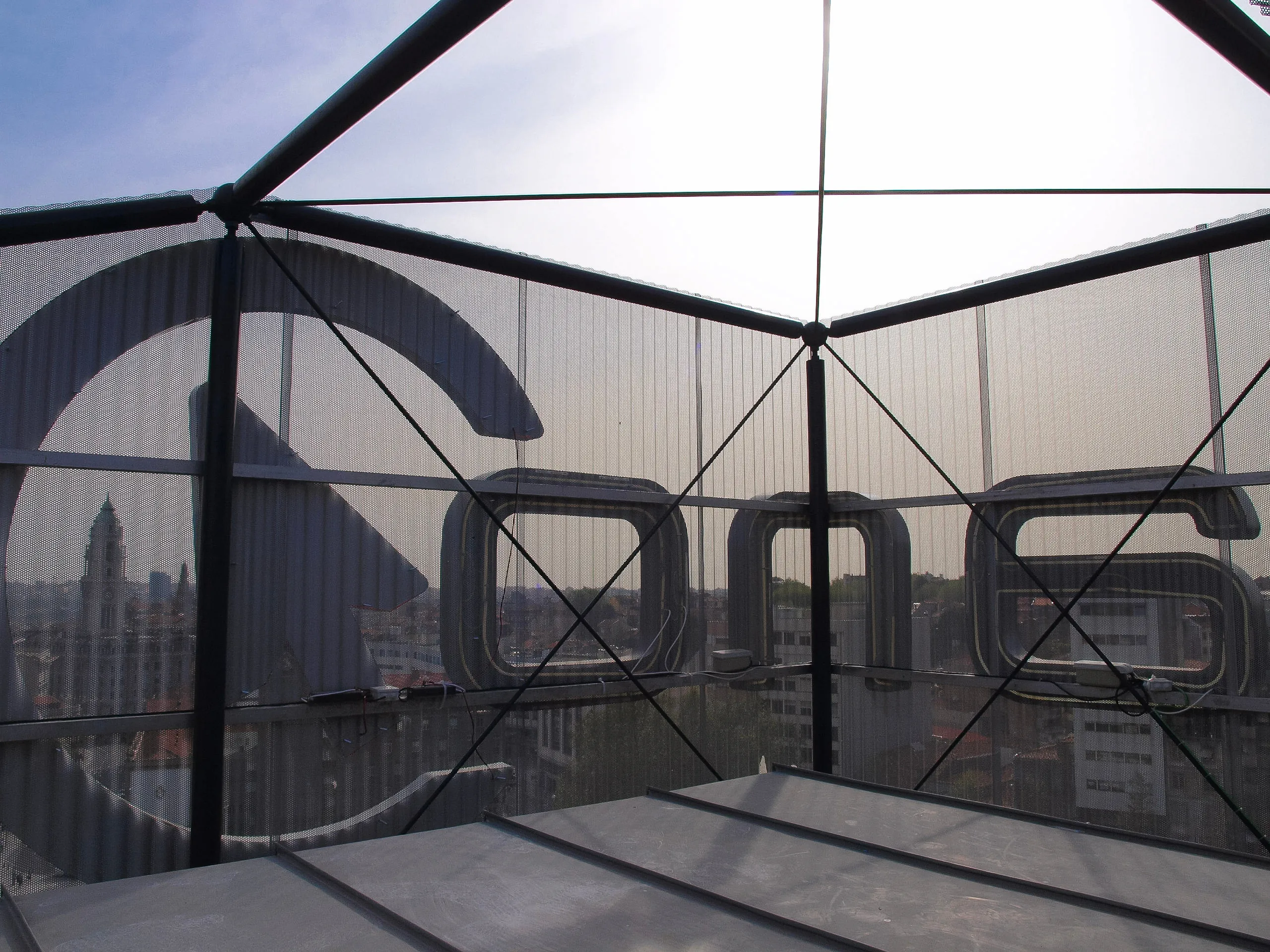
We began by stripping the roof off. We installed a new penthouse office for the directors with an exceptional view of the town, leaning heavily on Mies for the metal frame of the top floor, as it had landed there. Then we encapsulated the entire original envelope in a new metal skin. We wrapped the building in perforated aluminium sheets stretched over a steel sub-structure. This generated a new, prismatic diamond shape derived entirely from the inside out.
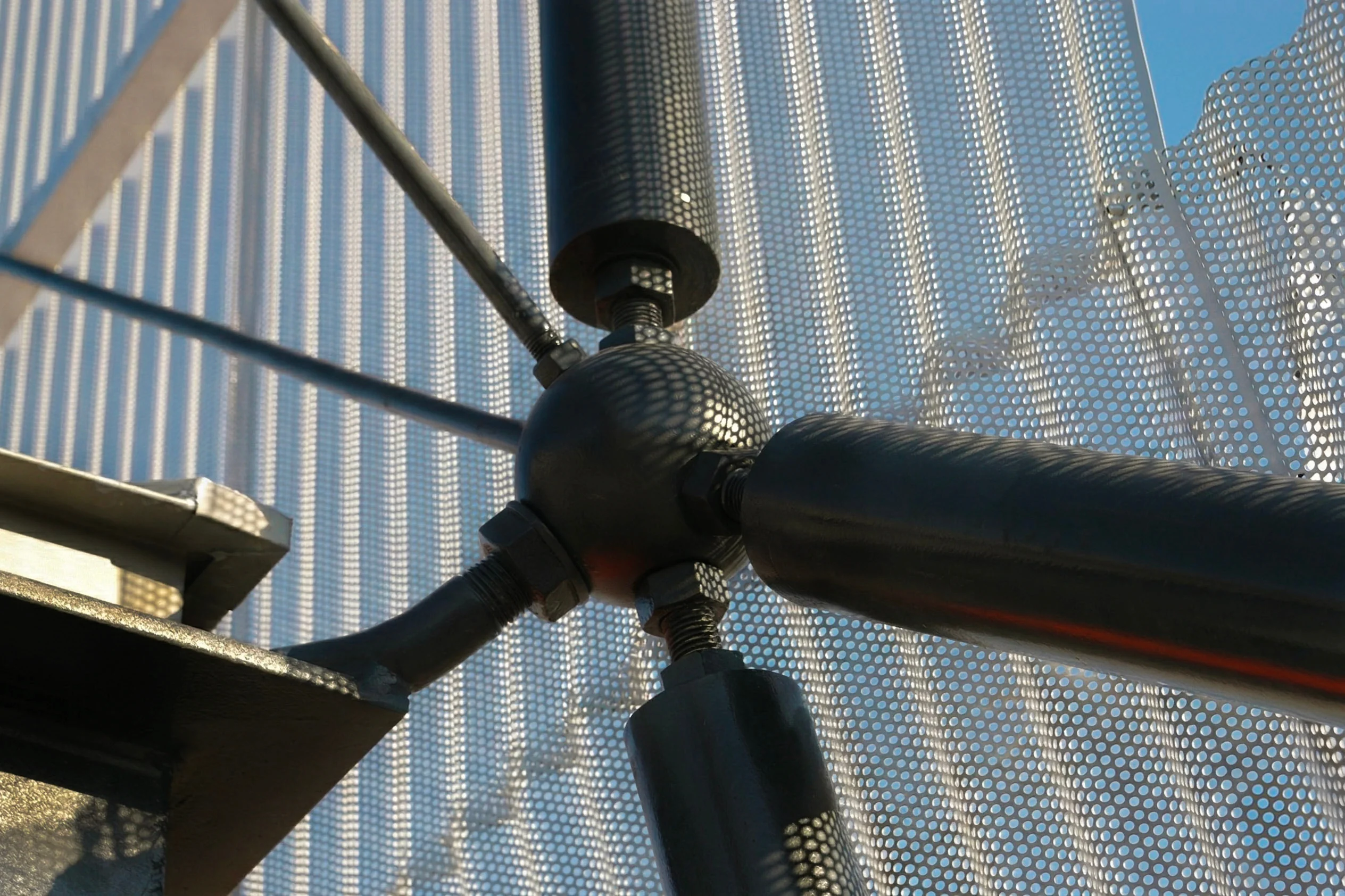
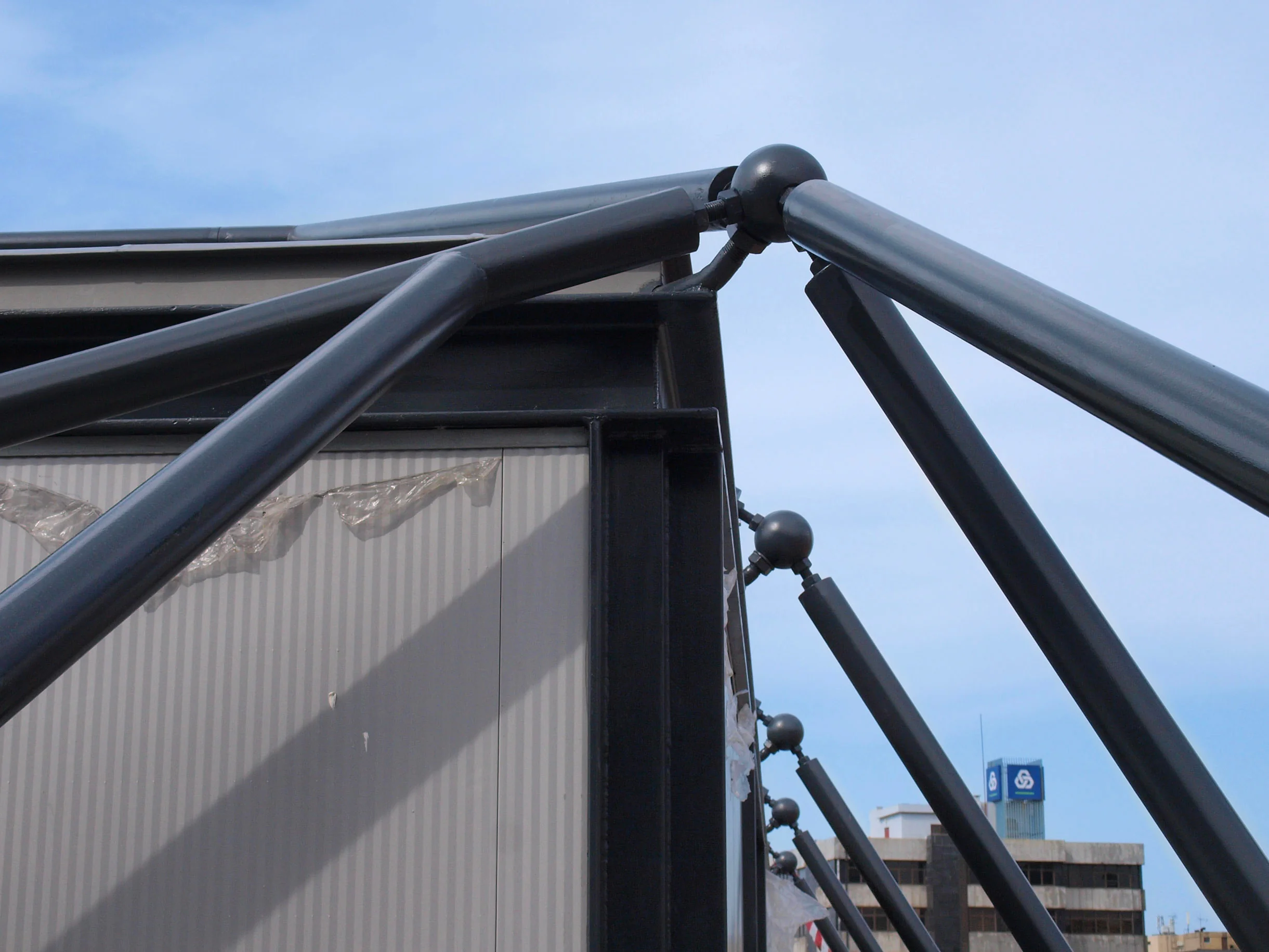
To attach this new mesh to the old building, we sat down with our structural engineer, Francisco. We devised a cheap and highly efficient system using solid steel spheres. We anchored these spheres to the existing concrete and the new penthouse framework. The centre of the sphere acted as a universal joint. It became the single pivot point where all the unpredictable angles and planes of the new facade could safely meet. It solved a massive geometric headache with a simple metal ball.
The mesh created a dual reading of the architecture. By day, it is a solid object. At night, the ghost of the original 1980s building pops out from behind the veil. To figure out how to light this, we spent a long, dark night in 2011 on top of the train station with Artur and a theatrical lighting designer named Manuel Alão. We tested various concepts. Unfortunately, the LED industry was still rudimentary back then. The alternative controllers were too expensive and demanded constant maintenance. Our grand lighting ambitions were never fully realised, but the experimentation was a very good time.
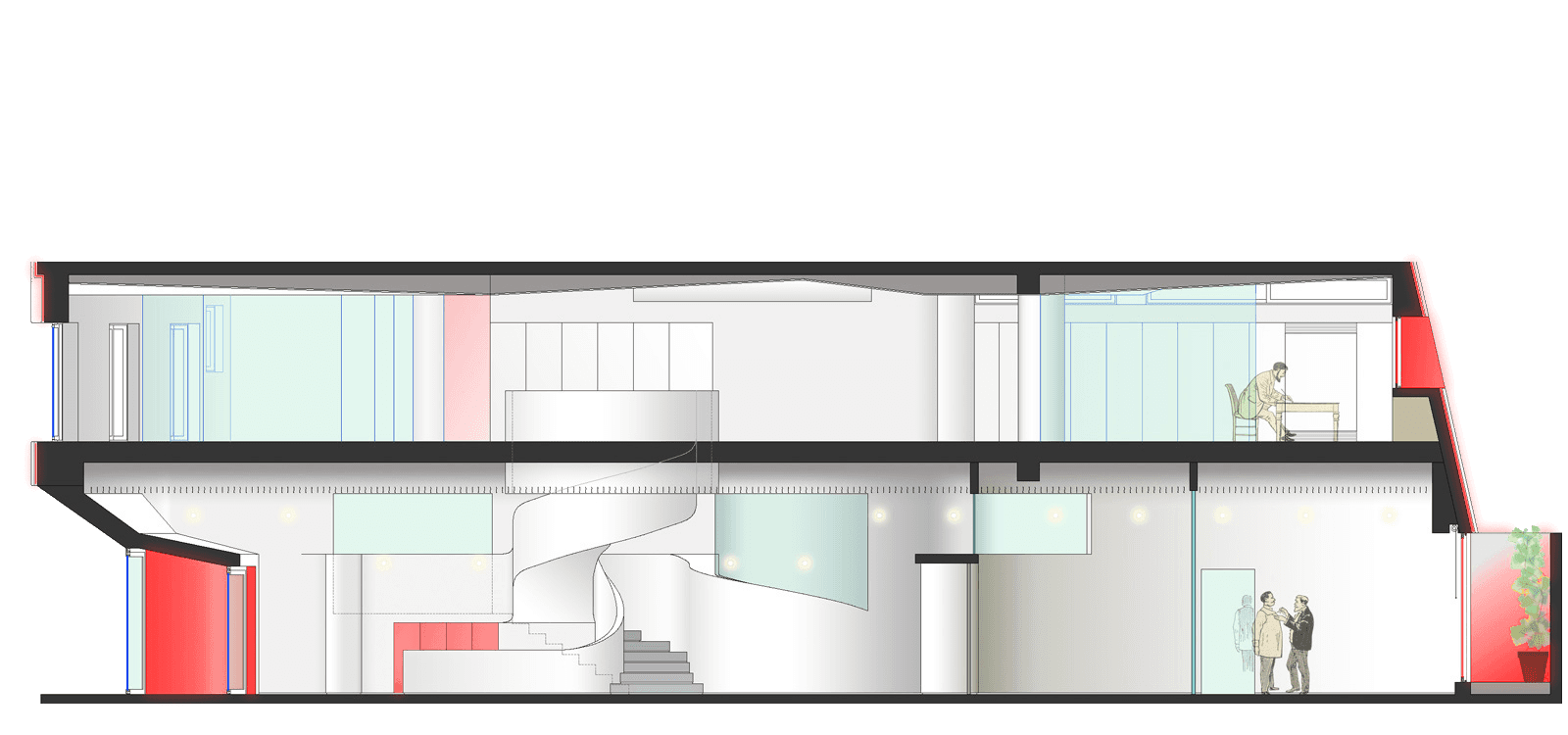
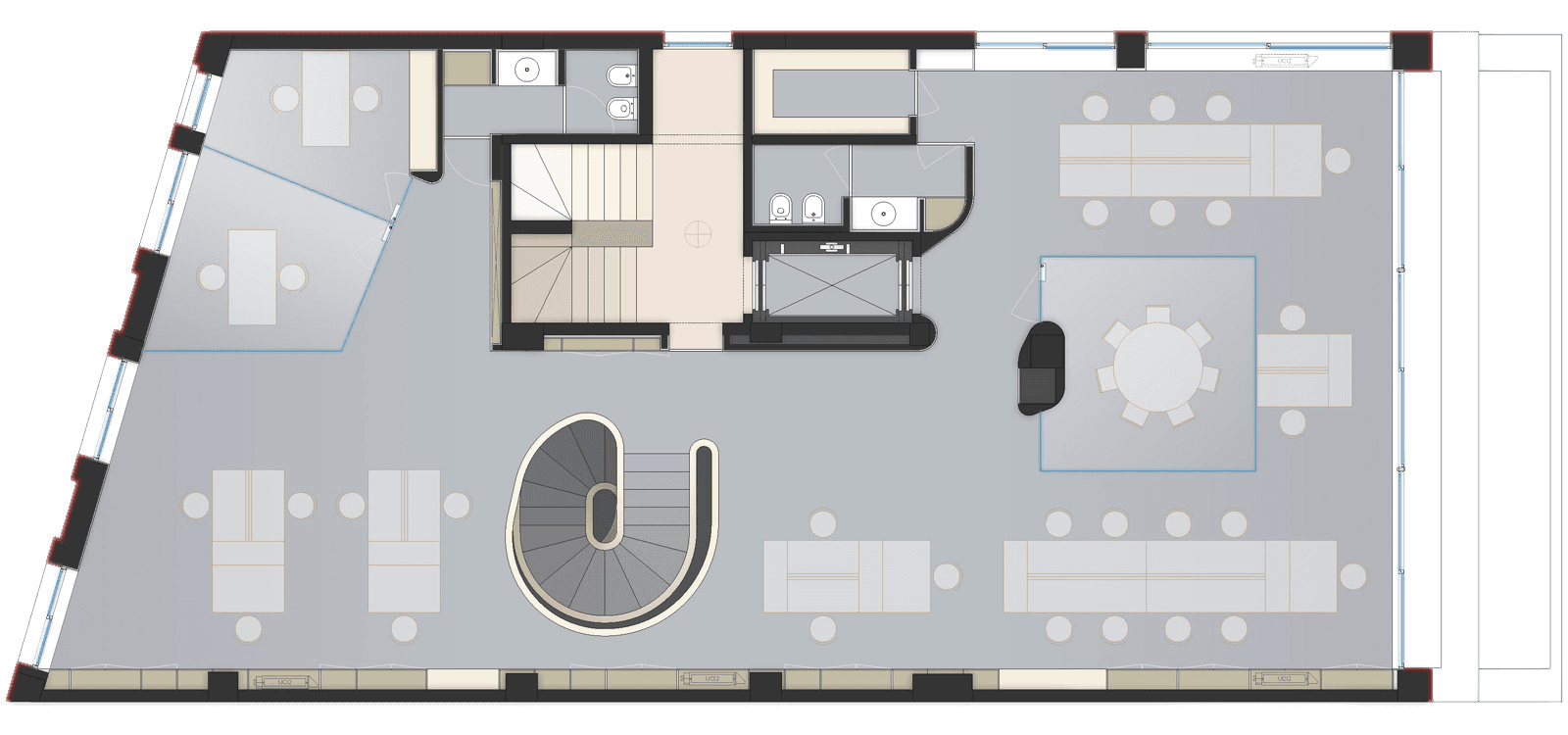
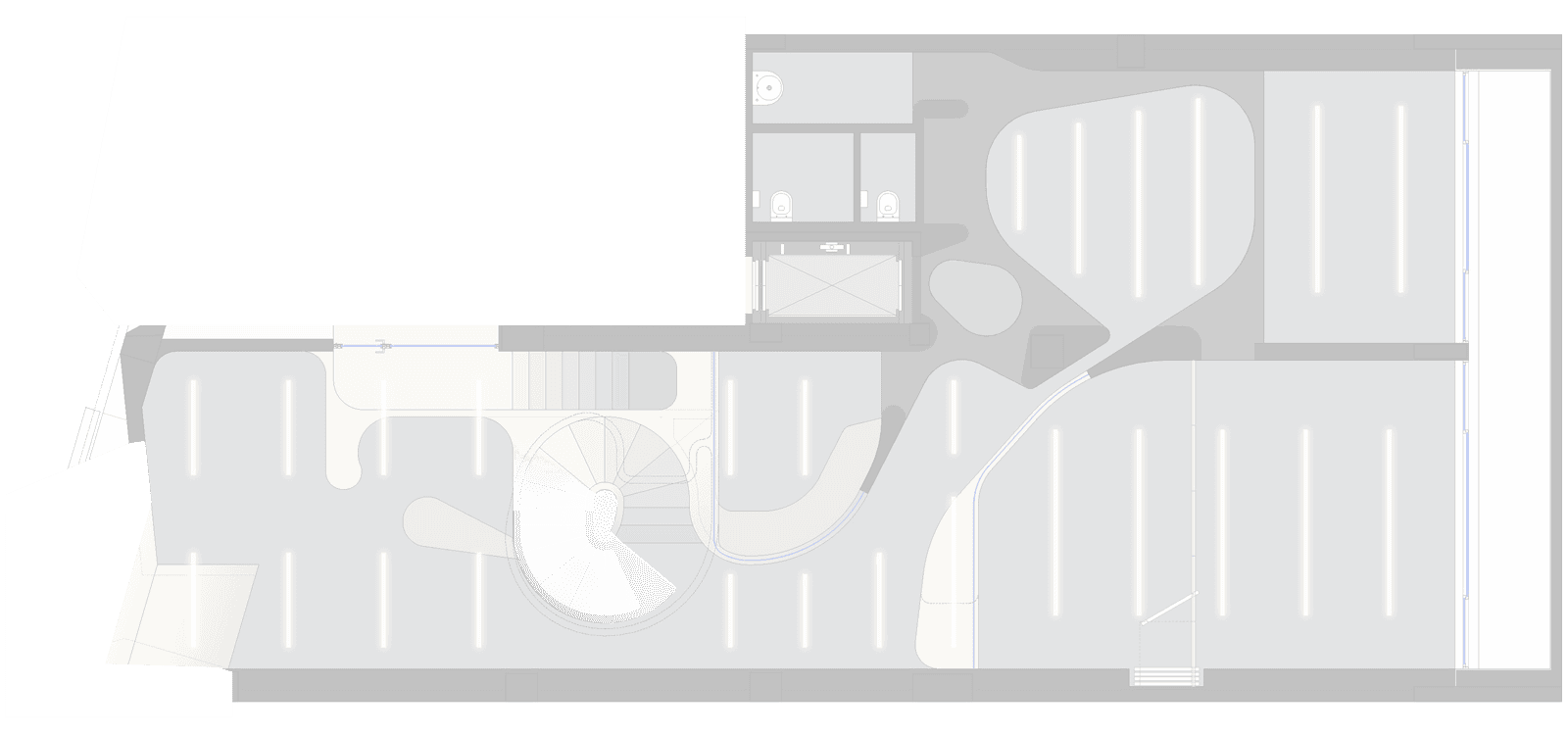
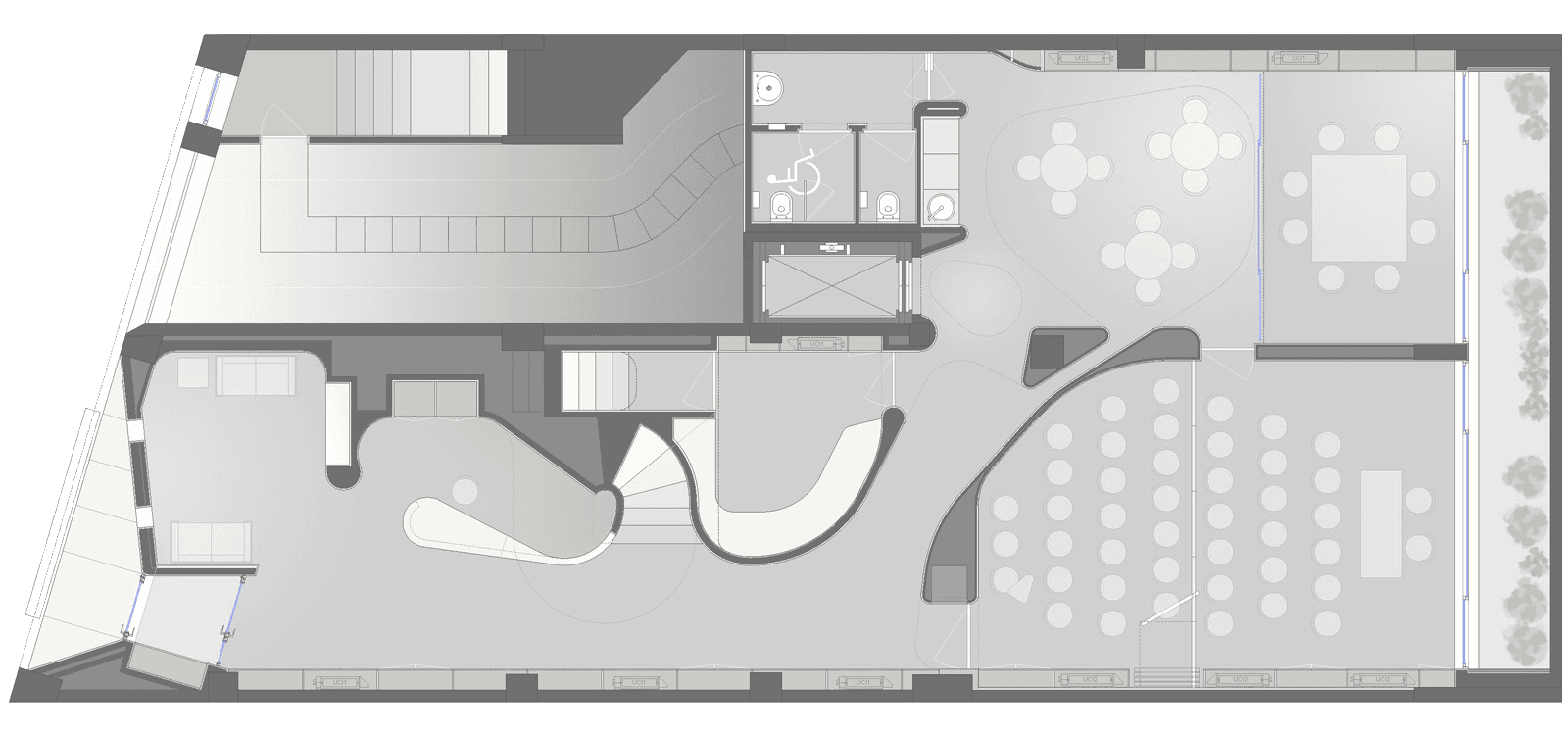
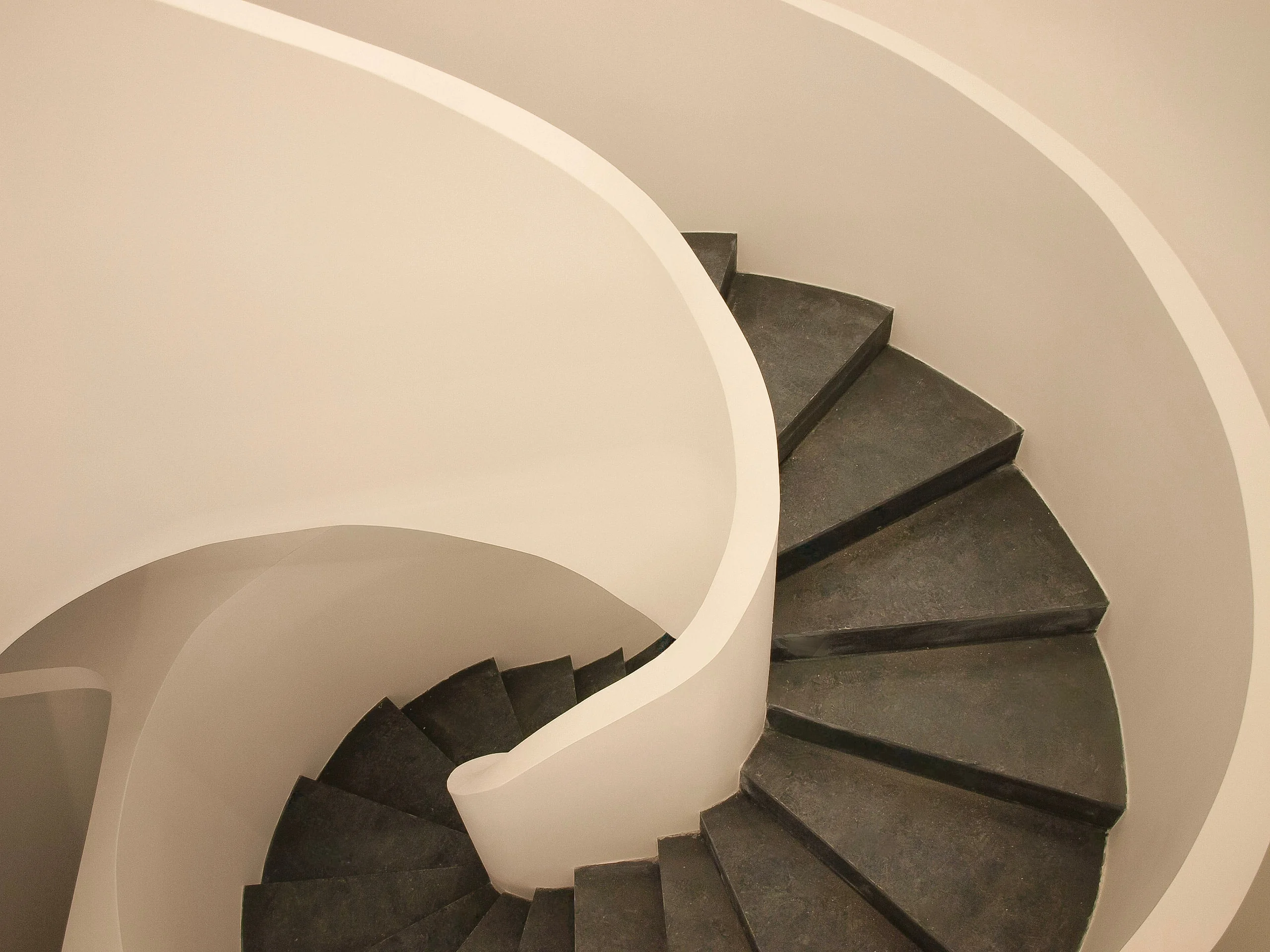
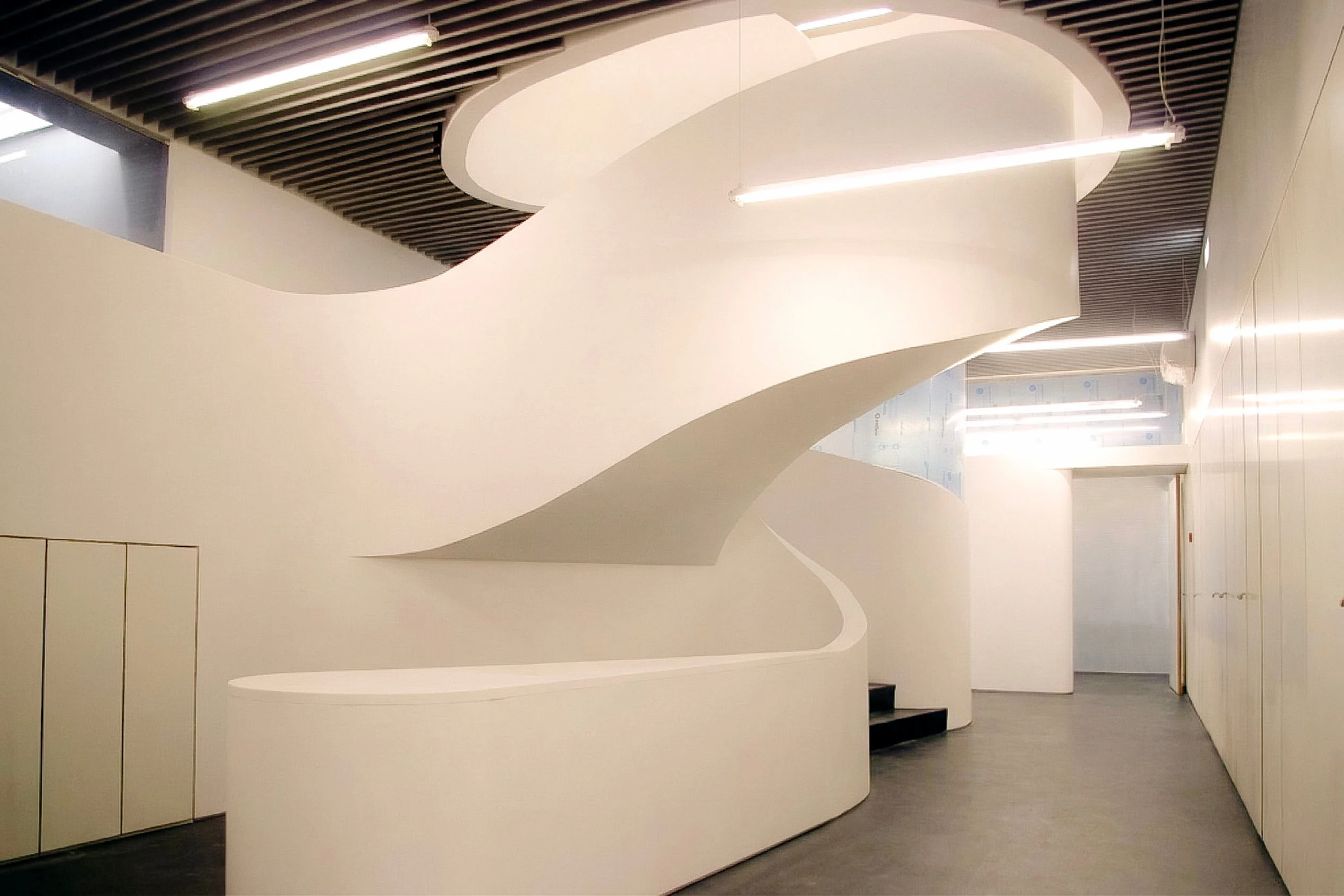
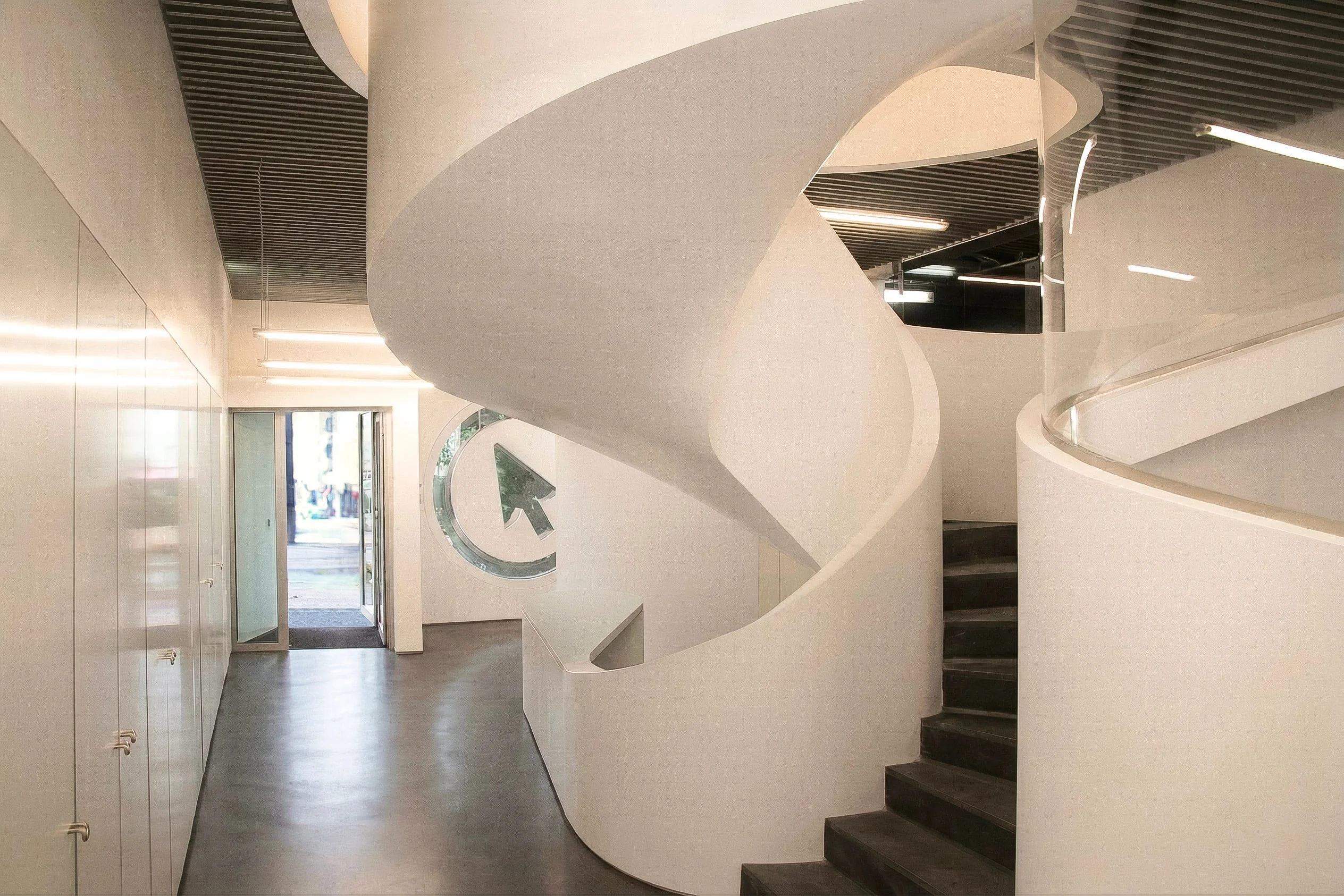
While the external diamond was the public statement, the internal reorganisation remains the quiet triumph. On the ground and first floors, we poured a concrete spiral staircase. We offset the top balustrade from the stairs themselves. This creates the distinct sensation that the staircase is simply dissolving into a void. We also took advantage of the tall entrance ceiling. We placed the company servers on a mezzanine behind darkened glass. This allowed visitors to glimpse the blinking brains of the software company, while conveniently venting all that extreme server heat straight out to the road.
None of this would have happened without the deep trust and foresight of ANO’s president. That relationship led directly to our subsequent work together on the Quinta das Pirâmides estate. Had we not moved to the UK, I am fairly certain we would still be building things together today. And so it goes.